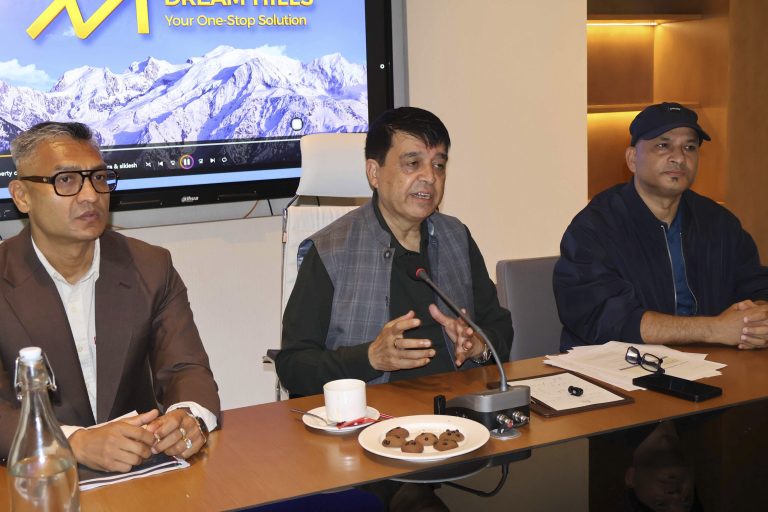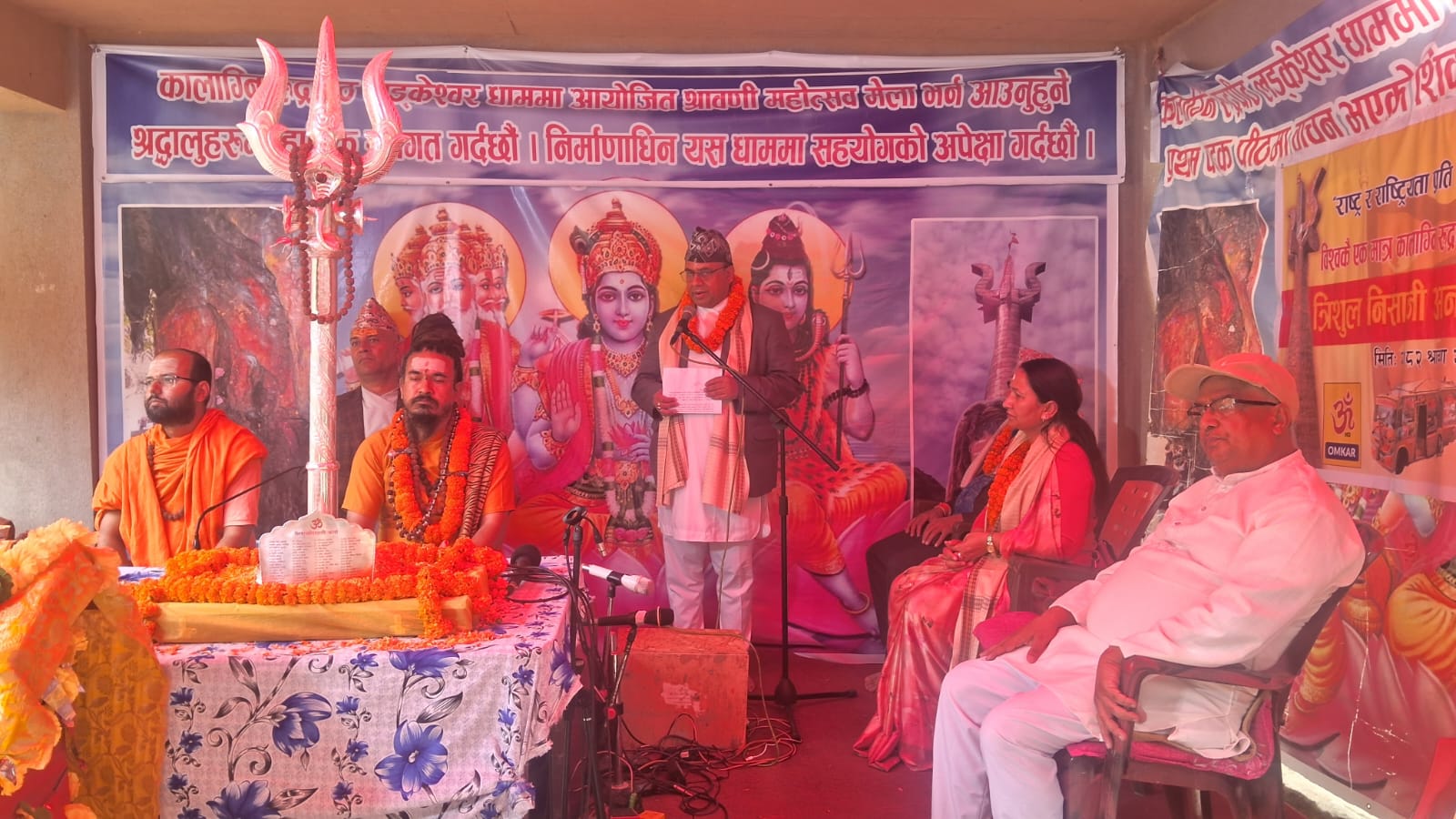
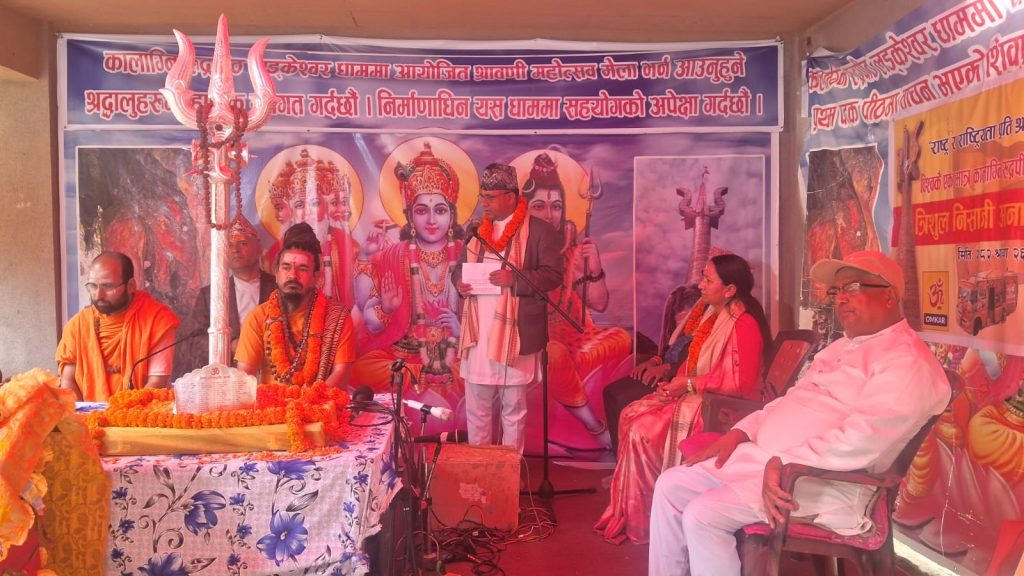
Minister for Culture, Tourism, and Civil Aviation, Badri Prasad Pandey, has emphasized the need for collective focus on strengthening the revival of Nepal’s civilization, culture, knowledge, and philosophy. Speaking on Monday at the Shravani Mahotsav Fair organized at Kalagni Rudrapith Ladkeshwor Dhaam, the world’s only shrine of its kind, Minister Pandey stressed that such sacred sites should be elevated to greater heights through clear vision and strategic religious and cultural upliftment campaigns.
He noted that for the stability, development, and prosperity of the country, every citizen must perform their duties and responsibilities with sincerity and dedication. “We possess an inner energy unlike any other in the world. By removing the veil of self-interest, we can witness the true revival of our civilization, culture, and philosophy,” he remarked.
Enhancing Ladkeshwor Dhaam as a Center of Faith
Highlighting Ladkeshwor Dhaam as a vital center of spiritual devotion, Minister Pandey underscored the importance of structured development to ensure its preservation and promotion. He called on stakeholders to embrace a comprehensive approach that integrates religious heritage with sustainable tourism promotion, thereby attracting pilgrims and cultural enthusiasts from across the globe.
He added that Nepal, blessed with diverse cultural traditions and natural beauty, is increasingly being valued by people worldwide for its potential in education, research, and unique cultural experiences. To harness this potential, he emphasized, it is equally essential to strengthen the civil aviation sector to improve accessibility to such heritage sites.
Commitment to Rectifying Distortions in Religious Sites
Minister Pandey also announced his commitment to taking concrete steps to eliminate distortions and irregularities in prominent religious and cultural sites, including Pashupatinath, Lumbini, and Janakpur. He stressed that Nepal’s heritage teaches values of altruism, coexistence, and the protection of human dignity, and preserving these principles should be central to national development strategies.
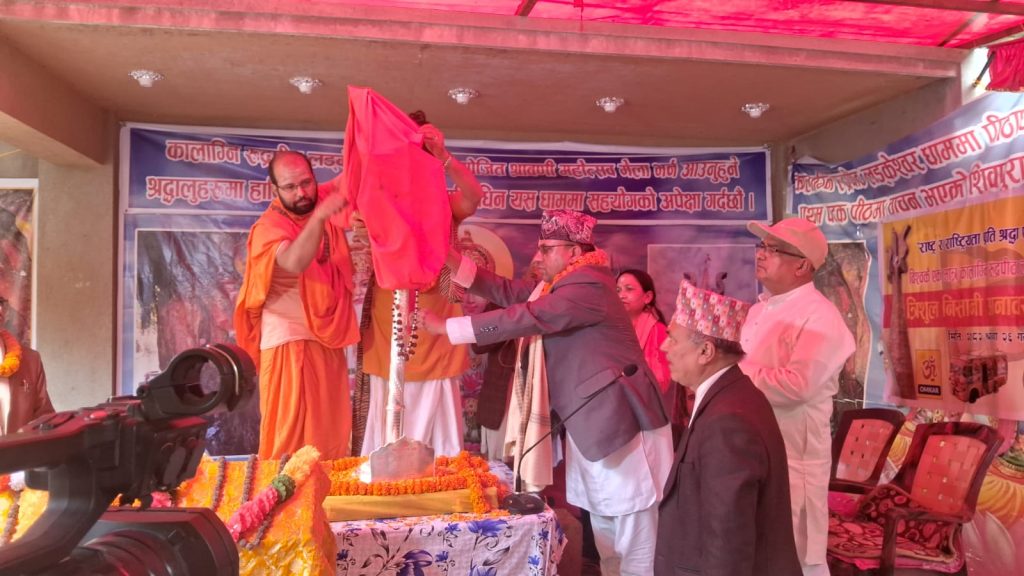
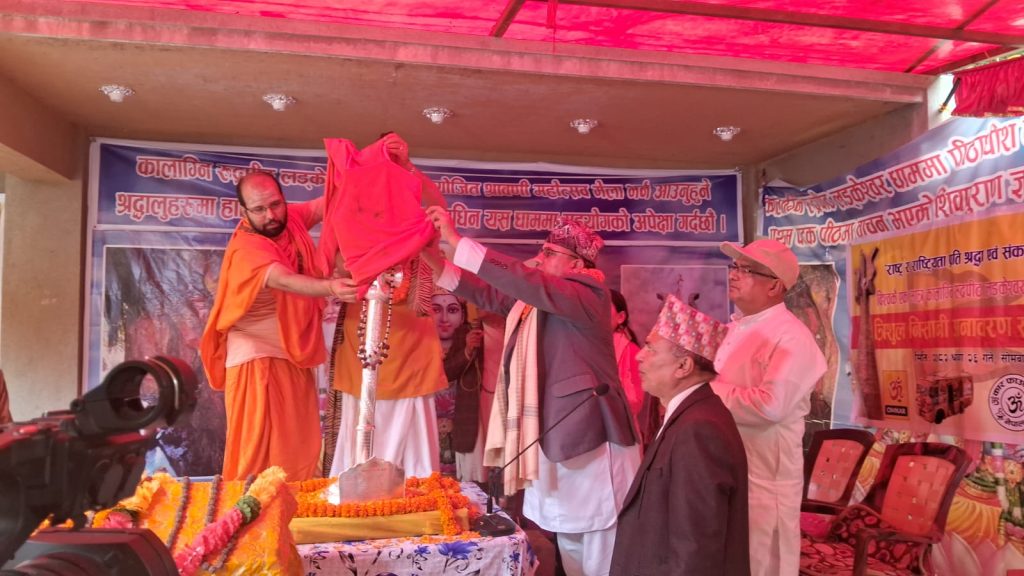
In his remarks, he praised the ongoing construction of the 108-foot-tall Trishul, which is set to be the largest of its kind in the world. He commended the dedication of those involved in the project, noting its potential to become a landmark attraction that would symbolize Nepal’s religious devotion and cultural pride.
Ministry’s Role in Reconstruction and Preservation
Minister Pandey declared that his ministry remains firmly committed to the reconstruction and preservation of religious sites across the country. He affirmed that safeguarding such sacred spaces is not only a cultural obligation but also a strategic initiative to boost cultural tourism and strengthen Nepal’s identity on the global stage.
He also revealed that during this year’s Badimalika festival, approximately 60,000 devotees visited the site to pay homage, an encouraging sign of growing public engagement with Nepal’s religious heritage.
Strengthening Aviation for Cultural Tourism
Pointing to the increasing global interest in Nepal’s cultural and natural treasures, Minister Pandey reiterated the need to reinforce the country’s aviation infrastructure. Improved air connectivity, he argued, is crucial for enabling both domestic and international visitors to access remote yet significant cultural and religious destinations.
By ensuring reliable transport options, Nepal could further position itself as a prime destination for pilgrimage tourism, cultural exploration, and spiritual retreats. He also noted that sustainable tourism planning must be prioritized so that increased visitor numbers contribute positively to the preservation of heritage sites rather than causing harm.
Cooperation Across All Levels of Government
Minister Pandey expressed confidence that Nepal’s cultural policy would progress effectively if guided by clear standards and strong cooperation among all three tiers of government, federal, provincial, and local. He called for united efforts in cultural promotion, preservation projects, and infrastructure development, stating that such coordination is vital to achieving a cultural awakening that resonates not just within the nation but globally.
He further expressed his vision of establishing Nepal’s cultural revival as an international benchmark, positioning the country as a hub of spiritual wisdom, artistic heritage, and philosophical depth.
A Vision for Global Recognition
In concluding his address, Minister Pandey reaffirmed his belief that Nepal’s cultural awakening is not solely a national objective but a movement that could inspire the world. By protecting sacred traditions while embracing modern management and promotion strategies, Nepal can achieve a harmonious blend of heritage preservation and contemporary cultural relevance.
He stressed that heritage conservation must go hand in hand with educational outreach, community involvement, and tourism integration. In his view, such a holistic approach would allow sacred sites like Kalagni Rudrapith Ladkeshwor Dhaam to not only thrive as spiritual destinations but also serve as beacons of Nepal’s enduring cultural legacy.
The Shravani Mahotsav at Ladkeshwor Dhaam, with its religious rituals, cultural performances, and devotional gatherings, showcased the deep-rooted faith and unity of the community. As Minister Pandey’s address made clear, events like these are more than celebrations, they are milestones in the ongoing journey to revitalize Nepal’s civilizational identity and secure its rightful place on the global cultural map.