Mount Everest, a symbol of national pride and one of the world’s most treasured natural landmarks, is confronting an increasing challenge: pollution. The accumulation of waste in the Everest region has become a serious environmental concern, threatening the pristine ecosystem and the iconic status of the world’s highest peak. Recognizing the urgent need for action, Nepal Life Insurance Company, in collaboration with Round Table Nepal, has launched a strategic initiative named “Project Care”, a comprehensive Everest Clean-Up Campaign aimed at mitigating this growing crisis.
Successful First Phase of Cleanup
The first phase of Project Care has already demonstrated remarkable results, successfully collecting 5,000 kilograms of waste from the Everest region. The initiative was carried out with the technical expertise of the Sagarmatha Pollution Control Committee (SPCC) and in collaboration with the waste management organization Khaalisisi, creating a model for effective corporate social responsibility (CSR) and environmental stewardship.
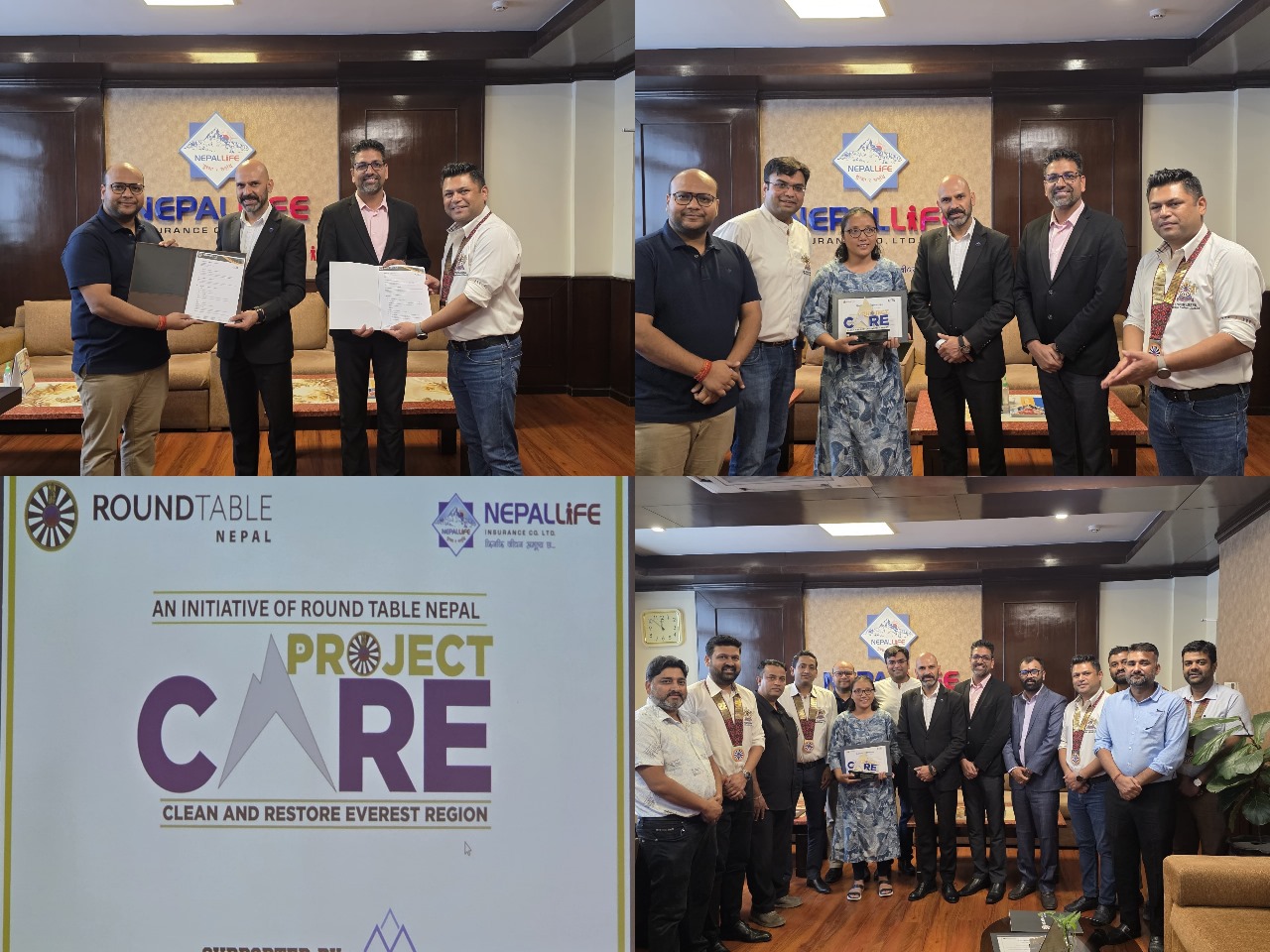
The official report of this initial achievement was formally handed over by Prabesh Agrawal, President of Round Table Nepal, to Praveen Raman Parajuli, CEO of Nepal Life Insurance, during a ceremonial event. The presence of high-ranking officials, including Nepal Life’s Deputy CEO Amit Kumar Kayal and former Round Table Nepal President Nitesh Kumar Agrawal, highlighted the project’s legitimacy and the serious commitment of both organizations.
Commitment to Environmental Sustainability
CEO Parajuli emphasized the significance of the campaign, stating, “Everest is not only Nepal’s pride but also a jewel of the world that must be preserved.” His message resonated strongly with a generation increasingly conscious of environmental sustainability alongside technological and business development.
The campaign underscores Nepal Life Insurance’s commitment to CSR by aligning corporate resources with meaningful environmental action. This approach moves beyond symbolic gestures, positioning the company as a key stakeholder in preserving Nepal’s natural heritage.
Innovative Waste Management Approach
The methodology adopted in Project Care reflects a sophisticated and well-planned approach to waste management. While the first phase focused on the collection of 5,000 kg, future plans aim to address an additional 25,000 kg of waste. This long-term vision is essential given the scale of the problem.
Project Care’s waste segregation process is meticulous. Biodegradable waste is responsibly disposed of below the base camp, while non-biodegradable waste, including plastics, discarded climbing gear, and oxygen cylinders, is carefully packed into 30 kg bags and transported to Kathmandu for further processing.
This logistical operation is where the integration of technology and innovative solutions becomes particularly impactful. Partnering with Khaalisisi, a waste management and recycling organization, ensures that non-biodegradable waste does not simply end up in landfills. Instead, it is channeled into a recycling ecosystem, contributing to a circular economy by transforming waste into a valuable resource.
Collaborative Multi-Stakeholder Effort
The success of Project Care lies in its multi-stakeholder collaboration. Representatives from Nepal Life Insurance, Round Table Nepal, SPCC, and Khaalisisi attended the event, showcasing strong institutional support. The SPCC’s decades of experience in the Everest region provided invaluable local expertise and technical know-how necessary for effective cleanup operations at high altitudes.
By combining corporate funding, local knowledge, technical expertise, and innovative waste management, Project Care has set a benchmark for large-scale environmental conservation projects in Nepal and beyond.
Impact Beyond Cleanup
The initiative is more than a cleanup campaign; it represents a broader vision of responsible environmental stewardship. It demonstrates how corporate entities can leverage resources, strategic partnerships, and innovative technology to address some of the most daunting environmental challenges.
For Nepal’s technology and business community, Project Care is an inspiring case study. It illustrates that companies can drive meaningful change, using their influence to preserve the nation’s natural treasures for future generations. The campaign sends a strong message: environmental protection is not merely a charitable endeavor but a strategic and ethical imperative that aligns business goals with societal needs.
A Legacy of Responsibility
Project Care also cultivates a culture of responsibility among climbers, tourists, and local communities. By addressing waste management at its source and promoting recycling, the campaign fosters awareness of sustainable practices in high-altitude tourism, which is critical for the long-term preservation of the Everest region.
In an era when environmental degradation is a pressing global issue, initiatives like Project Care are essential reminders of the power of collaboration, strategic planning, and social responsibility. They show that even challenges as formidable as Mount Everest’s pollution can be addressed effectively when vision, dedication, and innovation converge.
A Beacon of Hope for Everest
The Everest Clean-Up Campaign represents a significant milestone in Nepal’s journey toward environmental sustainability. It is a compelling narrative of preservation, responsibility, and strategic corporate citizenship. Beyond collecting waste, Project Care symbolizes a commitment to safeguarding Nepal’s natural heritage, inspiring communities, corporations, and individuals to take action.
As Nepal Life Insurance and Round Table Nepal continue their partnership, the ongoing efforts of Project Care are set to make a lasting impact, transforming the way society perceives conservation. Everest is more than a peak; it is a legacy, and with initiatives like this, it is being preserved for generations to come.