A 15-member expedition team has embarked on the first-ever ascent of Api Himal, located in Darchula district of Sudurpaschim Province. The team set off on Friday, marking a historic milestone for the region’s mountaineering history. The farewell ceremony, organized by the Nepal Mountaineering Association (NMA), was attended by Culture, Tourism, and Civil Aviation Minister Badri Pandey, who personally bid farewell to the climbers.
Speaking at the event, Minister Pandey highlighted the significance of the expedition, noting that the first ascent of Api Himal is a moment of pride and joy for Sudurpaschim Province. He stressed that this achievement will not only bring the province into the spotlight but also open new possibilities for adventure tourism in the region.
Government’s Climbing Fee Waiver Sparks New Opportunities
The expedition was made possible following the recent decision by the Government of Nepal to waive climbing fees for two years for 97 peaks located in Sudurpaschim and Karnali provinces. This policy, announced through the official gazette, aims to encourage mountaineering activities in less-explored areas of the country, promote tourism in remote regions, and support local economic development.
Api Himal, with its breathtaking landscapes and challenging terrain, has long remained an untapped destination for climbers. The waiver has provided the perfect opportunity for mountaineers to explore its potential, while also positioning the mountain as a new attraction for both domestic and international climbers.
Minister Pandey Highlights the Role of Mountaineering in Nation Branding
During his address, Minister Pandey emphasized that mountaineering is one of the most significant avenues through which Nepal can showcase its identity to the world. He praised the joint efforts of Sherpa and non-Sherpa climbers in taking on such ambitious challenges, stating that their collaboration marks the beginning of a new era in the nation’s mountaineering history.
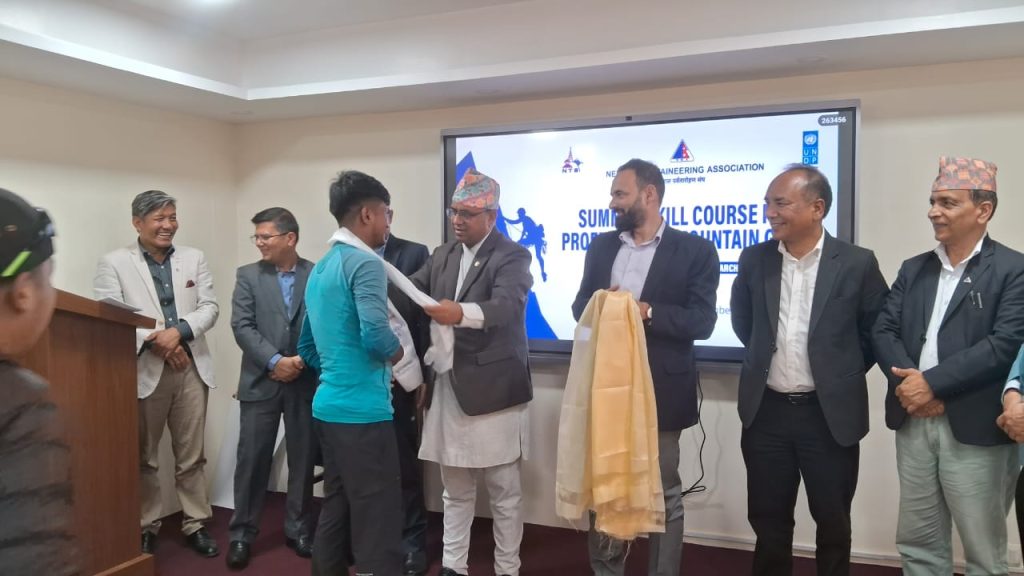
“This campaign will promote coordination and cooperation at the local level while making a significant contribution to the tourism development of Sudurpaschim and Karnali provinces,” he remarked. The minister further expressed confidence that the Api Himal ascent would serve as a model for integrating local participation into high-altitude expeditions.
Local Participation at the Core of the Expedition
The expedition team includes active participation from climbers hailing from Api Rural Municipality, highlighting a strong commitment to involving local communities in tourism development. The blend of experienced mountaineers and local climbers is expected to enhance the cultural exchange and knowledge-sharing during the climb.
By engaging locals, the initiative also aims to create a sense of ownership and pride in the region’s natural heritage. This approach ensures that the benefits of tourism and mountaineering extend beyond adventure sports to include economic and social development in the surrounding communities.
A New Era for Tourism in Remote Regions
The ascent of Api Himal is seen as more than just a mountaineering achievement—it is also a strategic move to promote Sudurpaschim Province as a prime destination for adventure tourism. The region, rich in natural beauty, cultural diversity, and unexplored landscapes, has immense potential to attract trekkers, climbers, and nature enthusiasts from around the world.
Industry experts believe that the successful completion of this expedition could pave the way for similar initiatives in other peaks of the province. With improved infrastructure, promotion, and policy support, Sudurpaschim could soon establish itself as a hub for adventure tourism, complementing Nepal’s globally recognized mountaineering destinations like Everest, Annapurna, and Manaslu.
Balancing Risk with Opportunity
While the climb presents significant challenges due to the mountain’s altitude, technical difficulty, and unpredictable weather, the expedition has been carefully planned to prioritize safety. The involvement of local climbers familiar with the terrain adds an extra layer of preparedness.

Organizers have emphasized that such expeditions, despite their risks, bring long-term benefits by generating awareness, inspiring young climbers, and boosting the local economy through increased demand for guides, porters, accommodation, and other tourism-related services.
Symbol of Regional Pride and National Achievement
The Api Himal expedition stands as a symbol of regional pride, demonstrating how a remote corner of Nepal can take center stage in the world of adventure sports. For the people of Sudurpaschim, this is an opportunity to showcase their cultural and natural wealth to the world, while also benefiting directly from tourism-driven development.
Minister Pandey’s active presence at the farewell ceremony underscored the government’s recognition of the expedition’s significance. His remarks reflected a broader vision to integrate mountain tourism with sustainable development strategies for the country’s remote provinces.
Looking Ahead
As the 15-member team continues its journey towards the summit, the nation watches with anticipation. Success in this mission would not only place Api Himal on the global climbing map but also serve as a powerful example of how collaboration between government, mountaineering bodies, and local communities can bring transformative change to a region.
If completed successfully, the expedition could inspire similar climbs in other peaks benefiting from the recent climbing fee waiver, thereby expanding Nepal’s portfolio of mountaineering destinations beyond its traditional hotspots. The Api Himal ascent represents a convergence of adventure, policy support, local involvement, and national pride, a combination that could set the stage for a vibrant new chapter in Nepal’s mountaineering legacy.