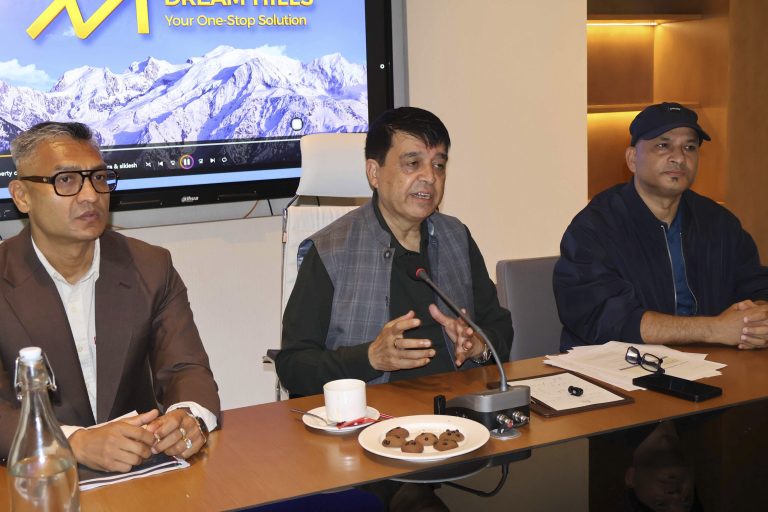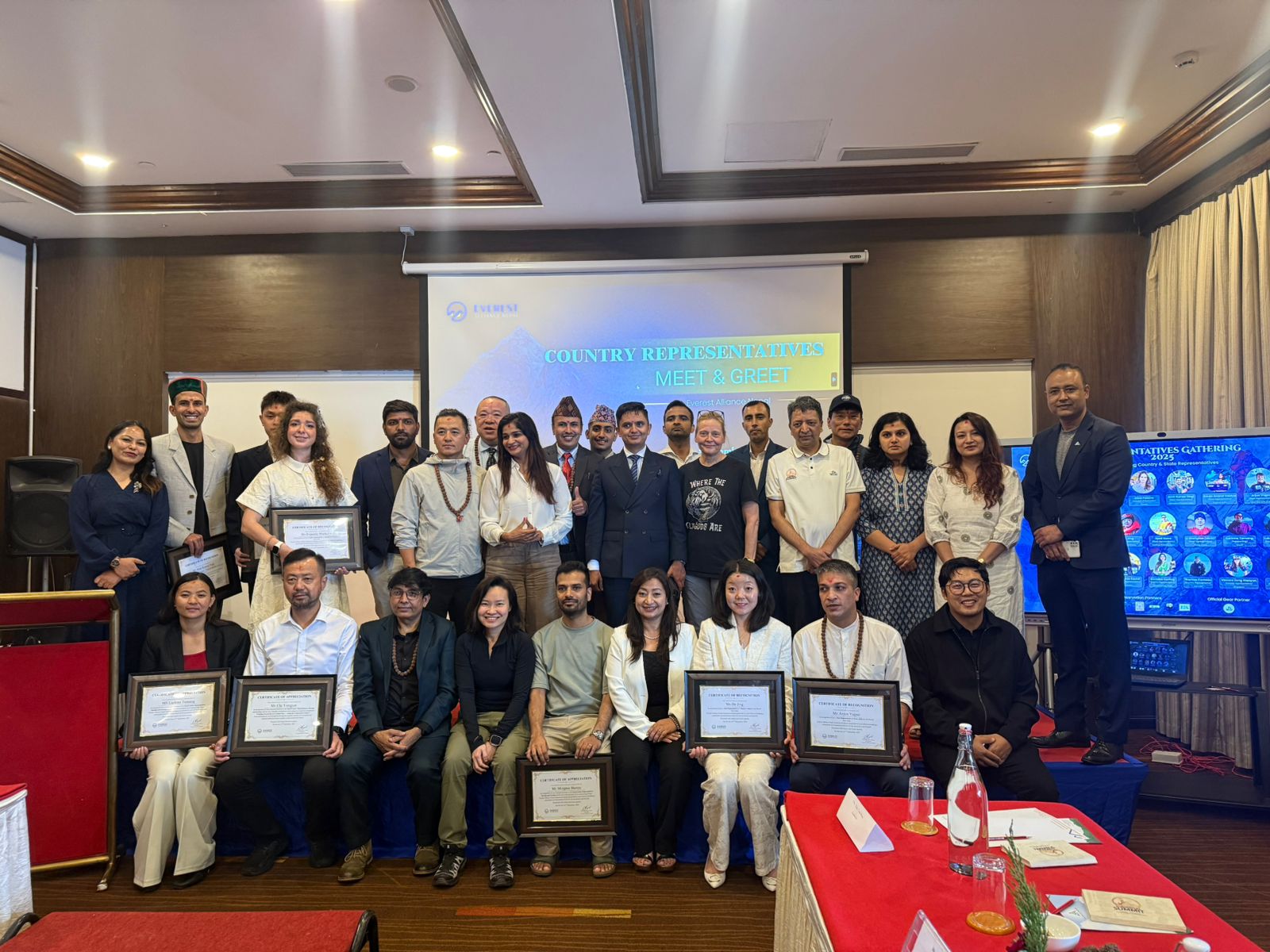
Everest Alliance Nepal (EAN) successfully organized the Country Representative Meet & Greet Program in Kathmandu, uniting national and international stakeholders to deliberate on sustainable mountaineering, climate change, and collaborative initiatives for the Himalayan region. The gathering featured representatives from the National Sports Council, Nepal Tourism Board, International Mountain Tourism Alliance (IMTA), IUCN, ICIMOD, WWF, NTNC, and the Zoological Society of London (ZSL), alongside climbers and country representatives from across the globe.
Commitment to Sustainable Adventure Sports
Tanka Lal Ghising, Member-Secretary of the National Sports Council, underscored the importance of advancing adventure sports through sustainability. He reaffirmed the Council’s commitment to collaboration, stating: “The National Sports Council is committed to working together in the field of sustainable development of adventure sports including mountaineering and trekking. I heartily congratulate the Everest Alliance Nepal (EAN) for organizing such a meaningful meeting aimed at shared purpose, its effective implementation and encouraging positive change.”

Indigenous Knowledge and Climate Policy
Sunil Sharma, Officiating Director of the Nepal Tourism Board (NTB), called attention to the pressing need to document indigenous knowledge of Himalayan communities adapting to climate change. He explained that such knowledge could become a valuable resource for global forums and policymaking. Sharma also highlighted the Hindu Kush Himalaya Initiative led by the Government of Nepal, which convened international parliamentarians to discuss climate issues. He urged forums to move beyond discussions: “Conferences and programs often generate memos and agendas, but they must translate into actionable policy changes.”
International Cooperation for Mountain Tourism
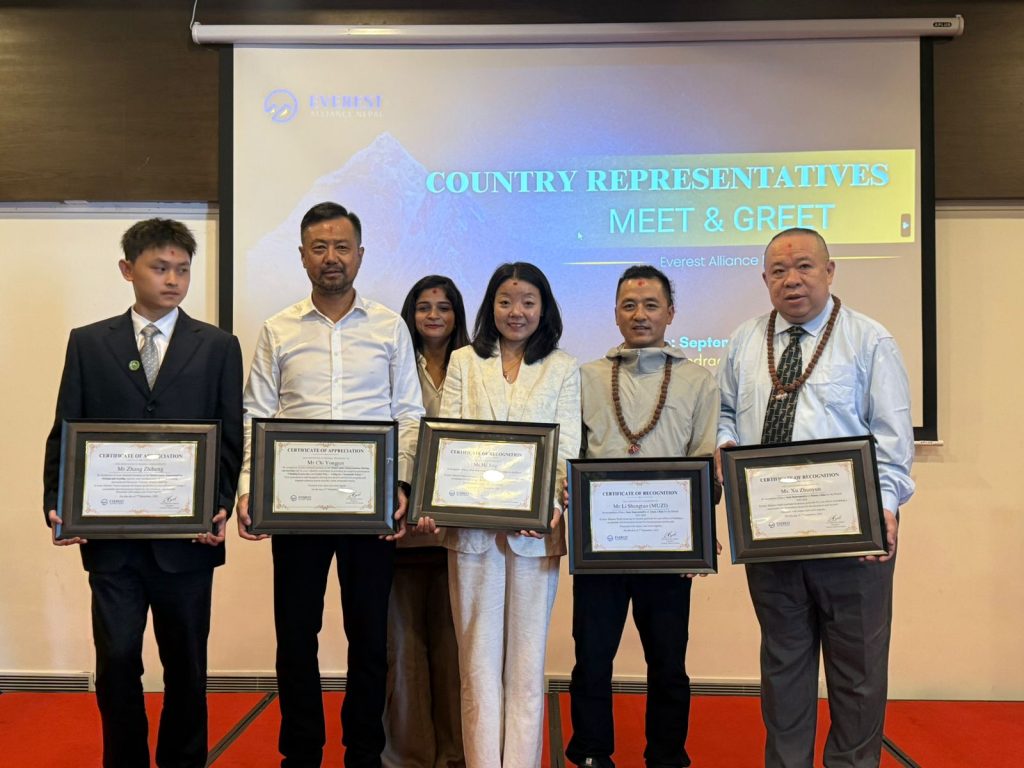
Representing the International Mountain Tourism Alliance (IMTA), Zhang Zhiheng reflected on the challenges of climate change to global mountain tourism. He noted the risks of warming climates, such as reduced snowfall and increased hazards for climbers. Zhang emphasized: “The future of mountain tourism must rest on the dual pillars of sustainable development and climate adaptation. Innovation and cooperation are vital to this endeavor.” Dr. Narendra Man Babu Pradhan from IUCN added that Himalayan ecosystems are increasingly vulnerable due to climate crises and human interference, stressing the urgency of collaborative action.
Global Voices for the Himalayas
The program also heard international perspectives from climbers and country representatives. Russian delegate Evgenia Markova emphasized sustainable tourism and climate awareness, while India’s Suvidha Kadlag praised EAN’s role in uniting South Asian efforts for environmental protection. Nepali youth climber and mountain guide Laxmi Tamang highlighted her hands-on conservation work with EAN and urged greater youth engagement in the fight against global warming. Similarly, Amit Negi from Himachal Pradesh, India, reminded attendees that climate change is a shared responsibility, praising EAN for fostering cultural representation, environmental protection, and practical learning.

Role of Research and Conservation Organizations
ICIMOD’s Anu Joshi Shrestha congratulated EAN for mobilizing the private sector for mountain conservation, praising its alignment with ICIMOD’s “Save the Snow” campaign. She highlighted the importance of collaborative global advocacy, particularly in light of melting glaciers and water security in the Hindu Kush Himalaya region.
WWF Nepal’s Climate and Energy Head, Arati Khadgi, discussed initiatives such as promoting renewable energy in Shey Phoksundo and waste management systems in Sagarmatha National Park. She stressed that the impacts of climate change extend from mountains to seas, affecting both people and endangered species like snow leopards and red pandas.

From NTNC, Project Director Chiranjibi Prasad Pokharel expressed readiness to collaborate with EAN in protecting Himalayan biodiversity while strengthening community-based conservation models. Similarly, Ashmita Pandey from the Zoological Society of London (ZSL) emphasized mountaineers’ role as global ambassadors for climate advocacy and expressed enthusiasm for joint campaigns.

Gratitude and Future Priorities
In his concluding remarks, EAN President Sudarshan Nepal expressed heartfelt gratitude to all participants for making the Everest Summiteers Summit 2025 a success and supporting the Meet & Greet program. He outlined EAN’s next steps, which include tackling Himalayan waste management, enhancing safety training for porters and field staff, and intensifying climate change mitigation efforts. “The Himalayas are not only Nepal’s pride but also a gift to the entire world. Together, we can protect them for future generations,” he stated.
Building a Collective Himalayan Agenda
The program reaffirmed EAN’s role as a bridge between climbers, environmentalists, policymakers, and international organizations. Participants agreed that sustainable tourism, environmental education, and community engagement are crucial to safeguarding the Himalayas. By fostering cross-border partnerships and advocating for actionable policies, EAN continues to position Nepal as a leader in global mountain conservation.
Through this collaborative platform, Everest Alliance Nepal has reinforced its mission of Himalayan preservation, climate resilience, and responsible adventure tourism, ensuring that the voice of the Himalayas resonates strongly on the global stage.