Last year, Dhorpatan and surrounding regions saw a steady flow of domestic and international tourists visiting Jaljala, a hidden gem located on the border of Baglung and Myagdi districts. However, this year, prolonged rainfall and blocked roads have prevented visitors from reaching the destination, with many tourists turning back from Dhorpatan valley and Bukipatan without experiencing the famed site.
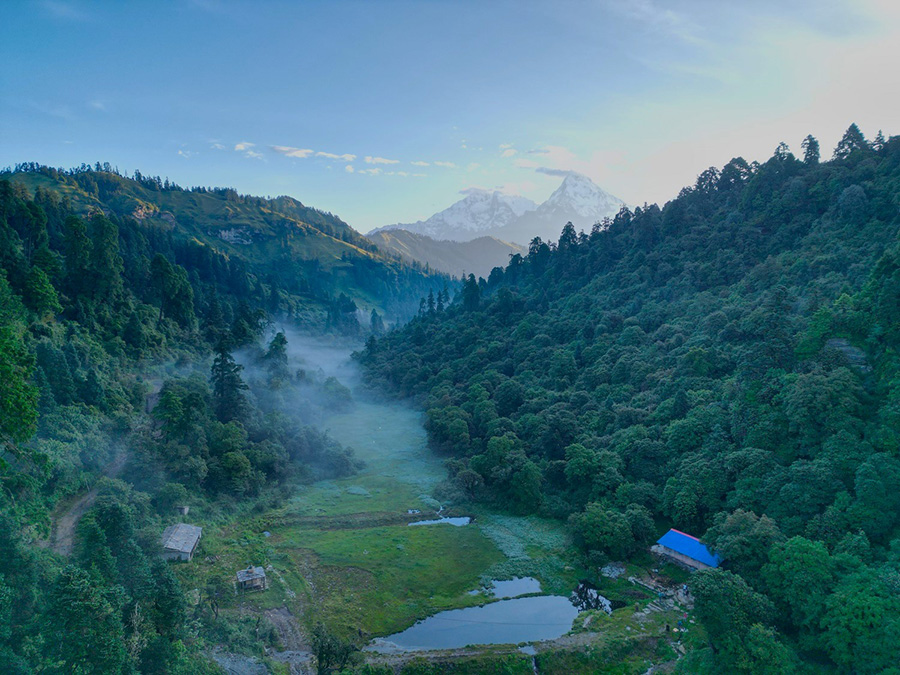
Jaljala, Nepal’s only hunting reserve, is gaining attention for its panoramic views of dozens of snow-capped peaks, including Dhaulagiri, Machhapuchare, Annapurna, Manaslu, Putha, Churen, Gurja, and Nilgiri, making it an increasingly attractive destination for trekkers, photographers, and adventure tourists. Located at an elevation of 3,400 meters above sea level, the area has become a rising star in Nepal’s highland tourism circuit.

From Obscurity to Emerging Tourist Attraction
Just five years ago, Jaljala remained largely unknown to tourists. “Until recently, very few people even knew about Jaljala,” said Jeevan Pun, chairperson of the Dhorpatan Valley Hotel Entrepreneurs Association. With increased publicity over the past few years, more and more visitors have started coming during the winter season to enjoy its natural beauty and sunrise vistas over the Himalayan range.
The access road from Dhorpatan valley, approximately 22 kilometers west of the valley, was only opened last year, connecting Dhorpatan with lower Jaljala via Dhaulagiri Rural Municipality in Myagdi. While the road improved accessibility, the monsoon season presents severe challenges as heavy rainfall and landslides often render sections impassable.
Roadblocks and Safety Challenges
Tourists face difficult terrain even when the road is open. “To reach Jaljala, one has to cross three wooden bridges, known locally as Sanghu, over rivers and dense forests,” Pun explained. This year, due to excessive rainfall, these bridges have not yet been repaired, preventing tourists from proceeding further. In the past, bridges set up during dry seasons have been washed away by monsoon floods, emphasizing the need for constant maintenance.
“Currently, vehicles and trekkers cannot pass safely, and many tourists coming to Dhorpatan end up returning without visiting Jaljala,” Pun said. Approximately 100 tourists visit Dhorpatan daily, many of whom express disappointment at being unable to reach the peak.
Promoting Tourism Amid Natural Challenges
Despite these obstacles, Jaljala’s appeal continues to grow. Pun observed, “Since last year, the number of tourists heading to Jaljala has increased significantly. Previously, only shepherds and locals ventured here. Today, due to publicity and social media, tourists are drawn to its unique beauty and breathtaking Himalayan views.”
The growing popularity has encouraged local authorities and communities to repair roads and restore infrastructure, ensuring safe access for visitors. Pun mentioned that the Sanghu bridges and road sections would soon be cleared and repaired, enabling tourists to reach Jaljala by Tihar festival, weather permitting.
Tourist Experiences and Expectations
Tourists visiting from nearby regions, such as Tulsipur, Dang, have expressed disappointment at not being able to reach Jaljala. Rawal Rokaya, who came with a group of 12, shared, “I had heard that one could reach Jaljala by motorcycle from Dhorpatan valley, but due to landslides and damaged roads, travel is currently impossible. The heavy rainfall this year has further delayed access.”
Even though tourists like Rokaya could not reach Jaljala, they were able to explore nearby areas such as Bukipatan before returning. Nonetheless, the experience highlights the challenges of high-altitude tourism during the monsoon season in Nepal, where natural beauty and adventure must be balanced with infrastructure and safety considerations.

Looking Ahead: Balancing Accessibility and Preservation
Jaljala’s growing popularity is encouraging sustainable tourism initiatives in the region. Authorities in Dhorpatan and Myagdi are working to maintain road networks, repair bridges, and enhance local facilities to provide safe access for tourists. At the same time, local communities remain committed to preserving the natural environment, ensuring that increased footfall does not harm the fragile ecosystem.
The combination of stunning Himalayan views, cultural experiences, and adventure tourism potential makes Jaljala an emerging attraction, but its accessibility remains heavily dependent on weather conditions and timely infrastructure repairs. With proactive efforts from local authorities and community stakeholders, the region hopes to welcome tourists safely while preserving its natural charm and ecological integrity.