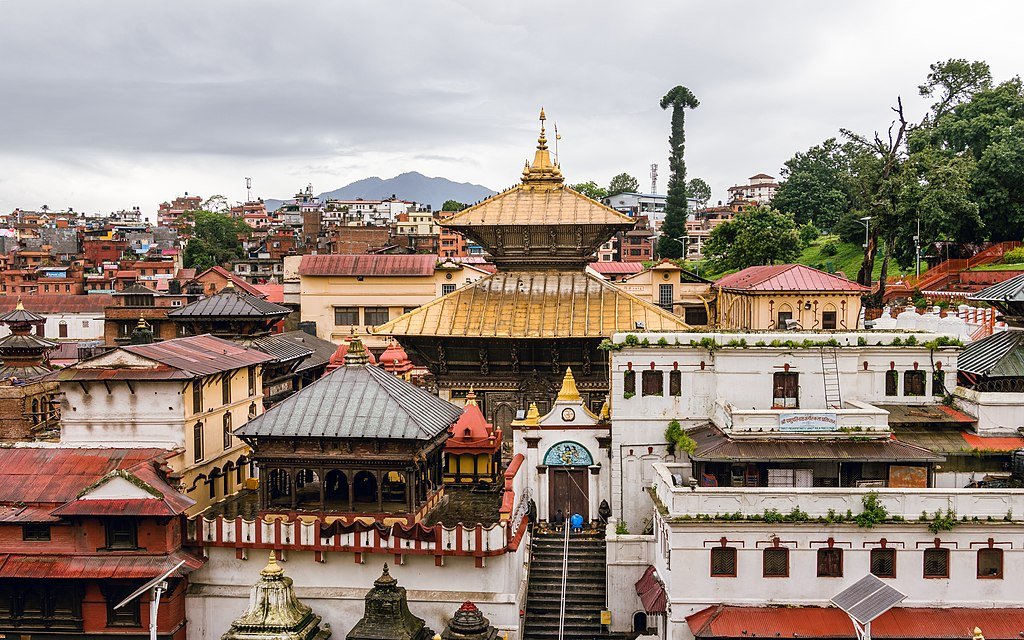
Nestled on the banks of the sacred Bagmati River in Kathmandu, the Pashupatinath Temple stands as one of the most revered Hindu temples in the world. Dedicated to Lord Shiva, known here as Pashupati, the “Lord of Animals,” this temple is not only a spiritual epicenter for Hindus in Nepal and abroad but also a UNESCO World Heritage Site, attracting thousands of pilgrims and tourists each year.
The temple complex spans over 2,400 square meters and houses a myriad of smaller shrines, ashrams, and ghats, each contributing to its status as a major religious and cultural hub. Its gold-plated roof and intricately carved wooden doors exemplify the excellence of Nepalese pagoda-style architecture.

Historical Roots and Origins
The history of Pashupatinath Temple is rich and deeply intertwined with Nepalese culture and Hindu mythology. The exact date of its construction is uncertain, but historical records suggest its existence over 2,000 years. Archaeological studies indicate that the temple has undergone several renovations and reconstructions, particularly following natural disasters and political changes.
Legend has it that a linga (symbol of Lord Shiva) manifested spontaneously at the site, making it sacred from ancient times. The temple is mentioned in the Skanda Purana, one of Hinduism’s revered texts, which describes Pashupatinath as the deity who protects all beings.
The present structure is believed to have been constructed in the 5th century by King Prachanda Deva, though it has been expanded and renovated multiple times since then. In the 15th century, King Bhupatindra Malla further enhanced the temple, adding exquisite woodwork and gold plating to the roof, giving it the grandeur seen today.
Religious Significance
Pashupatinath is considered the most sacred temple for Shiva worshippers outside India. It is a central pilgrimage site, especially during Maha Shivaratri, when thousands of devotees converge to honor Lord Shiva with rituals, fasting, and night-long prayers. The temple is unique in that it allows only Hindus to enter the main sanctum, while non-Hindus can view the temple from the opposite bank of the Bagmati River.
Inside the sanctum, a golden statue of the lingam is enshrined, symbolizing Shiva’s energy and power. Daily rituals include the Abhisheka, a ceremonial bathing of the lingam with water, milk, and holy substances, performed by hereditary priests known as Bajracharyas.
Architectural Marvel
The temple’s pagoda-style architecture is a testament to Nepalese craftsmanship. Its multi-tiered roof is adorned with gold plates and intricately carved wooden struts that depict various deities and mythological scenes. The four main doors, north, south, east, and west, symbolize the cardinal directions, reinforcing the temple’s role as a spiritual center for the universe.
Surrounding the main shrine are numerous smaller temples dedicated to different Hindu deities, such as Hanuman, Ganesha, and Vishnu. The banks of the Bagmati River are lined with cremation ghats, emphasizing the temple’s role in the life cycle rituals of Hindus.
Cultural and Social Impact
Beyond its religious significance, Pashupatinath Temple is a hub for Nepalese culture and tradition. The temple hosts annual festivals, cultural performances, and religious discourses, fostering a sense of community among devotees.
Economically, the temple attracts thousands of tourists, supporting local businesses, including hotels, shops selling religious items, and traditional eateries. The temple’s management, overseen by the Pashupatinath Temple Trust, ensures the preservation of its architecture and cultural heritage.
Modern Developments and Preservation Efforts
In recent years, the temple complex has seen several development initiatives aimed at preserving its cultural and spiritual value. Restoration projects focus on conserving ancient wood carvings, maintaining the gold-plated roof, and improving visitor facilities. The government and UNESCO work collaboratively to ensure that the temple’s status as a World Heritage Site is protected against environmental and human-induced threats.

Pilgrimage Experience
Visiting Pashupatinath is more than a sightseeing trip; it is a spiritual journey. Pilgrims often perform ritual baths in the Bagmati River before entering the temple complex. Evening aartis (prayer ceremonies) are a mesmerizing experience, with rows of lamps illuminating the riverbank and priests chanting hymns that resonate across the sacred space.
The temple also offers insight into the Hindu philosophy of life and death. The cremation ghats on the riverbanks are a constant reminder of the impermanence of life, and witnessing these rituals is considered an essential spiritual lesson for many devotees.
Pashupatinath Temple remains a symbol of Nepal’s rich religious, cultural, and historical heritage. From its ancient origins to its modern-day significance, it continues to inspire devotion, attract tourists, and preserve centuries-old traditions. As a spiritual epicenter, it represents the harmonious blend of architecture, faith, and community that defines Nepalese Hindu culture.