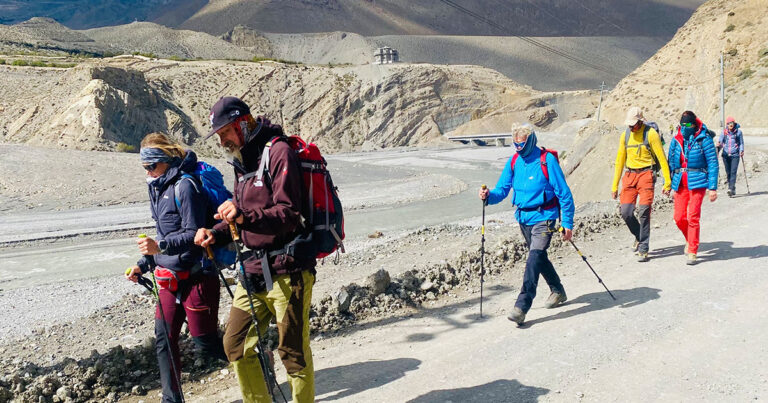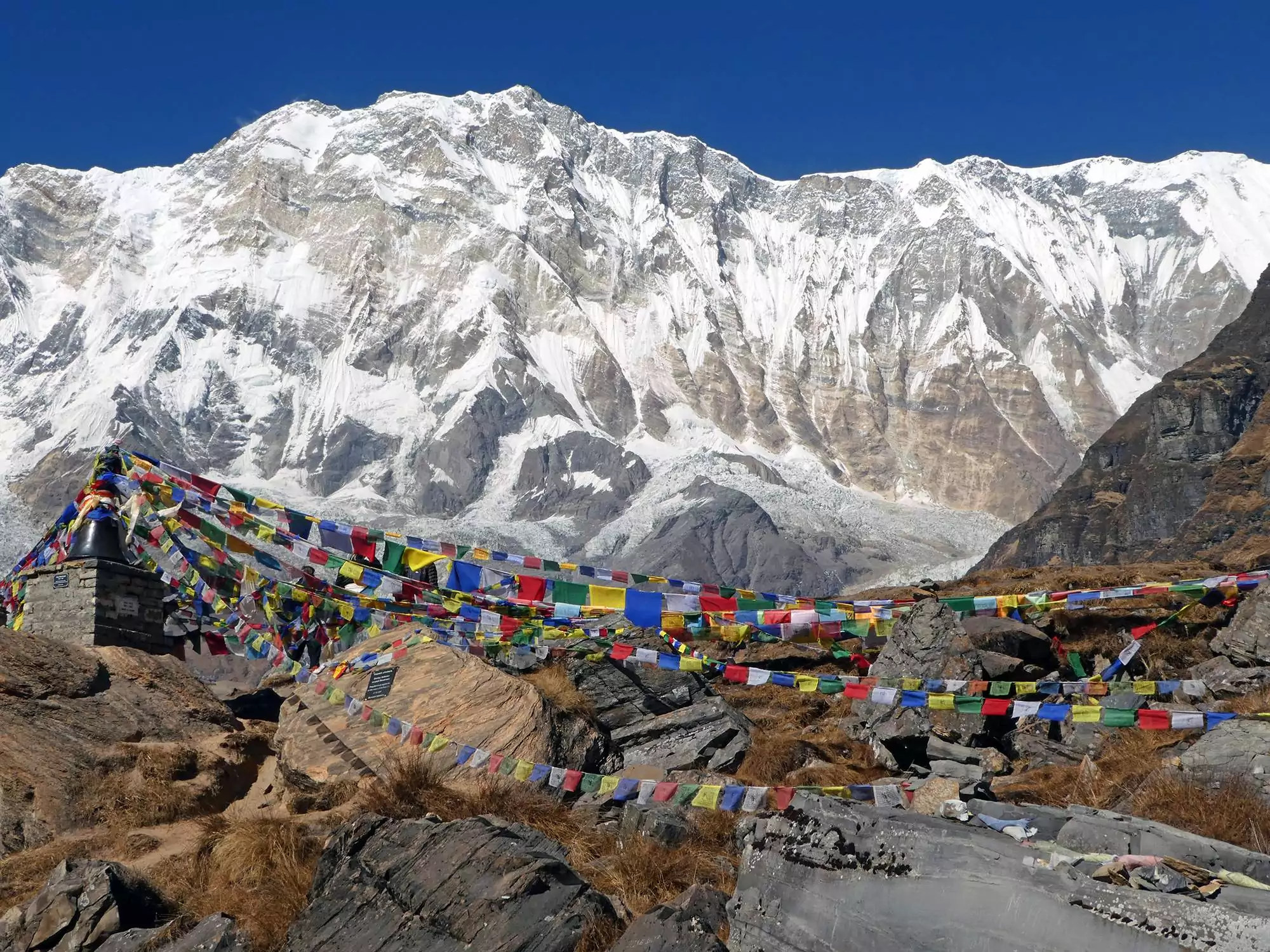
Tourist movement in the western districts of Myagdi and Mustang has come to a standstill after light rainfall followed by continuous snowfall blanketed the popular trekking routes and high-altitude settlements. Since last night, several parts of both districts have experienced intermittent rain and snow, affecting transportation and outdoor movement.
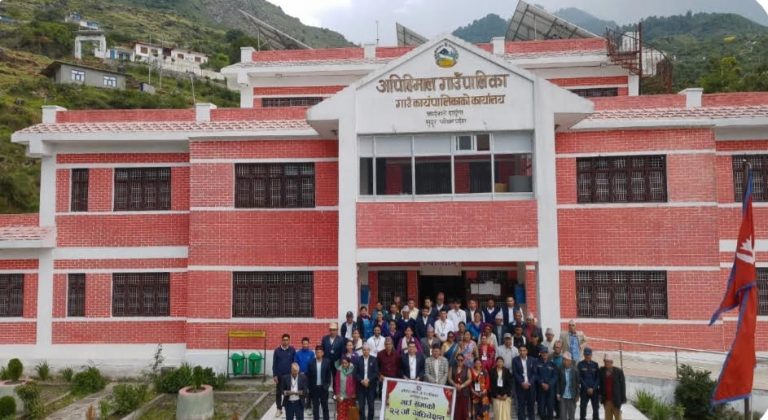
According to Pramesh Gurung, Ward Chairperson of Varagung Muktichhetra Rural Municipality–1, Mustang, tourists visiting the region have been compelled to remain indoors due to worsening conditions.
“The roads and trekking trails are completely covered with snow, making both vehicle movement and walking extremely difficult,” Gurung said. “We have advised tourists not to venture out as the situation remains risky.”
The snow-covered trails have disrupted not only vehicular travel but also access to key mountain lodges and villages frequented by trekkers along the Annapurna Circuit and Upper Mustang regions.

Authorities Issue Travel Advisory
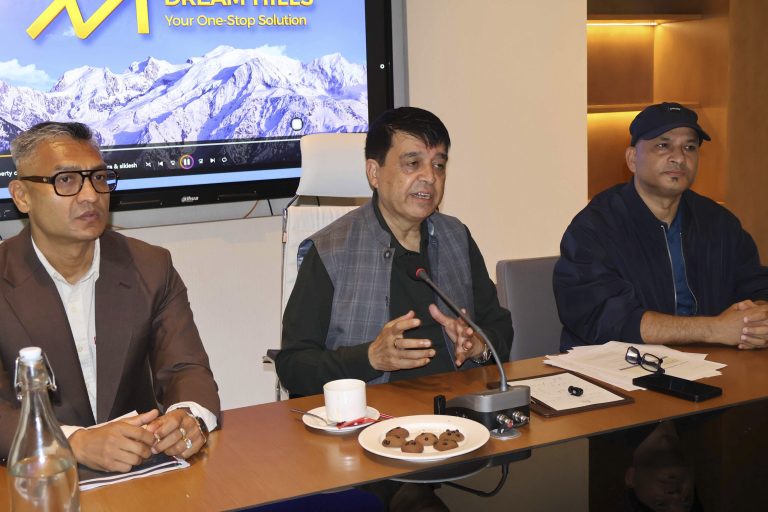
With forecasts of continued rain and snowfall, the Department of Hydrology and Meteorology, the National Disaster Risk Reduction and Management Authority, and the District Administration Offices of Myagdi and Mustang jointly issued public notices urging both domestic and foreign travelers to postpone trekking plans starting Monday.
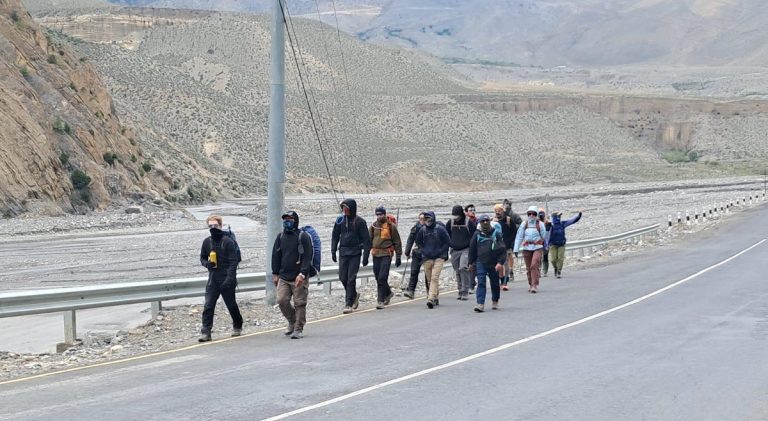
Officials said the warning has reduced the overall tourist flow to the highlands, though several groups who had already begun their journeys are now stranded in higher regions. “Given the risk of snow accumulation, slippery trails, and possible avalanches, we strongly advise tourists not to continue trekking until conditions improve,” one local administration official said.
Tourist Hotspots Affected
The snowfall has impacted several popular destinations including Muktinath, Lo Manthang, and Charang in Upper Mustang. Similarly, in Myagdi, major trekking spots such as Annapurna Base Camp, Panchakunda Lake, Ghorepani, Khopra Lake, Mohare Danda, and Kokhe Danda have been severely affected by the weather conditions. Trekkers in these areas have reported reduced visibility, icy footpaths, and increasing difficulty in maintaining warmth as temperatures continue to drop sharply.
At Humkhola, the entry point to the Maurice Herzog Trail leading to Annapurna Base Camp, hotelier Tej Gurung said that movement along the route had completely stopped since early morning. “Normally, around 500 tourists pass through here daily, but only about 200 arrived on Monday,” Gurung said. “Those who had already set out have postponed their treks and are staying in lodges.”
Rescue and Safety Coordination
In Annapurna Rural Municipality–4, Ward Chairperson Lok Bahadur Pun reported that local authorities and guides managed to safely escort trekkers from Annapurna Base Camp to Narchyang and Bhurung Tatopani on Sunday night after conditions worsened.
“Snowfall began around midnight and intensified quickly. We arranged transportation and guided trekkers to lower altitudes for safety,” Pun stated. Similarly, Dambar Bahadur Pun, a hotel operator in Ghorepani, confirmed that tourists have suspended their trekking schedules due to the bad weather. “Many had planned to hike to Poon Hill for sunrise views, but they have stayed inside after breakfast,” he said. “We have advised everyone to remain indoors to avoid risks such as cold-related illness, slipping on ice, or losing direction on snow-covered trails.”
Tourism Temporarily Stalled
Local tourism entrepreneurs said the snowfall, while posing immediate challenges, may later enhance the scenic appeal of the region once the weather clears. However, for now, the focus remains on ensuring tourist safety.
Mustang and Myagdi, both integral to Nepal’s trekking circuit, attract thousands of tourists each autumn season. The Annapurna and Dhaulagiri ranges, visible from these regions, are major draws for trekkers seeking panoramic Himalayan views.
Despite this, the sudden shift in weather has left lodges and teahouses operating at partial capacity. Many travelers have extended their stays while waiting for improved weather forecasts and safer trail conditions.

Cold Wave and Visibility Challenges
With continuous snowfall, villages above 3,000 meters are now blanketed in snow. Locals have reported freezing temperatures, poor visibility, and livestock losses due to the harsh weather. The Larke Pass and Thorong La, both key high-altitude routes, are reportedly closed due to heavy snow accumulation.
Local authorities are coordinating with trekking agencies to monitor stranded groups and maintain communication through guides and local checkpoints. “Our priority is to ensure that all trekkers remain safe and accounted for until the weather clears,” officials said. The Meteorological Department forecasts that the snowfall may continue for another two days before gradually subsiding.
Economic Impact and Seasonal Outlook
The snowstorm has temporarily disrupted a peak period for trekking and mountain tourism, which provides vital income for locals in these Himalayan districts. Tea houses, transport providers, and guides have all reported cancellations and delays.
Nevertheless, tourism entrepreneurs remain optimistic that clear skies and snow-covered landscapes will soon attract even more visitors once travel resumes. “This is the time of year when tourists enjoy the clearest mountain views,” said hotel owner Tej Gurung. “Once the snow settles, the mountains will look even more magnificent.” As temperatures continue to fall and winter sets in, authorities have urged travelers to check weather updates, follow safety advisories, and carry proper gear for cold conditions when visiting high-altitude destinations.