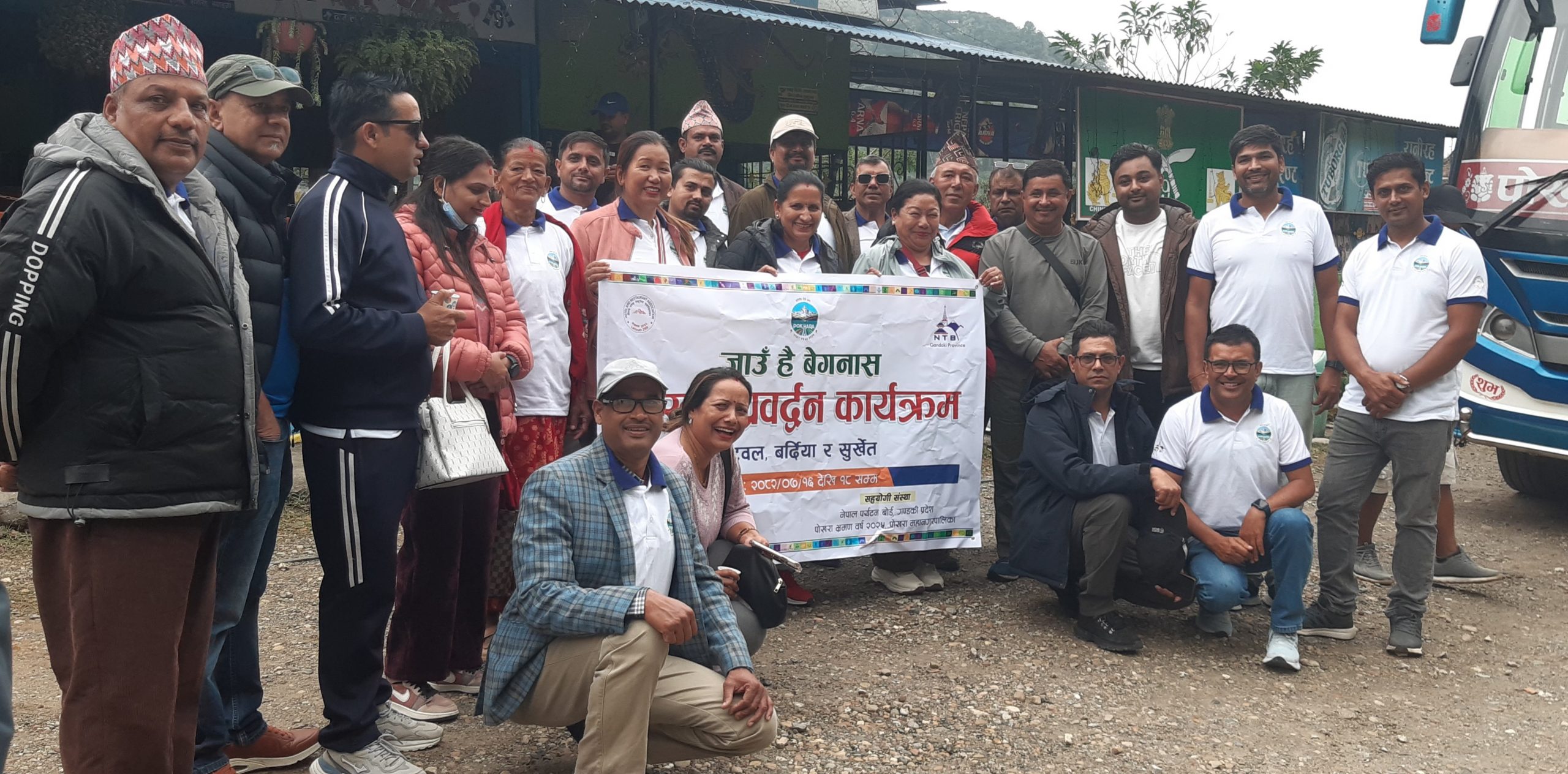
The Hotel and Restaurant Association, Lekhnath has launched a promotional campaign titled “Pashchim Nepalma Jaun Hai Begnas Pokhara” (Let’s Go to Western Nepal – Begnas Pokhara) from Sunday, with the joint support of the Nepal Tourism Board and Visit Pokhara Year 2025. The initiative aims to strengthen domestic tourism and build collaborative partnerships among western tourism destinations.
According to Bir Bhadra Kandel, President of the association, a 37-member delegation comprising tourism entrepreneurs and stakeholders from the Lekhnath region has embarked on the promotional journey targeting Butwal, Bardiya, Surkhet, and other key areas of western Nepal. “Our goal is to promote internal tourism while developing long-term tourism partnerships between Pokhara and other western destinations,” he stated.

Interaction with Tourism Entrepreneurs in Butwal
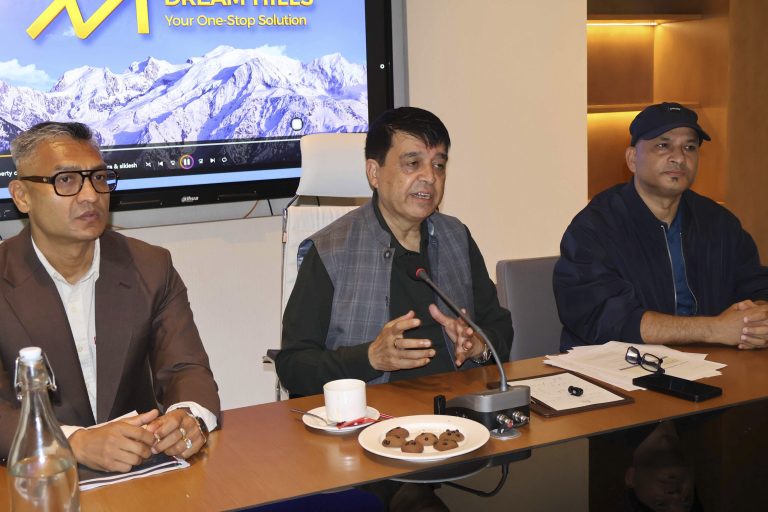
As part of the campaign, the team held an interaction session in Butwal, the major city of Lumbini Province, with local tourism entrepreneurs. The session focused on fostering mutual cooperation to enhance travel flow between western cities.
During the event, Damodar Bhakta Thapa, Advisor of the association and Co-Coordinator of Visit Pokhara Year 2025, highlighted the unique tourism potential of the Lekhnath region, which includes several Ramsar-listed lakes such as Begnas Lake and Rupa Lake, among the seven prominent lakes in the area. He emphasized that these natural assets, along with it’s scenic charm, position the region as one of Nepal’s most promising tourist destinations.
Thapa also invited tourism entrepreneurs from Butwal to encourage their visitors to include Pokhara and Lekhnath in their travel itineraries, underscoring that such partnerships could benefit both destinations economically.
Strengthening Regional Tourism Collaboration
President Bir Bhadra Kandel stressed the importance of reciprocal tourism promotion, proposing a model where tourists visiting Pokhara are encouraged to explore Butwal and vice versa. “If we can exchange visitors between these destinations, both regions will prosper through shared opportunities,” he remarked.
Similarly, Madhav Kumar Khanal, President of the Hotel and Restaurant Association Rupandehi, expressed readiness to collaborate with it’s tourism sector. He mentioned that Rupandehi’s tourism offerings, anchored by Lumbini, the birthplace of Gautam Buddha, and several other historical and cultural landmarks, complement it’s natural and adventure attractions perfectly. Khanal noted, “We have been sending tourists visiting Butwal to Pokhara, and we are committed to strengthening this partnership further.”
Mutual Benefits Through Tourism Partnership
Chhabi Lal Sharma, Accounts Officer of Pokhara Metropolitan City, stated that cooperation and brotherhood between cities like Pokhara and Butwal would bring mutual prosperity. He emphasized that tourism collaboration not only promotes regional destinations but also strengthens Nepal’s overall image as a diverse travel hub.
The tourism representatives discussed joint promotional activities, exchange programs, and the creation of combined travel packages connecting Lumbini–Butwal–Pokhara–Begnas routes to encourage longer tourist stays and greater local spending.

Three-Day Promotional Tour Across Western Nepal
According to Suresh Lamichhane, General Secretary of the Hotel and Restaurant Association, Lekhnath, the three-day promotional campaign will continue through Bardiya and Surkhet, where the team will engage with local tourism entrepreneurs, hoteliers, and media representatives. After completing these discussions, the delegation will return to Pokhara. The program aims to raise awareness of Pokhara–Lekhnath’s eco-tourism potential and enhance inter-provincial tourism cooperation.
The interaction program in Butwal saw active participation from local tourism entrepreneurs, hotel operators, and media representatives, all expressing commitment to work together in promoting western Nepal as a cohesive travel circuit.
A Step Toward Strengthening Domestic Tourism
The “Pashchim Nepalma Jaun Hai Begnas Pokhara” campaign is seen as a vital effort to revive domestic tourism following years of slowdown and to distribute tourism benefits more evenly across Nepal’s regions. By linking natural attractions, cultural sites, and business networks between Pokhara and western cities, the initiative hopes to set a model for regional tourism integration. With strong backing from the Nepal Tourism Board and the Visit Pokhara Year 2025 campaign, the effort highlights how collaborative promotion, shared destinations, and local participation can drive sustainable tourism growth in Nepal.