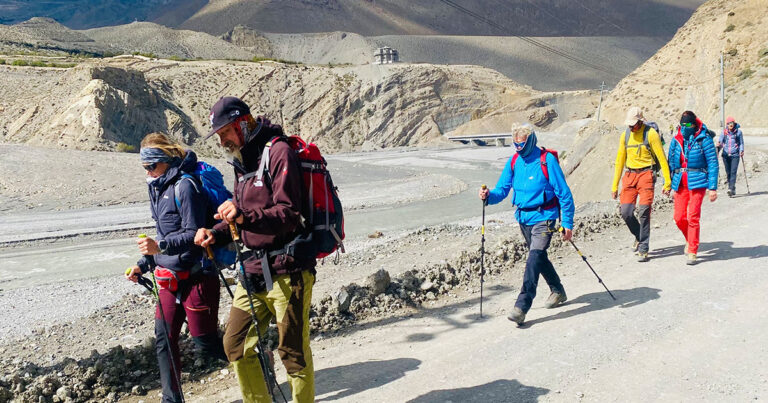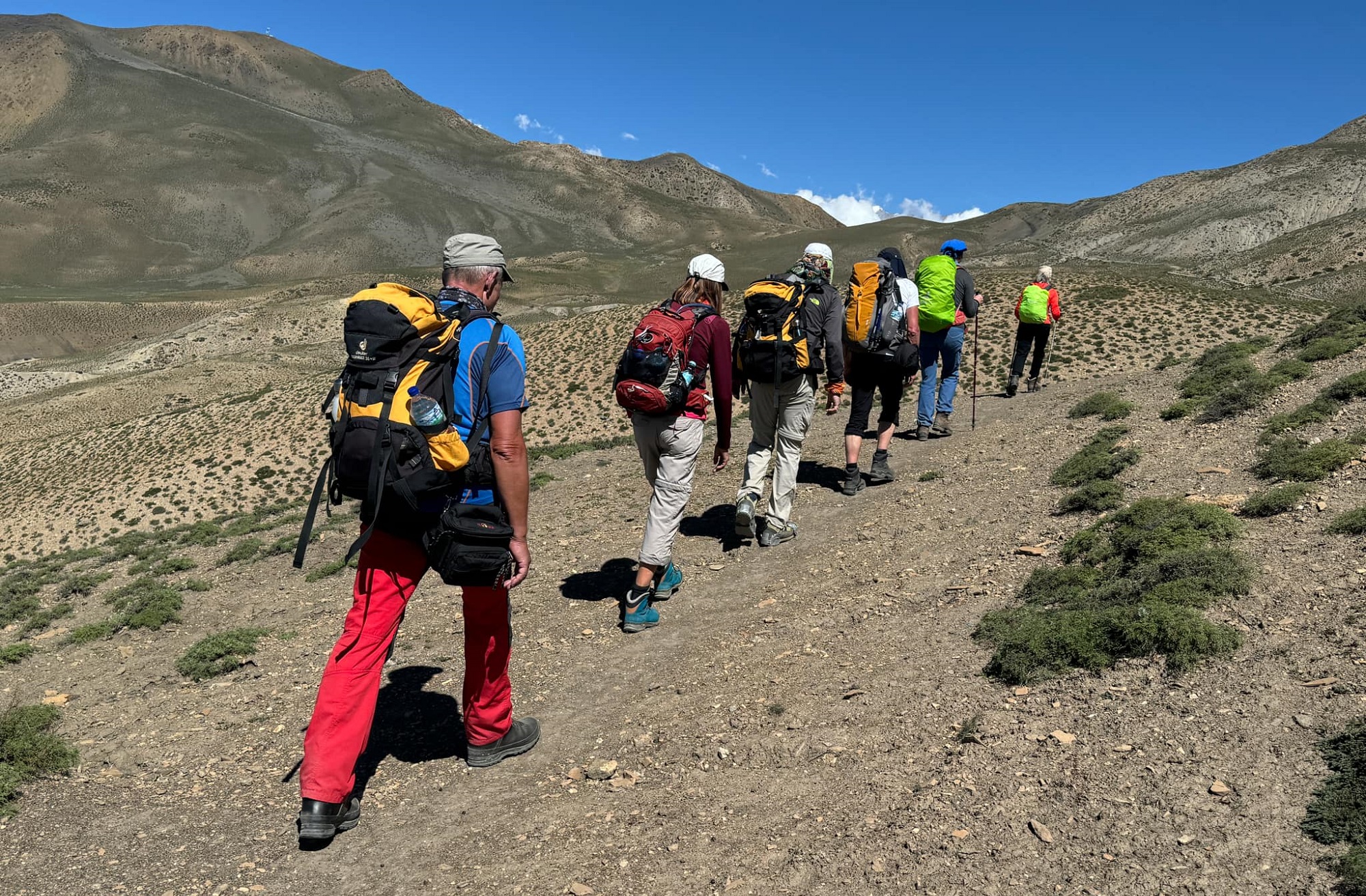
The Government of Nepal has revised the trekking fee structure for foreign tourists visiting Upper Mustang, a restricted region bordering the northern Korala Pass near China. As per the new decision, foreign nationals will now be required to pay USD 50 per day instead of the previous mandatory lump-sum fee.
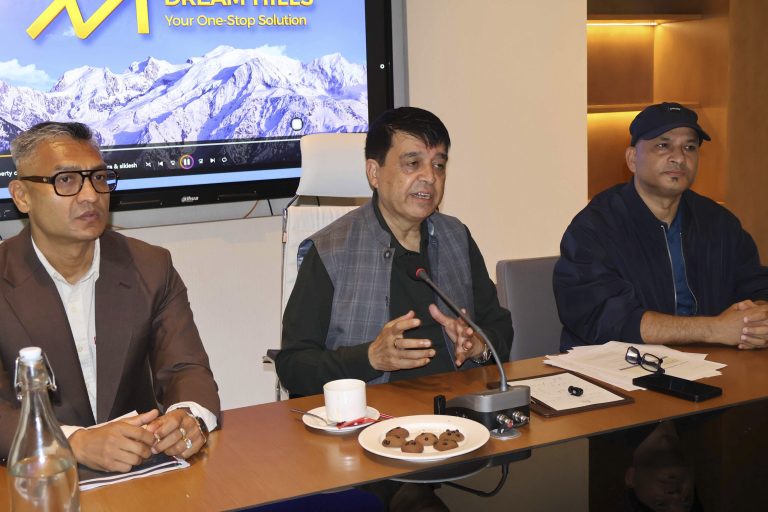
The announcement was made by Government Spokesperson and Minister for Communication and Information Technology, Jagdish Kharel, while briefing the media on recent Cabinet decisions. The change has been implemented by amending Schedule 12 of the Immigration Regulation, 2051.
Mandatory USD 500 Lump-Sum Fee Removed
Under the earlier rule, all the foreign trekkers visiting the Upper Mustang were obliged to pay a flat USD 500 fee for a minimum of 10 days, regardless of their actual stay. After completing the first 10 days, tourists had to pay an additional USD 50 per person per day to extend their stay.

With the government’s new decision, the compulsory 10-day lump-sum fee has now been officially removed. Visitors will instead pay only for the number of days they spend in Upper Mustang, making the region more accessible and cost-effective for the trekkers. The local authorities and tourism stakeholders believe this revised fee system will encourage more tourists to travel beyond Kagbeni and Muktinath, areas where most of the foreign visitors previously ended their journeys due to expensive permit costs.
Local Governments Welcome the Decision
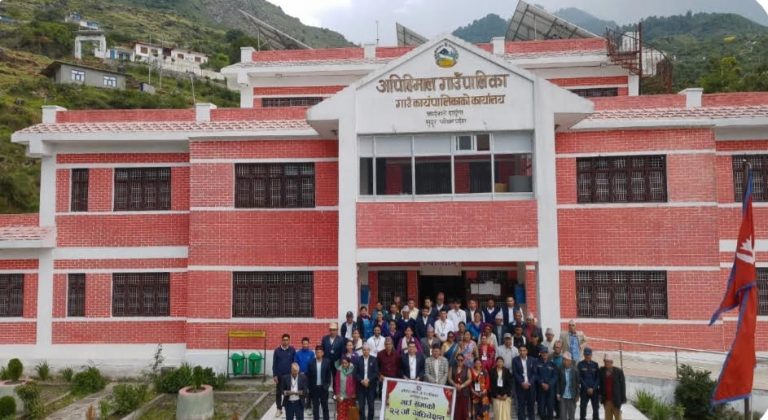
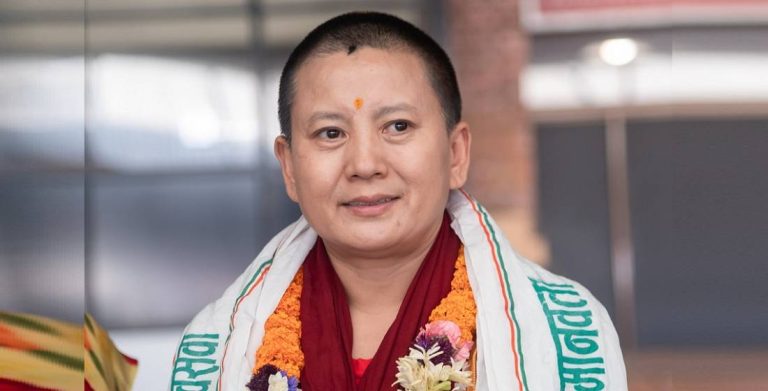
Local leaders from Upper Mustang have welcomed the policy change. Lho-Ghekar Damodarkunda Rural Municipality Chairperson Lopsang Chomphel Bista stated that their long-standing demand was to completely remove Upper Mustang from the restricted area list. However, he acknowledged that the new decision partly addresses their concerns and will likely boost tourism in the region. Similarly, Tshering Nerbu Gurung, Chairperson of Lo-Manthang Rural Municipality, described the decision as positive and beneficial for local tourism-driven economies.
Upper Mustang: A Restricted Region with High Permit Costs
Upper Mustang, located within the Annapurna Conservation Area Project (ACAP), has long been designated as a restricted and controlled zone due to its proximity to the Nepal–China border and its sensitive cultural and geopolitical importance.
The high trekking permit cost has been one of the main reasons limiting tourism in the region. Although Mustang receives nearly 150,000 foreign tourists annually, only 3–4% of them make it to Upper Mustang due to expensive entry fees. Tourism operators and local communities believe the new pay-per-day system could significantly increase footfall in remote areas like Lo-Manthang, Chhoser, Dhakmar, and Tsarang, villages rich in Tibetan-influenced culture, ancient monasteries, cave settlements, and historical heritage.

Expected Boost to Tourism and Local Economy
The revision aligns with broader government efforts to promote tourism recovery and support remote Himalayan communities reliant on tourism income. Local stakeholders hope that a more affordable permit structure will:
- Increase the number of trekkers entering Upper Mustang
- Encourage longer stays, benefiting hotels, homestays, mule services, and guides
- Promote cultural and adventure tourism in the trans-Himalayan region
- Reduce the concentration of tourists in lower Mustang areas
- Strengthen overall tourism value across Mustang district
Entrepreneurs and guide associations believe this reform could help Upper Mustang regain momentum after years of slowed tourism caused by the pandemic, geopolitical restrictions, and escalating travel costs.
With the removal of the hefty fixed fee and the introduction of a more flexible USD 50 daily charge, the Government of Nepal aims to make Upper Mustang more accessible while maintaining necessary regulations in this sensitive border zone. Local leaders and tourism stakeholders have welcomed the decision, expressing confidence that the revised structure will help revive and diversify tourism in one of Nepal’s most culturally unique and geographically significant destinations.