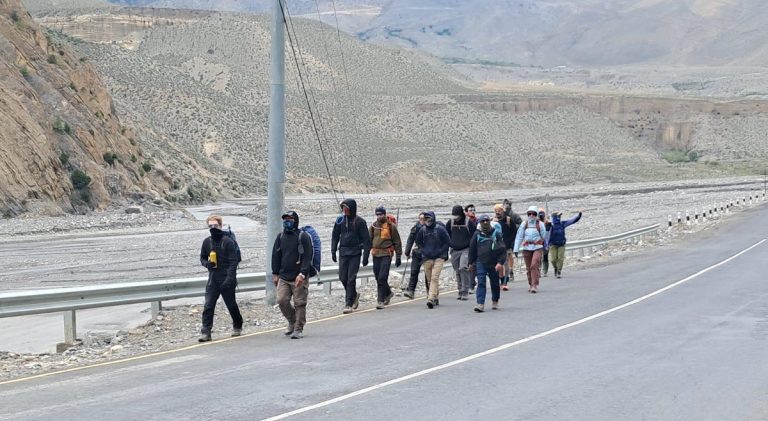
The Manaslu region of Gorkha district has witnessed a strong surge in tourist arrivals in the first four months of the current fiscal year, with 8,544 visitors recorded between Shrawan and Kartik. According to the Manaslu Conservation Area Project (MCAP), Kartik alone brought in 4,247 tourists, making it the busiest month of the season so far.
Steady Rise in Tourist Numbers Since Shrawan
MCAP Chief Santosh Sherchan reported that Ashwin saw 3,442 visitors, followed by 779 in Bhadra and 76 in Shrawan. Of the total arrivals since the beginning of the fiscal year, 142 were Nepali tourists, while the remaining were foreign nationals. This year, MCAP has begun tracking domestic tourist numbers in addition to international visitors, a practice not followed in previous years.
Sherchan said the rising influx of tourists reflects the region’s growing popularity among trekkers seeking remote trails, high-altitude landscapes, and unique cultural experiences. “With over 8,500 visitors already, we estimate that the total arrivals this fiscal year will exceed 15,000 tourists,” he noted. “If we manage our resources properly and enhance infrastructure, Manaslu has the potential to become one of Nepal’s most prominent trekking destinations.”

Year-to-Year Tourism Trend Shows Strong Recovery
According to MCAP statistics, visitor numbers have steadily increased after the pandemic years:
- FY 2081/82: 12,512 tourists
- FY 2080/81: 9,782 tourists
- FY 2079/80: 7,705 tourists
- FY 2078/79: 2,284 tourists
The steady upward trend indicates a robust recovery and a widening appeal of the Manaslu Circuit compared to other trekking routes in Nepal. Tour operators say travelers are increasingly choosing Manaslu for its less crowded trails, authentic Himalayan culture, and challenging trekking experience, making it a strong alternative to the Annapurna and Everest regions.
Fee Structure for Manaslu Conservation Area Entry
Tourists entering the Manaslu Conservation Area are required to pay entry fees as mandated by MCAP. The rates are as follows:
- SAARC nationals: NPR 1,000 per person
- Non-SAARC foreign nationals: NPR 3,000 per person
- Nepali nationals: NPR 100 per person
Visitors can pay these fees at the designated counters in Bhrikutimandap, Kathmandu, and Damside, Pokhara. Those who do not pay at these locations must pay double the fee at MCAP’s checkpoints in Jagat and Samagaun, as per the revised provision.
Additional Permits for Restricted Manaslu Region
Because several parts of the Manaslu region fall under Nepal’s restricted area category, trekkers must also acquire special entry permits from the Department of Immigration. The Manaslu restricted area covers seven wards of Chumnubri Rural Municipality, encompassing the former VDCs of Sirdibas, Loho, Prok, Bihi, Samagaun, Chumchet, and Chhaikampar.
Permit fees for restricted zones:
Chum and Nubri Valleys
- During peak season, the fee is USD 50 per person per week
- During off-season, the fee is USD 25 per person per week
Nubri Valley (Specific Sections)
- Peak season: USD 70 per person per week
- Off-season: USD 35 per person per week
Tourists staying beyond one week must pay an additional charge for extra days, as stipulated by immigration regulations.

Manaslu Circuit’s Growing Appeal
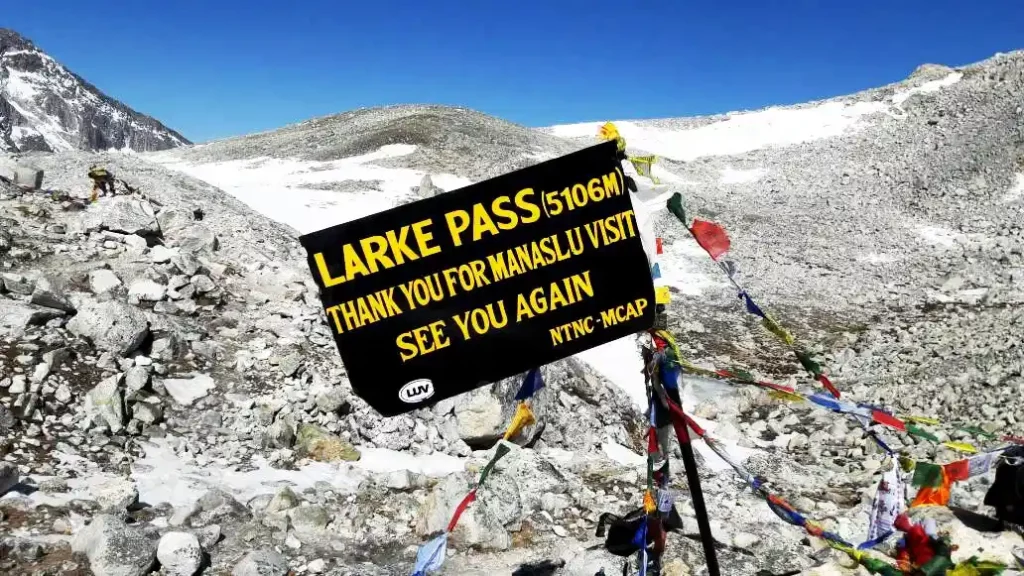
The Manaslu Circuit, often referred to as one of Nepal’s most pristine and culturally rich trekking routes, has been gaining global attention for its dramatic landscapes and traditional Tibetan-influenced villages. Trekkers pass through high-altitude valleys, ancient monasteries, and rugged terrains, eventually crossing the iconic Larke Pass at 5,160 meters.
Local tourism entrepreneurs believe that improved trail management, better promotion, and increased visibility on digital platforms have helped boost tourist arrivals. Sherchan added, “Each year, we are seeing a rise in the number of trekkers choosing Manaslu over more commercial trails. The region offers an untouched natural environment and unique cultural immersion, which is why its appeal continues to grow.”
With more than half of the tourist season still remaining, MCAP is optimistic about surpassing previous records. Efforts are underway to improve safety, strengthen conservation measures, and ensure a sustainable tourism model that benefits local communities. If current trends continue, Manaslu could soon establish itself as one of Nepal’s most important and sought-after trekking destinations, balancing natural beauty, cultural heritage, and adventure tourism in a single circuit.