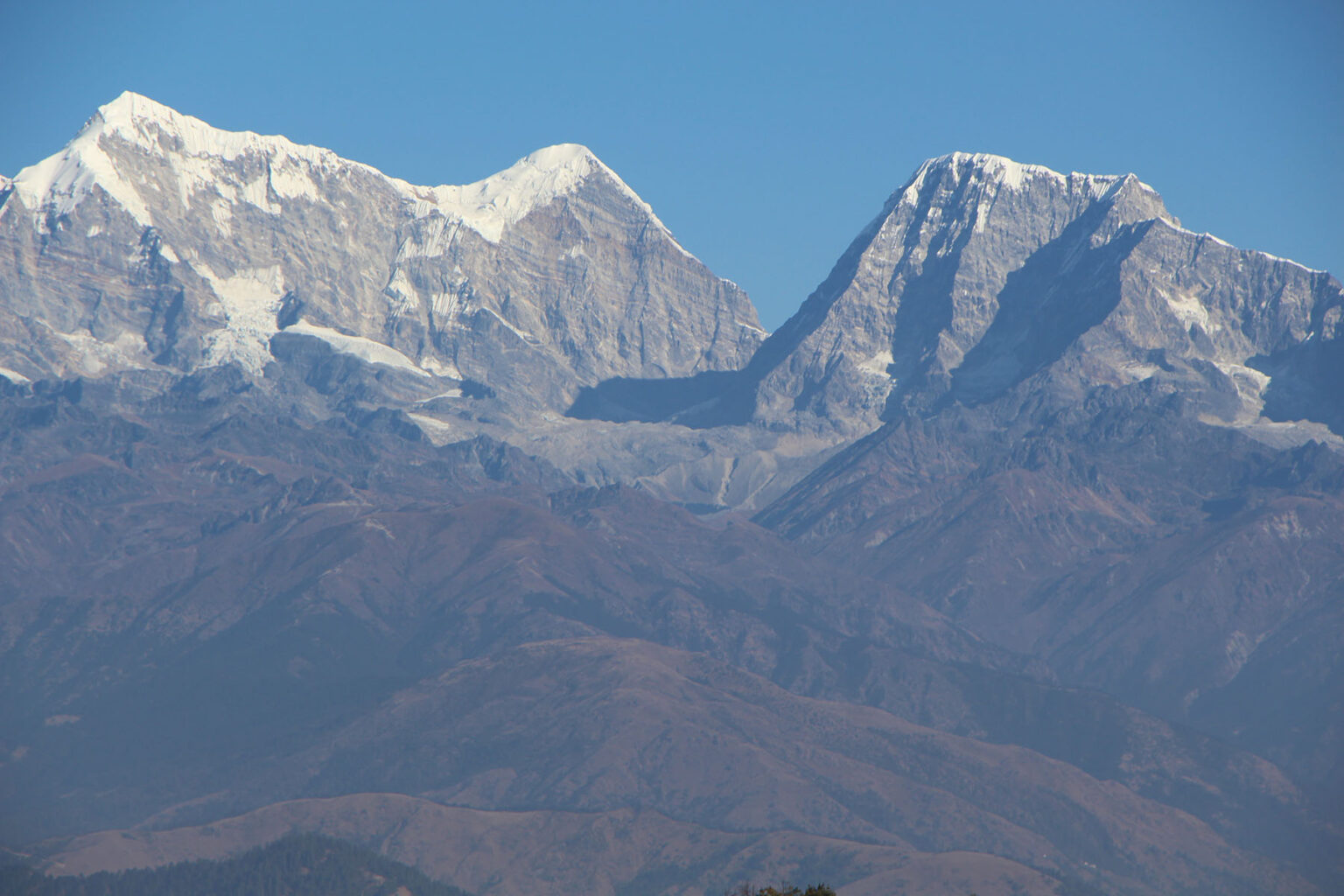
For decades, Khumbu’s identity (i.e. snow) has been tied to its towering mountains, cold winds, and glittering white peaks stretching across the horizon. These breathtaking snow-covered summits enchanted trekkers and mountaineers from around the world. But in recent years, the region has undergone a dramatic transformation, the snow that once blanketed the Himalayas throughout the year is disappearing at an alarming pace.
“It feels like a completely different era,” says elderly Khumbu resident Pasang Sherpa. “Since childhood, we saw nothing but white mountains. But now, half of the mountains look like bare black rocks. Look at them, do they still look like the Himalayas we grew up with? Everything has changed so much.”
Snowfall Declines and Glacial Surfaces Exposed
Two decades ago, upper Khumbu, stretching from Namche, Khumjung, Tengboche, and Lobuche to Gorakshep, remained snow-covered almost year-round. But locals now observe shorter snowfall periods and rapid melting of long-standing snow layers.

“Even the layers of snow attached to the mountain surfaces melt much faster these days,” says Lama Kaji Sherpa, describing how iconic peaks such as Everest, Lhotse, Nuptse, Ama Dablam, and Thamserku now increasingly expose their rocky surfaces. Visitors are stunned by this unusual sight, while locals say these bare mountain faces have become disturbingly normal.
A Climate Crisis Felt Daily
“When travelers question the changes, we too are forced to think about it, otherwise it has become normal for us because everything is changing so quickly,” says Fudoma Sherpa of Khumjung. “Whom do we ask for answers? How do we stop it? With no alternatives, we silently watch it happen.”
According to former conservation officer Bhumiraj Upadhyaya of Sagarmatha National Park, warming temperatures are the key driver. “As the Earth heats up, the snow cover becomes thinner every year. Snow-covered areas are shrinking continuously.”
Locals report that weather patterns have reversed entirely. “Earlier, the cold was intense but tolerable,” says Pema Sherpa of Jorsalle. “Now the cold is so sharp it makes the bones ache. And summers are so warm that you sweat even at the foot of the Himalayas.”
Scientific observations support local experiences: temperatures in high Himalayan regions have risen by about 1.5°C since the 1970s. Climate expert Rajan Thapa explains that exposed dark surfaces are caused not only by melting but also by rockfall zones, dry snow thinning, atmospheric black carbon, and increased human activities in the national park.
Flash Floods and Rising Hazards
The region has also faced severe climate-induced disasters. On July 32 (mid-August) last year, a devastating flash flood in Thame Khola destroyed over 20 homes and washed away schools, health posts, trekking trails, livestock shelters, agricultural land, and even hydropower structures. The flood also severely damaged the main trekking route from Phakding to Namche.
Khumbu, considered the backbone of Nepal’s tourism economy, is increasingly vulnerable. Glacial lakes in Pheriche, Imja, and Khumbu basins are expanding rapidly. Imja Lake alone has grown by 65 percent in just 20 years, signaling the scale of the crisis.
“We used to hear stories about glacial lake bursts,” says local resident Pashi Lama. “Now we live every day with that fear. As the lakes grow larger, our villages, trails, bridges, and homes are all at risk.”

Changing Way of Life in the Himalayas
Khumbu’s culture and daily life have always been shaped by the mountains, storing water from melted snow, grazing livestock in cold seasons, and farming according to predictable weather cycles. But with declining snowfall, rivers and streams have thinned. The Dudh Koshi and Imja rivers, once fed steadily by snowmelt, now surge only during monsoon and decline sharply in dry seasons.
According to local guide Bal Darnal, landslides, avalanches, and rockfalls are becoming more common along trekking routes. “We can’t plan treks the way we used to. Weather is unpredictable, and we must ensure much greater safety for tourists.”
Climber Speed Kaji Sherpa fears the region’s very identity is at risk. “Our entire culture, economy, and future depend on these mountains. If they continue to change like this, everything we know could be in danger.”
Source: RSS