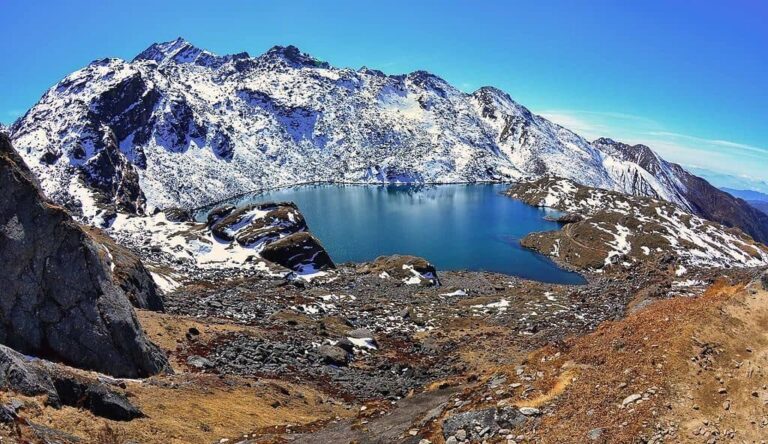
The revered Pathibhara area has witnessed its second snowfall of this winter, further intensifying the cold in the region. The latest snowfall occurred on Saturday evening, following the season’s first snowfall recorded on December 6. The fresh layer of snow has transformed the sacred landscape into a picturesque winter scene while also bringing a noticeable drop in temperature.

According to Rajendra Mahat, an employee of the Pathibhara Area Development Committee, the snowfall has significantly increased the cold, affecting both daily activities and pilgrimage movement in the area. Pathibhara, situated at an altitude of 3,794 meters above sea level, is one of Nepal’s most important religious destinations, drawing thousands of devotees each year.
Improved Facilities Ease Pilgrimage During Snowfall
To ensure uninterrupted access for pilgrims, a fiber roof has been installed along key sections of the trekking route leading to Pathibhara Dham. This protective covering has made the journey safer and more comfortable, allowing devotees to continue their pilgrimage even during rainfall and snowfall. The initiative has been widely appreciated by visitors, especially during the harsh winter months when weather conditions can change rapidly.
Local authorities say that the improved infrastructure has played a vital role in maintaining the flow of pilgrims despite challenging weather, reducing risks, and making the sacred journey more manageable.
Changing Snowfall Patterns Signal Climate Impact
Historically, Pathibhara used to receive regular snowfall starting from mid-November each year. However, in recent years, the timing and frequency of snowfall have shown noticeable changes. Experts and local officials attribute this shift to the growing impact of climate change, which has altered traditional weather patterns in the Himalayan region.

The delayed snowfall and irregular winter conditions are raising concerns about long-term environmental changes, which could affect both local livelihoods and tourism in the region. Despite the colder conditions, Pathibhara continues to attract devotees and visitors, reaffirming its significance as a spiritual and cultural landmark while also highlighting the urgent need for climate awareness and sustainable tourism practices in high-altitude destinations.