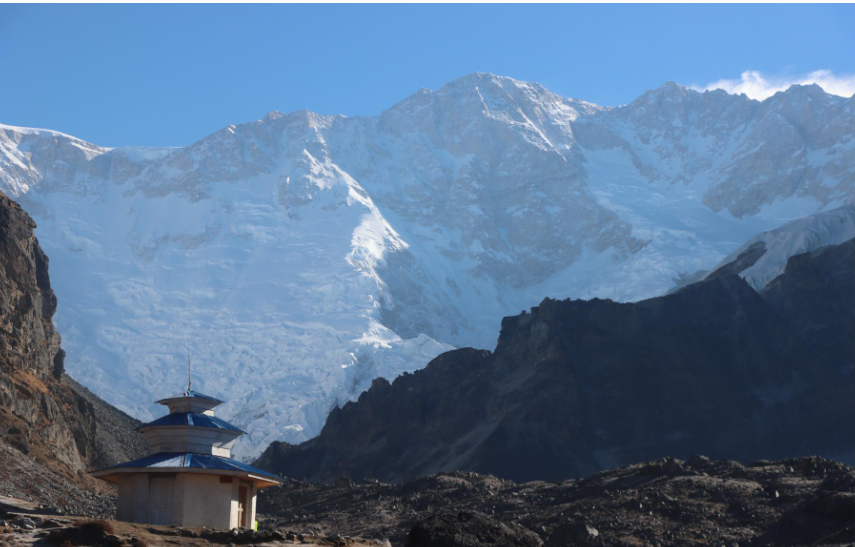
The Kanchenjunga Base Camp area in Taplejung, home to Nepal’s second-highest peak, has grown quiet following the end of the peak trekking season. Popular trekking spots such as Khambachen, Lhonak, and Pangpema are now noticeably deserted. Even the southern base camp areas of Chiramu and Ramjheral have seen a significant drop in visitor numbers.

Tourism operators attribute the decline to the conclusion of the tourist season. Tenzing Sherap Sherpa, a local tourism entrepreneur, explained that once the trekking season ends, tourist inflow slows down considerably, prompting many hoteliers and staff to return to lower settlements until the next season begins.
Rising Trend in International Tourism in Kanchenjunga
Despite the current lull, Kanchenjunga Conservation Area Office data indicates a gradual increase in foreign visitors over recent years. During the first trekking season this year, 950 international tourists visited the Kanchenjunga region, according to Tourism Assistant Tashi Tenzing Sherpa of the Conservation Area Management Council.
He added that even after the main trekking season concluded in Mangsir (November-December), a few scattered tourists continued to visit the area. The trend shows that not only international tourists but also domestic trekkers are gradually increasing in number.

In comparison, 877 foreign tourists had visited the Kanchenjunga region during the first season of the previous year, highlighting a steady rise in international trekking interest.
As the tourist season concludes, local businesses and tourism stakeholders are preparing for the off-season while noting the continued growth in visitor numbers over the past years. With increasing interest from both domestic and foreign travelers, the Kanchenjunga region remains a key destination for Nepal’s trekking and adventure tourism sector.