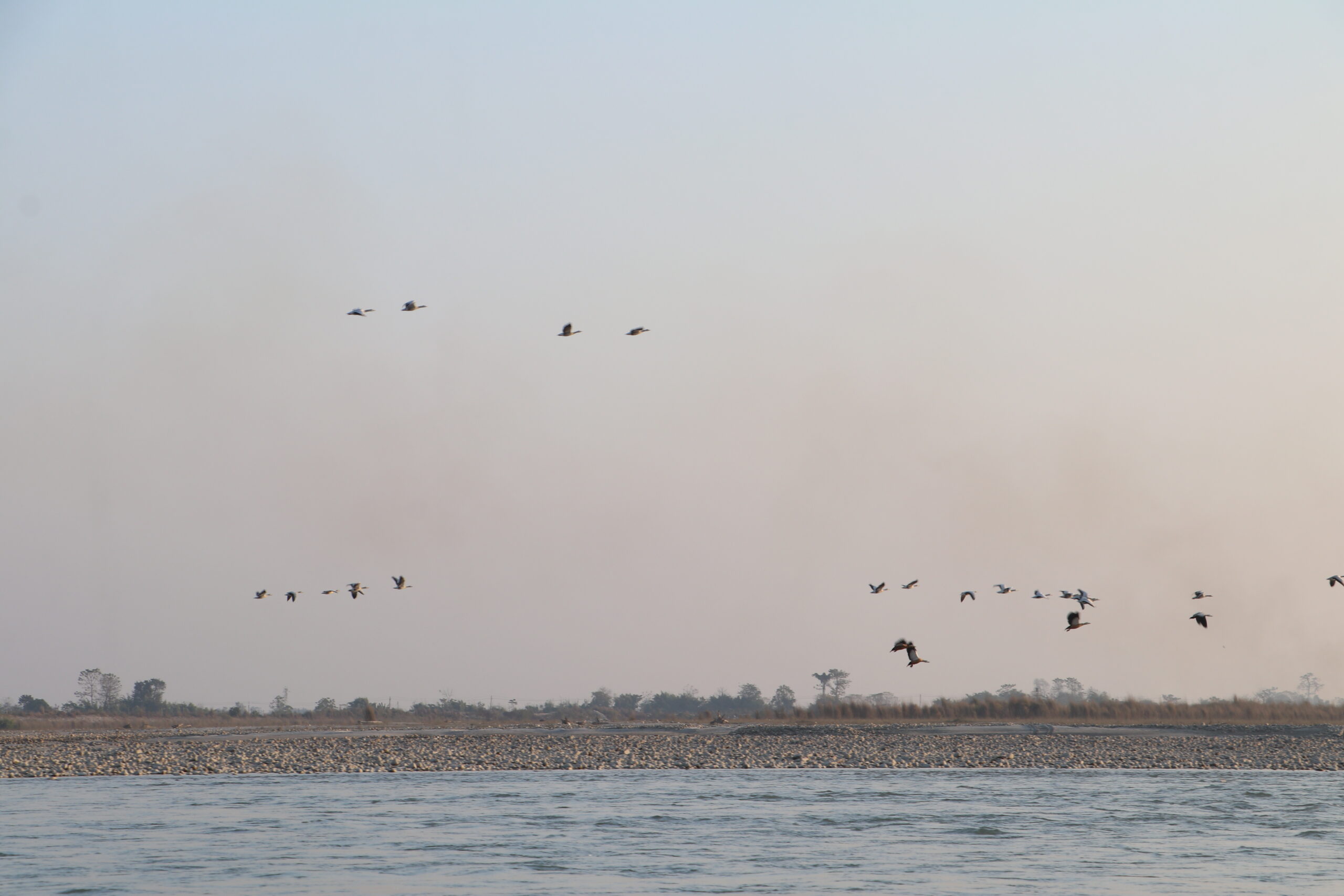
The annual waterbird census conducted this year in the Narayani River and its surrounding wetlands has revealed a positive trend in both bird diversity and population, highlighting the ecological significance of the western sector of Chitwan National Park. According to the census, a total of 42 species of waterbirds have been recorded in the Narayani River area this year, marking an increase compared to previous years.
Increase in Species and Population
DB Chaudhary, Bird Census Coordinator of Chitwan National Park West Sector, stated that the number of recorded waterbird species has risen by one compared to last year. In the previous census, 41 species were documented, whereas this year the count reached 42 species. Along with the increase in species, the overall population of birds has also grown significantly.

The integrated data compiled by a team of bird experts shows that 12,887 birds belonging to 42 species were counted in the Narayani River area this year. In comparison, 9,548 birds of 41 species were recorded in 2024, while 10,257 birds of the same number of species were counted in 2023. This steady rise in both species diversity and population reflects improved habitat conditions and the importance of wetland conservation in the region.
Significance of Narayani River Wetlands
The Narayani River and its adjoining wetlands serve as a crucial habitat for both resident and migratory waterbirds. Nepal is home to a rich avian diversity, with a total of 903 bird species recorded nationwide. Among them, 162 species are associated with aquatic habitats such as rivers, lakes, wetlands, and marshes. The Narayani River area alone supports a notable portion of these aquatic birds, underlining its role as one of the country’s key birding hotspots.
Experts believe that the availability of food, suitable nesting areas, and relatively undisturbed wetlands have contributed to the increased presence of birds in the region. The river’s diverse ecosystem, combined with conservation efforts within Chitwan National Park, has helped maintain favorable conditions for waterbirds.
Census Coverage and Methodology
The waterbird census was carried out systematically by dividing the study area into five sections. These included stretches from Sighrauli to Amaltari, Sighrauli to Pithauli, Pithauli to Amaltari, and from Amaltari to the Triveni Gandak Barrage. Teams of trained observers conducted synchronized counts to avoid duplication and ensure accuracy in data collection.
Coordinator Chaudhary shared that the preliminary analysis indicates an overall increase of 3,339 birds compared to last year. Such a rise is considered significant and suggests that the Narayani River continues to provide a safe and supportive environment for waterbirds despite various environmental challenges.
Migratory Birds from Northern Regions
A large proportion of the birds recorded during the census are migratory species that travel long distances to reach Nepal. According to Chaudhary, many of these migratory birds arrive from Siberia and other parts of the northern hemisphere to escape harsh winter conditions. The Narayani River’s wetlands offer them a suitable wintering ground with abundant food and shelter.
The seasonal arrival of these migratory birds not only enriches local biodiversity but also provides opportunities for research, conservation awareness, and eco-tourism. Birdwatchers and nature enthusiasts are increasingly drawn to the area, especially during the winter months when migratory species are most visible.

Conservation Implications
The encouraging census results underscore the need for continued conservation efforts in the Narayani River basin. Experts stress that protecting wetlands from pollution, uncontrolled development, and human disturbance is essential to sustain this positive trend. Regular monitoring through annual censuses plays a vital role in understanding population changes and guiding conservation policies.
With rising bird numbers and species diversity, the Narayani River area stands as a strong example of how protected areas and informed management can contribute to biodiversity conservation. The latest census findings offer hope that, with sustained efforts, Nepal’s wetlands will continue to support rich and diverse birdlife for years to come.