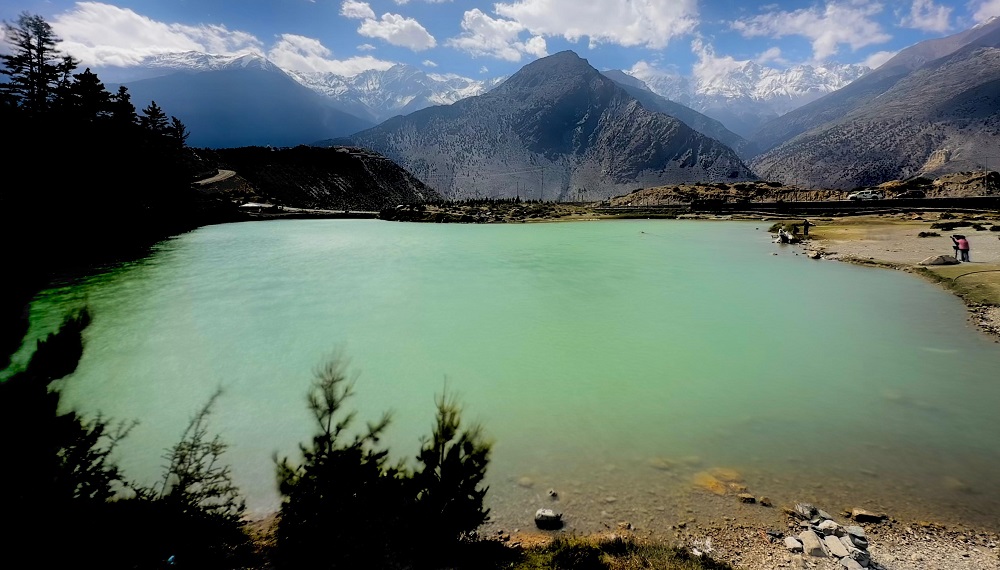
Dhumba Lake, a sacred emerald-green lake in Nepal’s Mustang district near Jomsom, is renowned for its breathtaking beauty and crystal-clear waters. Holding deep spiritual significance for both Buddhists and Hindus, the lake attracts travelers seeking peace, reflection, and a connection with nature. Its unique heart-shaped form, surrounded by majestic Himalayan peaks, offers stunning views and a tranquil environment perfect for photography and exploration. Easily accessible by road or trekking routes from Jomsom, Dhumba Lake also provides visitors the chance to discover nearby gompas and experience the region’s rich cultural heritage.
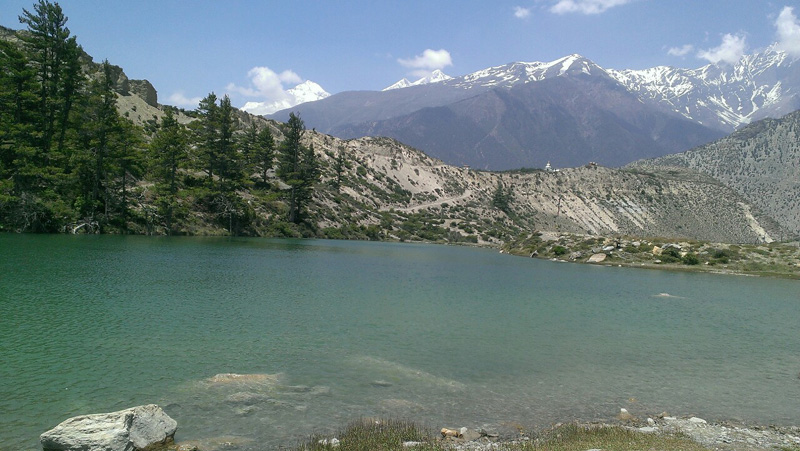
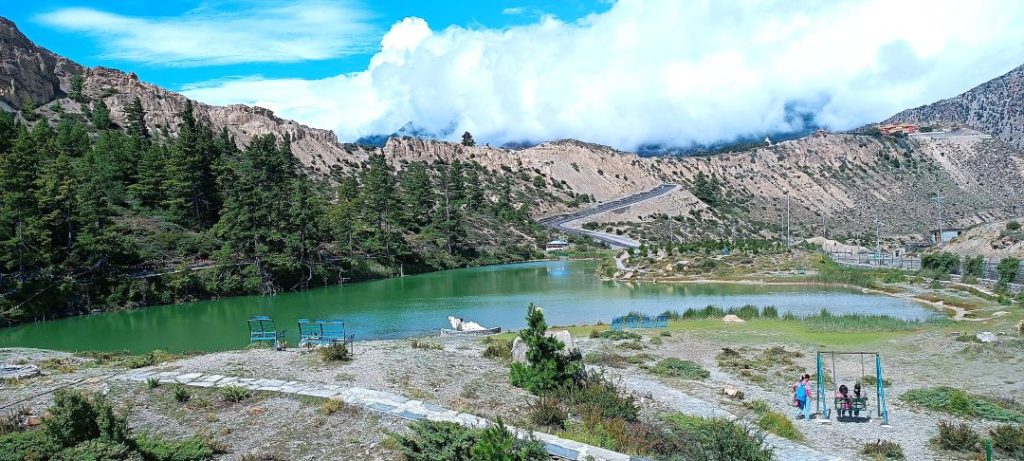
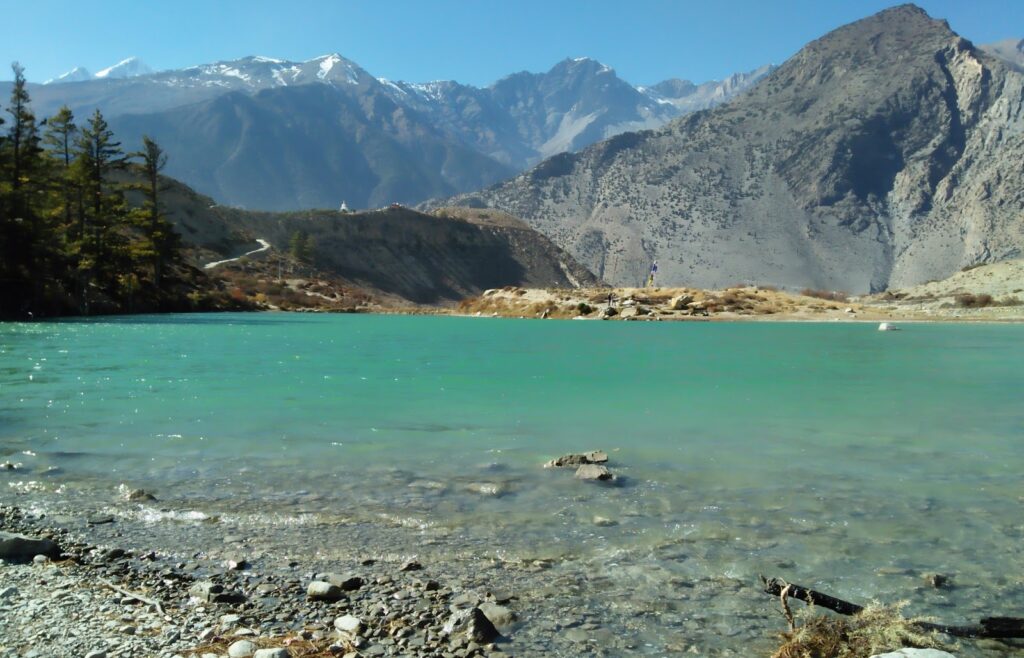
Nestled at an altitude of 2,830 meters above sea level, Dhumba Lake (also known as Dhumba Taal) in Gharpajhong-5, Samle, Mustang, has rapidly emerged as a serene haven for travelers seeking tranquility, spirituality, and natural beauty. Cradled at the foot of the majestic Nilgiri Himal, the lake offers a stunning blend of pristine waters, lush forests, and panoramic views of the Himalayan peaks, making it a must-visit destination for both domestic and international tourists.
Accessibility and Rising Popularity
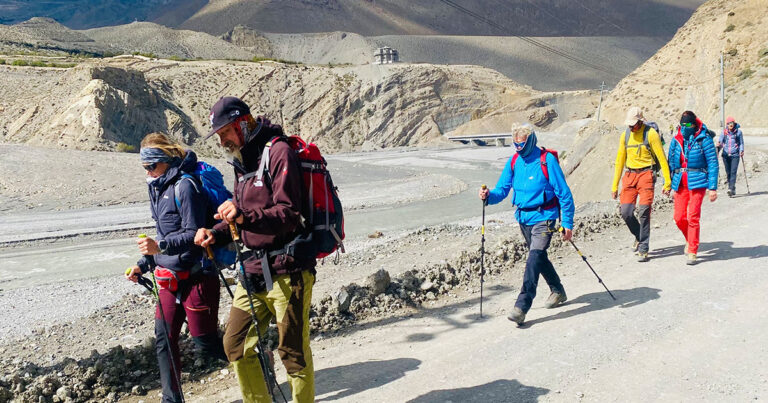
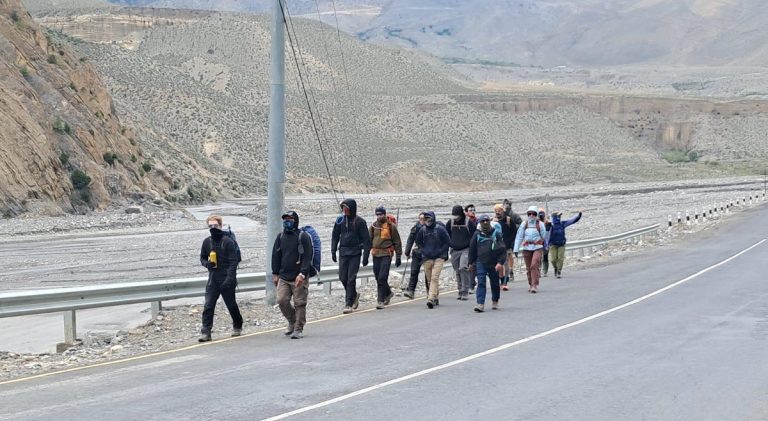
Recent infrastructure developments have played a crucial role in boosting Dhumba Lake’s popularity. A new road connecting the lake to the Jomsom-Korala National Highway, just three kilometers away, has made travel significantly easier. Tourists heading toward Muktinath or returning from the Upper Mustang region often stop here to enjoy the scenic vistas and fresh mountain air.
Natural Beauty and Scenic Charm
Dhumba Lake, stretching across 130 meters, is sometimes called “Pan Butte Taal” due to its heart-like shape visible from higher ground. The emerald-blue waters, formed by glacial melt from the Nilgiri Himal, are surrounded by forested slopes and terraced farmland. The lake offers breathtaking views of the Nilgiri and Dhaulagiri peaks, as well as nearby ridgelines.
The surrounding villages, Jomsom, Marpha, Syang, Thini, and Samle, and the Kaligandaki Corridor add cultural richness to the landscape. Visitors can also explore terraced apple orchards and traditional farmlands, creating a harmonious blend of nature and human habitation. Soni Awaal, a tourist from Kathmandu, remarked, “Unlike the noisy lakes in the valleys, Dhumba Lake offers a peaceful escape. The serene surroundings make you feel like you’ve entered another world.”
Spiritual Significance
Beyond its natural charm, Dhumba Lake holds deep spiritual importance. The Kuchup Terenga Monastery, situated nearby, is tied to the local Buddhist heritage. Legend has it that Lama Urgen Palsang from Thini village traveled to Tibet for Buddhist studies. Upon completing his training, his guru entrusted him with five sacred jewels of Guru Padmasambhava (Guru Rinpoche), instructing him to enshrine them at a location meeting specific spiritual and geographical criteria. Dhumba Lake fulfilled all conditions, giving rise to the monastery and its spiritual legacy.
The monastery follows the Nyingma tradition, one of the oldest branches of Tibetan Buddhism. During annual religious ceremonies, water from Dhumba Lake is used for sacred rituals, highlighting the lake’s dual ecological and spiritual significance.
Conservation and Community Efforts
Dhumba Lake and the monastery are managed by the Kuchup Terenga Management Committee under the Annapurna Conservation Area Project (ACAP). Local conservation teams from Jomsom, Thini, and Samle actively work to maintain the lake’s ecological balance. Traditional practices include releasing fish fry into the lake during ceremonies honoring Guru Padmasambhava, while fishing is strictly prohibited. Rare aquatic birds and endangered waterfowl also find sanctuary along the lake’s banks.
Recent development initiatives have improved visitor safety and comfort. New stairways with railings, resting pavilions, hot room facilities, and informative signage enrich the tourist experience while preserving the lake’s natural and cultural integrity.
Dhumba Lake: The Future of Eco-Cultural Tourism
As Dhumba Lake continues to gain recognition, it is poised to become one of Nepal’s premier eco-cultural tourism destinations, offering a harmonious blend of breathtaking natural beauty, rich cultural heritage, and spiritual depth. Its emerald waters, set against the dramatic backdrop of Nilgiri and Dhaulagiri, along with the historic Kuchup Terenga Monastery and local legends, create an experience that is both peaceful and enriching.
With sustainable management, community involvement, and improvements in accessibility, infrastructure, and conservation, Dhumba Lake provides travelers a rare opportunity to immerse themselves in Nepal’s pristine Himalayan landscapes while honoring spiritual traditions and ecological stewardship, making it a destination that can enchant generations of visitors.