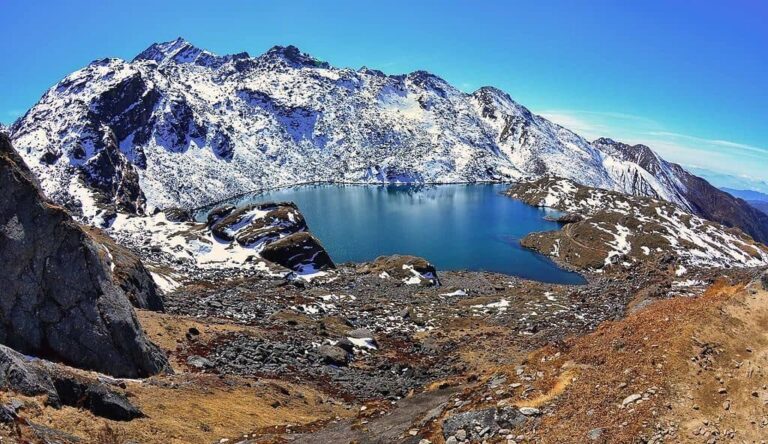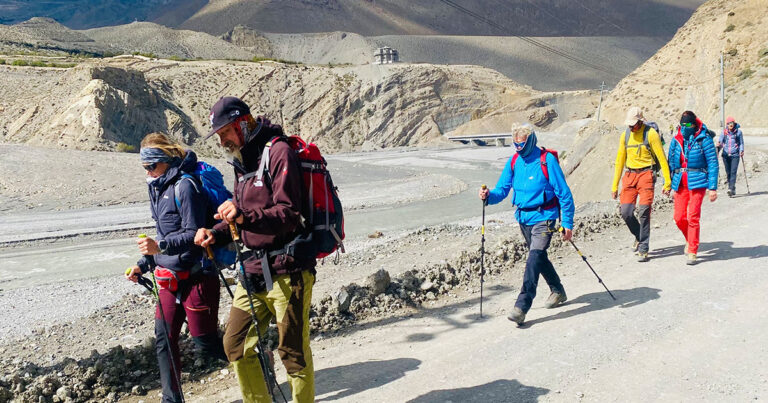
A new trekking route connecting Dhowa to the iconic Dhaulagiri Icefall has officially entered the construction phase, marking a significant step toward promoting tourism and improving local accessibility in Myagdi.
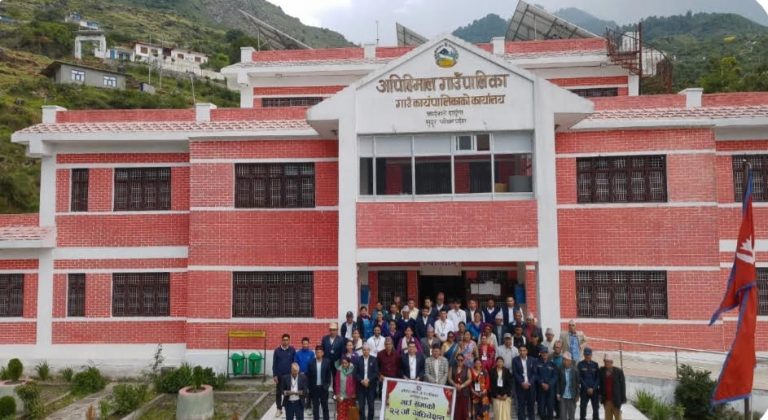
The project is being implemented by Annapurna Rural Municipality–1 with an allocated budget of NPR 1 million for the current fiscal year. The construction is being carried out through a local consumer committee, emphasizing community participation and ownership in infrastructure development.

Community-Led Effort Drives Progress
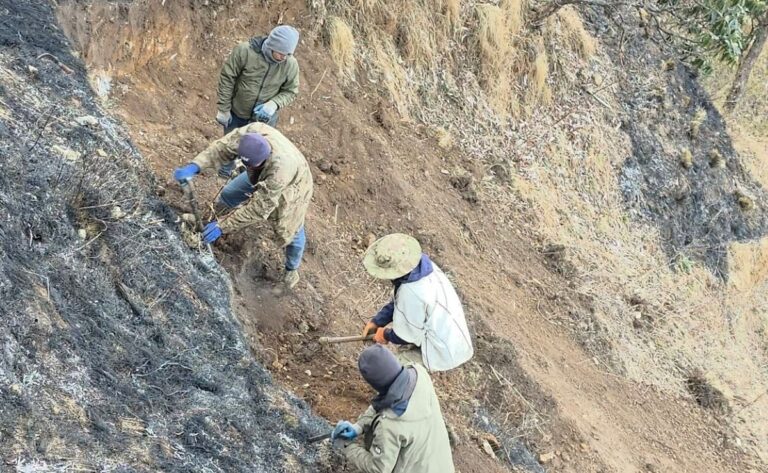
According to Consumer Committee Chairperson Bikash Pun, substantial progress has already been made. By the first week of Falgun (mid-February), the trail had been opened across challenging terrain, including Gunthali Cliff, Deurali Hill, Thulokhani, Bhitre Forest, and Thulo Ghaira Bharyang, reaching up to Bhirkhark.
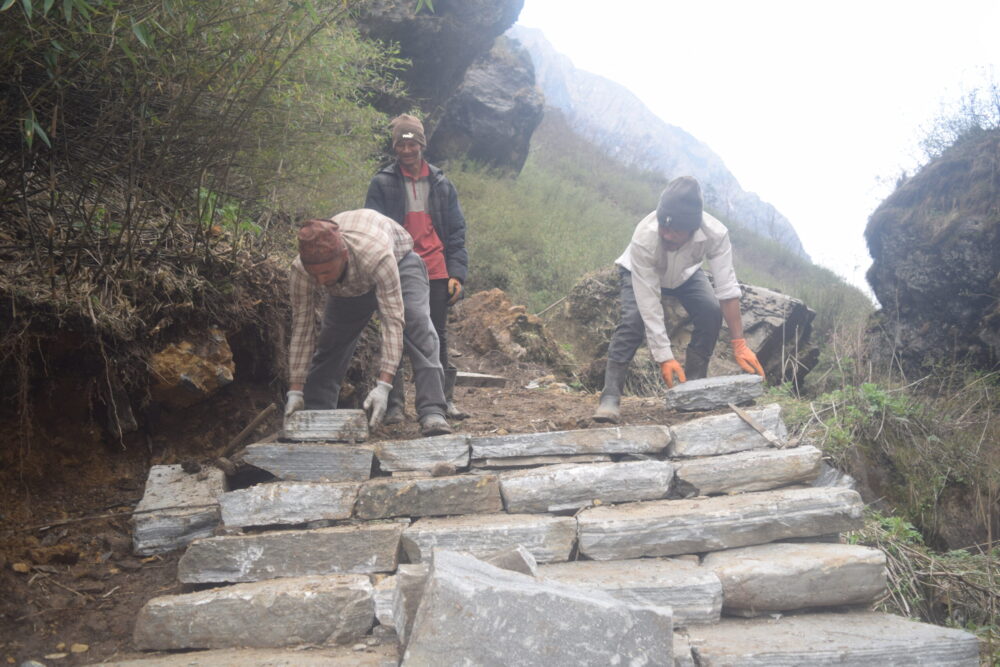
Technical assessments confirm that approximately three kilometers of the Dhaulagiri icefall trail have been completed, with an additional one kilometer currently under construction. Around 20 residents from Dhowa are directly engaged in the work. Because the construction zone lies far from settlements, workers have been staying on-site, setting up temporary shelters made of tarpaulin to avoid the long daily commute through rugged terrain. This hands-on involvement of residents has not only accelerated the pace of construction but also strengthened a sense of collective responsibility toward tourism development.
Reviving a Historic Foot Trail of Dhaulagiri Icefall
The new trekking route is being developed by identifying and upgrading an ancient footpath historically used by Dhowa residents while moving livestock seasonally between highland and lowland pastures. Ward Chairperson Dilip Garbuja explained that the municipality aims to transform this traditional trail into a structured trekking route while preserving its cultural significance.
The plan for the current fiscal year is to extend the trail up to Kholakhark, gradually integrating it into the broader regional trekking network. This initiative reflects a growing trend in Nepal of revitalizing heritage trails to create sustainable tourism opportunities while honoring indigenous lifestyles.
Strategic Link to Regional Trekking Network
The importance of the route extends beyond the village. The Dhaulagiri Icefall trail was first identified about 15 years ago following the construction of the Beni–Jomsom Road, which significantly improved access between Myagdi and Mustang.
The main trekking route begins from Rakhu of Raghuganga Rural Municipality and connects to Lete in Mustang, forming a scenic corridor that offers dramatic Himalayan landscapes. Lete serves as a key junction for trekkers exploring the Dhaulagiri and Annapurna regions.
The current construction focuses on developing auxiliary trails that link nearby settlements to this main trekking route, ensuring that multiple communities benefit from tourism flow rather than limiting access to a single entry point.
Tourism Potential for Magar Heritage Village
Dhowa is a settlement with a strong presence of the Magar community, known for its rich traditions, unique culture, and historical ties to transhumance practices. Local leaders believe that connecting the village to the Dhaulagiri Icefall trekking route will open new avenues for community-based tourism, homestay development, and cultural experiences.
Ward Chairperson Garbuja emphasized that the project is not merely about building a trail but about creating long-term economic opportunities. By drawing trekkers into lesser-explored areas, the municipality hopes to diversify tourism beyond established routes and distribute its benefits more equitably.
Boosting Sustainable and Inclusive Mountain Tourism
The trail construction aligns with Nepal’s broader strategy of promoting sustainable tourism in emerging destinations. Unlike heavily trafficked trekking corridors, this route offers pristine landscapes, traditional villages, and quieter travel experiences, an increasingly attractive combination for modern trekkers seeking authenticity.
Local participation in construction ensures that the infrastructure is both environmentally sensitive and socially inclusive. The use of manual labor, minimal mechanization, and reliance on traditional knowledge helps maintain ecological balance while employing villagers.

Once completed, the Dhowa–Dhaulagiri Icefall trail is expected to serve as a new gateway to the western Himalayan region, strengthening Myagdi’s position as an important yet underexplored trekking destination. Authorities anticipate that the route will encourage longer stays, support local enterprises, and preserve cultural heritage while showcasing dramatic alpine scenery.
With steady progress already visible on the ground, the project stands as an example of how grassroots initiative and local government collaboration can transform historic pathways into engines of sustainable development.