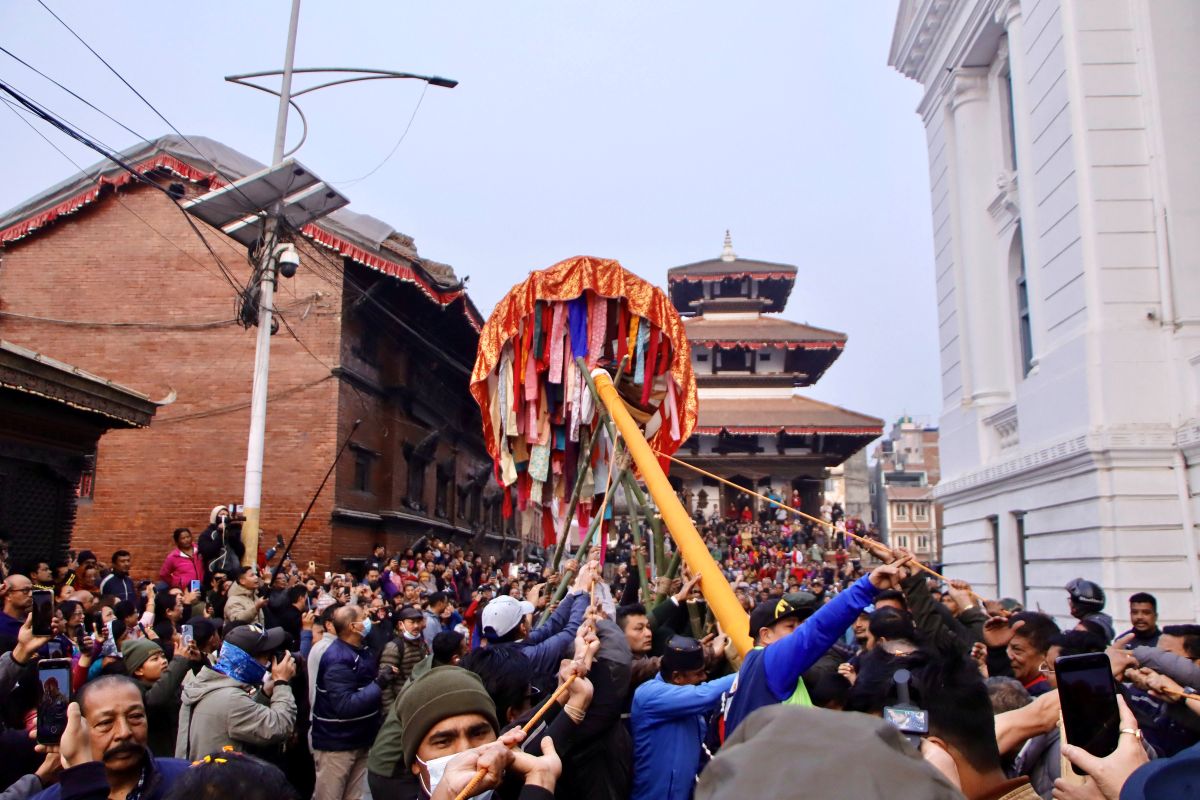
Chir marked the ceremonial beginning of this year’s Phagu Poornima celebrations as it was erected amid traditional rituals. The splendor and vibrancy of this year’s Phagu Poornima, popularly known as the festival of Holi, has officially begun with the installation of a colourful Chir at historic Basantapur in the heart of the capital. The ceremonial Chir was erected near the revered Kumari Ghar and Gaddi Baithak, marking the formal commencement of one of Nepal’s most cherished cultural celebrations.
Traditional Ritual Marks the Beginning
The installation took place at Basantapur Durbar Square, a site steeped in history and tradition, where festivals have been observed for centuries with great enthusiasm. According to age-old custom, members of the Dhalasikw Manandhar Sana: Goo Khal of Talachhi carried out the ritual on the day of Ashtami in the month of Falgun. This responsibility has been preserved through generations, reflecting the deep-rooted communal participation that defines Holi celebrations in Nepal.

The Chir, a tall wooden pole adorned with colourful cloth strips and decorations, symbolizes joy, renewal, and the triumph of positivity. Its installation is widely regarded as a sign of the arrival of spring, when nature begins to bloom, and communities prepare to celebrate harmony, colour, and togetherness.
Auspicious Time Determined by Astrological Calculation
The Nepal Calendar Determination Committee confirmed that the Chiroththan, or installation of the Chir, was performed at an auspicious moment, 7:13 a.m., with the pole turned eastward as prescribed by religious and astrological calculations. Observing the precise time is believed to ensure prosperity, happiness, and spiritual well-being for the community.
Scholars and priests explain that Holi is not only a festival of colours but also a ritual deeply connected with seasonal change, cosmic alignment, and the agricultural cycle. The arrival of spring carries symbolic meaning, representing rejuvenation, hope, and the victory of light over darkness.
Eight Days of Celebration Begin
With the Chir now standing tall, the festival of colours has officially begun for residents of Kathmandu Valley. The celebrations will continue for eight days, from Ashtami to the full moon day of Falgun, culminating in Phagu Poornima. During this period, families and communities gather to exchange colours, sweets, and greetings, strengthening social bonds and spreading festive cheer.
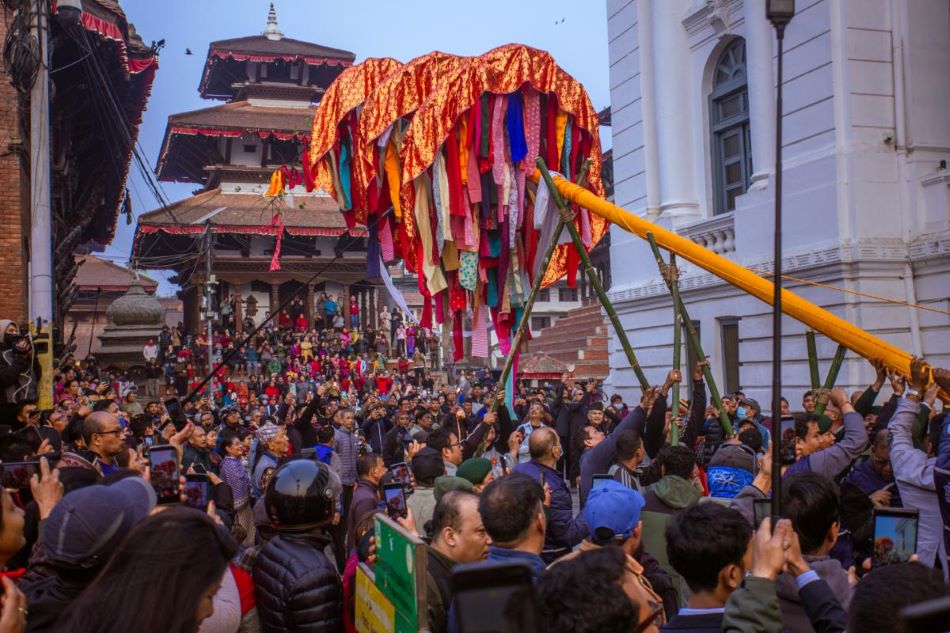
Markets across the Valley have already begun witnessing increased activity, with vendors selling abir (coloured powder), water balloons, festive delicacies, and traditional musical instruments. Children and youth, in particular, eagerly anticipate the playful aspect of the festival, while elders emphasize its cultural and spiritual importance.
Festival That Transcends Social Boundaries
Holi has long been regarded as a unifying celebration that transcends caste, creed, and social divisions. Participants smear colours on one another as a gesture of goodwill, forgiveness, and equality. Cultural experts note that the festival fosters a rare moment when societal hierarchies dissolve, replaced by laughter, music, and shared celebration.
Communities also organize musical gatherings, traditional dances, and communal feasts, reviving folk traditions that have been passed down through generations. The atmosphere is marked by inclusiveness, symbolizing social harmony and collective joy.
Main Celebration Day on Full Moon
Religious and astrological calculations indicate that this year’s main day of Phagu, the full moon day, falls on the coming Monday. On that day, the festival will be celebrated with particular enthusiasm across Nepal’s hilly regions, where revellers gather in public squares, temples, and neighborhoods to play with colours and exchange festive greetings.
In the Terai districts, preparations are underway to observe Holi the following day, Tuesday, in keeping with regional tradition. This staggered celebration reflects Nepal’s cultural diversity, where local customs shape how national festivals are observed while preserving their shared spirit.

Cultural Heritage and Tourism Appeal
Beyond its religious significance, Holi has also become an important cultural attraction for visitors, offering a glimpse into Nepal’s living heritage. The celebrations at Basantapur, surrounded by centuries-old architecture and monuments, present a vivid blend of history, spirituality, and festivity.
As the colourful Chir flutters against the skyline, it stands not only as a ritual object but also as a symbol of renewal, unity, and the enduring vibrancy of Nepali culture. With the festival now underway, the nation prepares to immerse itself in days filled with colour, music, and shared happiness, welcoming spring with open hearts and joyful celebration.