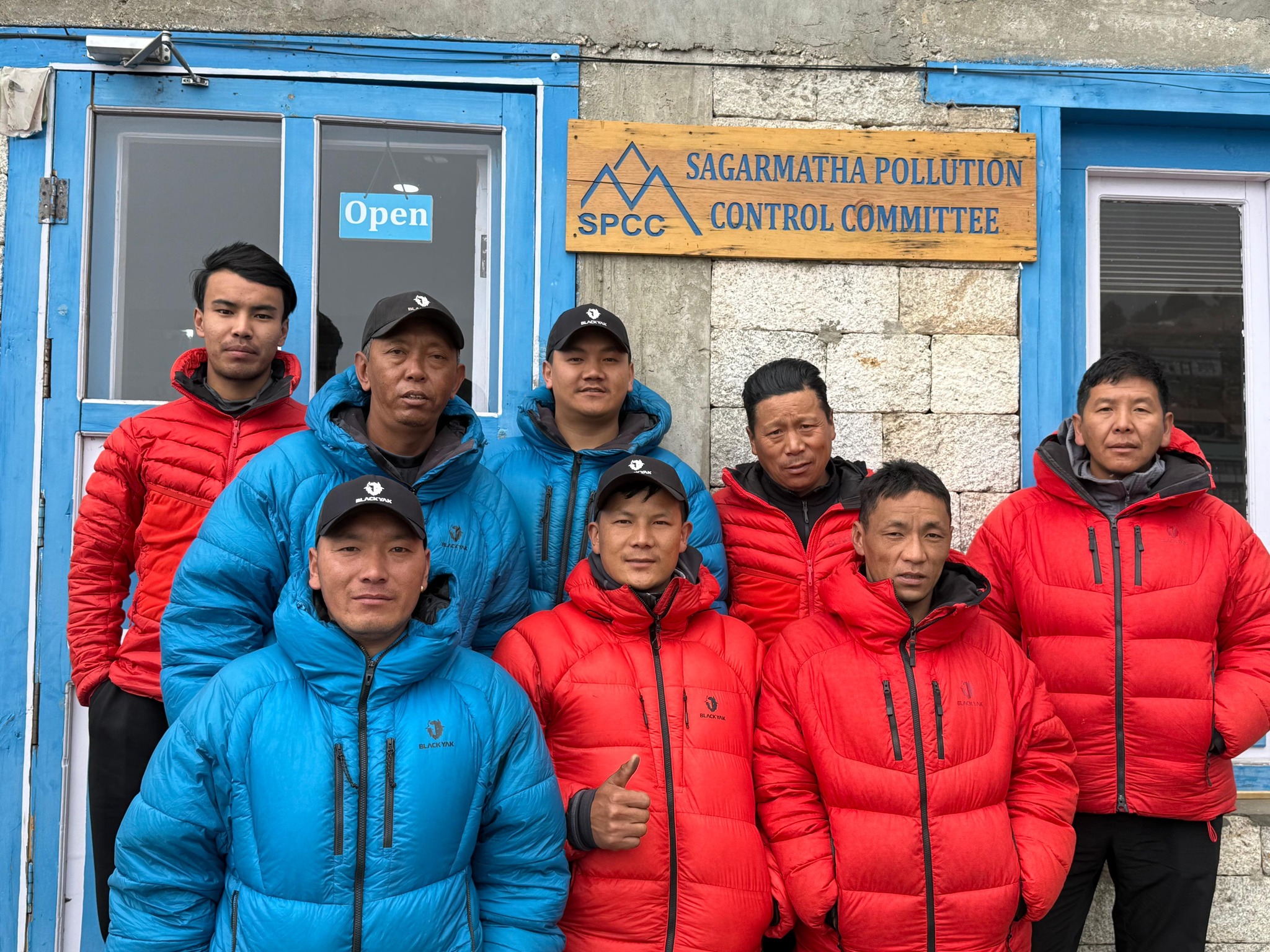
The Khumbu Icefall, located between Everest Base Camp and Camp II, is considered the most dangerous and technically challenging section of the Mount Everest ascent due to its constantly shifting ice, towering seracs, and deep crevasses. Preparations for the Spring 2026 mountaineering season on Mount Everest have officially begun, as the Sagarmatha Pollution Control Committee (SPCC) mobilizes its specialized Icefall Doctors to establish and maintain the critical climbing route through the Khumbu Icefall.
The team departed from the SPCC head office in Namche Bazaar and is currently en route to Everest Base Camp, marking the start of logistical and technical preparations for one of the world’s most demanding mountaineering operations.
Training and Rituals Before Route Installation
Between March 5 and March 10, the Icefall Doctors will undergo refresher training conducted by instructors from the Khumbu Climbing Center. The training focuses on advanced safety techniques, rope fixing, ladder installation, crevasse rescue, and risk management in the constantly shifting glacial terrain.

A traditional Sherpa puja ceremony will take place on March 16, a spiritual ritual seeking blessings for safety and success before any work begins on the mountain. Following the ceremony, the team will officially commence the complex task of setting up the climbing route through the Khumbu Icefall.
Three Months of Continuous Monitoring and Maintenance
The Icefall Doctors will remain stationed at the SPCC facility at Base Camp for approximately three months. Their responsibility is not only to establish the route but also to maintain it daily, repairing ladders, adjusting ropes, and rerouting sections when ice movement alters the landscape. This route is essential for climbers attempting not only Everest but also neighboring peaks such as Lhotse and Nuptse, making the team’s work vital to the entire spring climbing season.
The Khumbu Icefall, located between Base Camp and Camp II, is widely regarded as the most technically hazardous section of the ascent due to towering seracs, deep crevasses, and constant glacial movement. Conditions can change within hours, requiring continuous inspection and adjustment to ensure climber safety.
Experienced Team Leading the 2026 Operation
The Spring 2026 Icefall Doctors Team is composed of highly experienced Sherpa professionals led by Chief Leader Ang Sarki Sherpa and Team Leader Dawa Jangbu Sherpa. Base Camp operations will be managed by Tshering Tenzing Sherpa, supported by a dedicated crew overseeing logistics, kitchen services, and waste management. Their expertise, often built over decades of high-altitude experience, ensures that expedition teams from around the world can navigate the Icefall using a secure and standardized route.
Community-Led Organization at the Heart of Conservation
Established in 1993 by the Sherpa community, SPCC is a grassroots organization dedicated to environmental conservation and sustainable mountaineering in the Everest region. The committee plays a central role in waste management across Khumbu Pasang Lhamu Rural Municipality, including areas within Sagarmatha National Park and its buffer zones.
In addition to maintaining cleanliness along trekking trails and base camps, SPCC monitors climbing activities and implements systems to manage expedition waste, helping preserve the fragile Himalayan ecosystem.
Government Mandate for Route Management
Since 1997, Nepal’s Department of Tourism, under the Ministry of Culture, Tourism and Civil Aviation, has entrusted SPCC with the responsibility of establishing and maintaining the Khumbu Icefall climbing route each season. This long-standing collaboration reflects the government’s reliance on local expertise to ensure both climber safety and environmentally responsible mountain operations.
Critical Role in Global Mountaineering
Every year, hundreds of climbers attempt Everest and the surrounding peaks, relying on the Icefall Doctors’ meticulous work. The installation of aluminum ladders across crevasses, fixed ropes along vertical ice walls, and clearly marked paths transforms an otherwise impassable glacier into a navigable route.
Without this effort, commercial and independent expeditions would face significantly higher risks, making the Icefall Doctors among the most essential yet often unsung contributors to Himalayan mountaineering.

Partnership Support for Technical Operations
SPCC has acknowledged the continued support of its partner Black Yak, which provides essential technical clothing and equipment required for working in extreme high-altitude conditions. Such collaborations help ensure that the Icefall Doctors are equipped to operate safely in one of the harshest environments on Earth.
Readying the Himalayas for the Spring Climbing Season
With training underway and route installation set to begin soon, the mobilization of the Icefall Doctors signals the official start of preparations for the Spring 2026 Everest season. Their work not only enables climbers to pursue summit ambitions but also reinforces Nepal’s commitment to safe, sustainable, and professionally managed mountaineering in the Himalayas.
As expeditions begin arriving at Base Camp in the coming weeks, the carefully constructed path through the Khumbu Icefall will once again stand as a testament to local knowledge, resilience, and collaboration at the roof of the world.