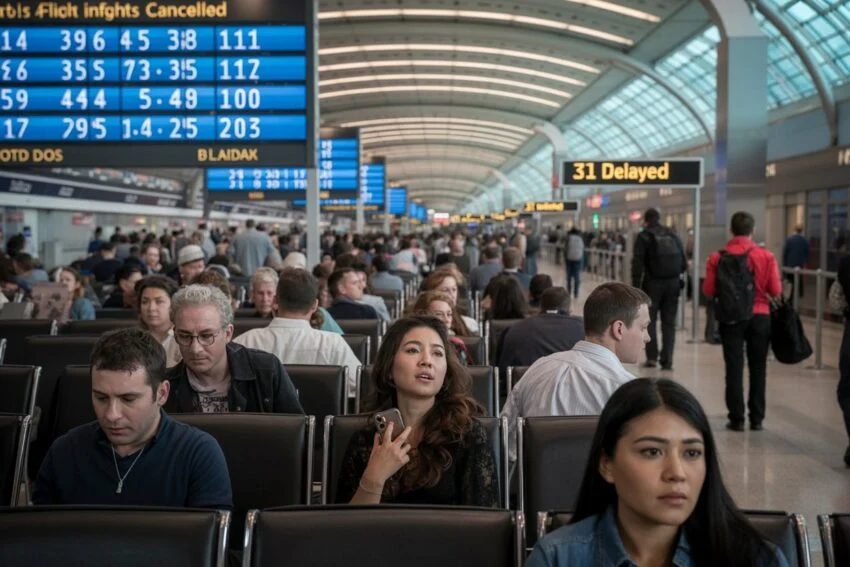
Orlando International Airport, one of the busiest travel hubs in the United States, has recently faced significant operational challenges, disrupting travel plans for thousands of passengers. Over the past week, the airport reported 376 flight delays and 8 cancellations, raising concerns for both domestic and international travelers relying on Orlando as a gateway to Florida’s popular theme parks and vacation destinations.
Understanding the Scope of the Disruptions
According to Federal Aviation Administration (FAA) data, the volume of delayed flights represents a substantial portion of the airport’s daily operations. Passengers have experienced long waits, rescheduled itineraries, and, in some cases, the need to seek alternative routes or accommodations. While flight delays and cancellations are common in aviation, the concentration of disruptions at Orlando International in such a short period has drawn attention to underlying operational challenges.

Officials have confirmed that adverse weather conditions, including thunderstorms and severe weather alerts, have been a primary factor contributing to the delays. Additionally, technical issues, air traffic congestion, and logistical constraints have compounded the situation, creating ripple effects that have impacted flight schedules across the southeastern United States.
Impact on Passengers and the Tourism Industry
For travelers, the disruptions have caused considerable inconvenience. Many were caught off guard by sudden itinerary changes, while others faced difficulties securing alternative transportation or accommodations. Given Orlando International’s role as a key transit hub for families visiting Disney World, Universal Studios, and other attractions, these delays have directly affected Florida’s tourism industry.
Hotels, shuttle services, and other tourism-related businesses near the airport have reported increased inquiries from travelers seeking rebooking assistance or last-minute accommodations. Airlines operating out of Orlando International have offered options to reschedule flights and provide compensation where applicable. Despite these efforts, questions remain about the airport’s capacity to manage peak travel periods effectively.
Role of Weather and External Factors
While thunderstorms and severe weather have been cited as major causes, delays have also been exacerbated by air traffic control bottlenecks and operational constraints. FAA authorities are working closely with airport management to mitigate these issues by adjusting flight schedules, rerouting aircraft when possible, and improving communication channels between airlines, air traffic controllers, and passengers.
Industry experts warn that these disruptions could continue to affect travelers in the coming weeks as Orlando International works to recover from backlogs and return operations to normal.
Measures Taken to Address the Challenges
Orlando International Airport has implemented several measures to reduce further disruptions:
- Enhanced real-time passenger information systems for flight tracking and status updates.
- Improved coordination between airlines and air traffic control to streamline boarding, deplaning, and scheduling.
- Longer-term infrastructure upgrades aimed at minimizing the impact of adverse weather on flight operations.
These initiatives aim to balance efficiency with safety, ensuring minimal disruption while maintaining passenger service standards.
Navigating Travel Disruptions
Passengers affected by the recent delays are encouraged to:
- Stay updated through official airport and airline channels.
- Utilize automated flight alerts via email or mobile apps.
- Contact airlines for rescheduling options, compensation, or accommodations.
- Maintain flexibility and plan for potential delays when traveling through busy hubs.

A Wake-Up Call for Infrastructure and Resilience
The recent surge in flight delays and cancellations at Orlando International Airport highlights the need for robust infrastructure, better coordination, and proactive management to handle unexpected disruptions. While weather-related delays are unavoidable, improved systems and communication strategies are critical to reducing passenger inconvenience and maintaining the airport’s reputation as a major travel hub.
For travelers, staying informed, planning, and maintaining flexibility are key to navigating periods of disruption at one of the nation’s busiest airports. Orlando International’s experience serves as a reminder of the importance of preparedness and resilience in the ever-growing global aviation network.