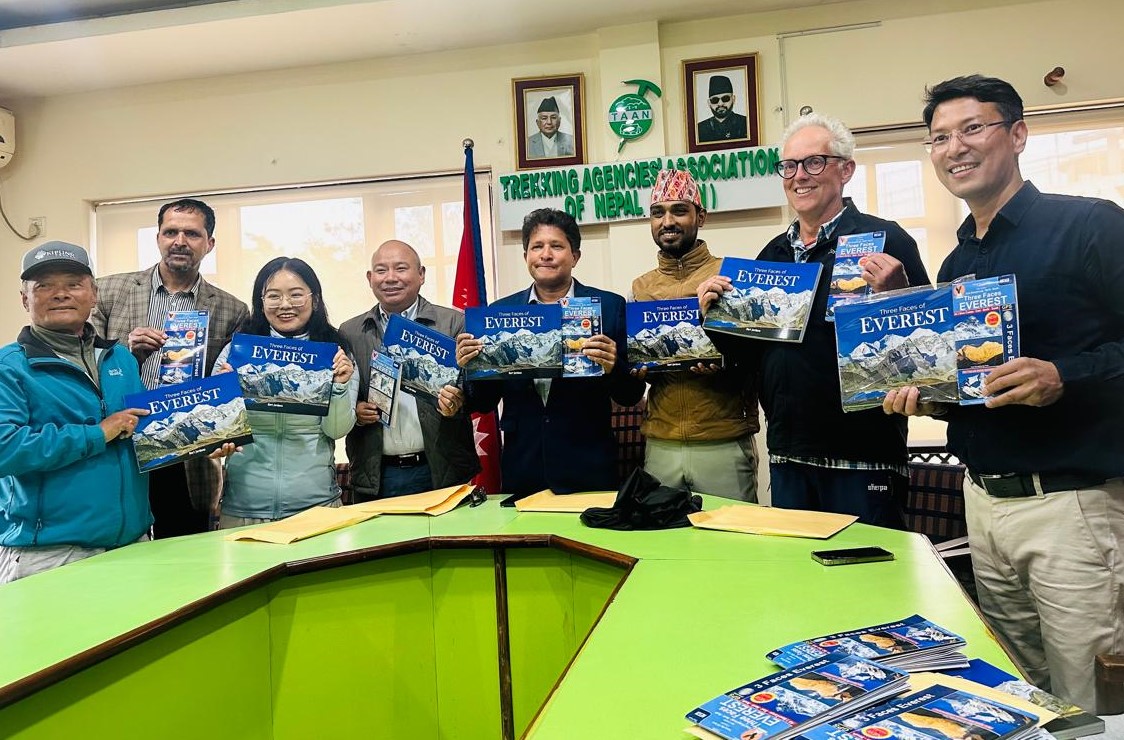
A comprehensive pictorial guidebook and trekking map titled The Three Faces of Everest was officially launched in Kathmandu, bringing together mountaineering insight, cartographic precision, and tourism promotion in a single publication. The book, authored by renowned Dutch climbing expert Bart Jordans, offers an in-depth look at all three faces of the world’s highest peak, South, North, and East, providing valuable information for trekkers, expedition planners, and mountaineering enthusiasts.
A Collaborative Effort for Tourism Advancement
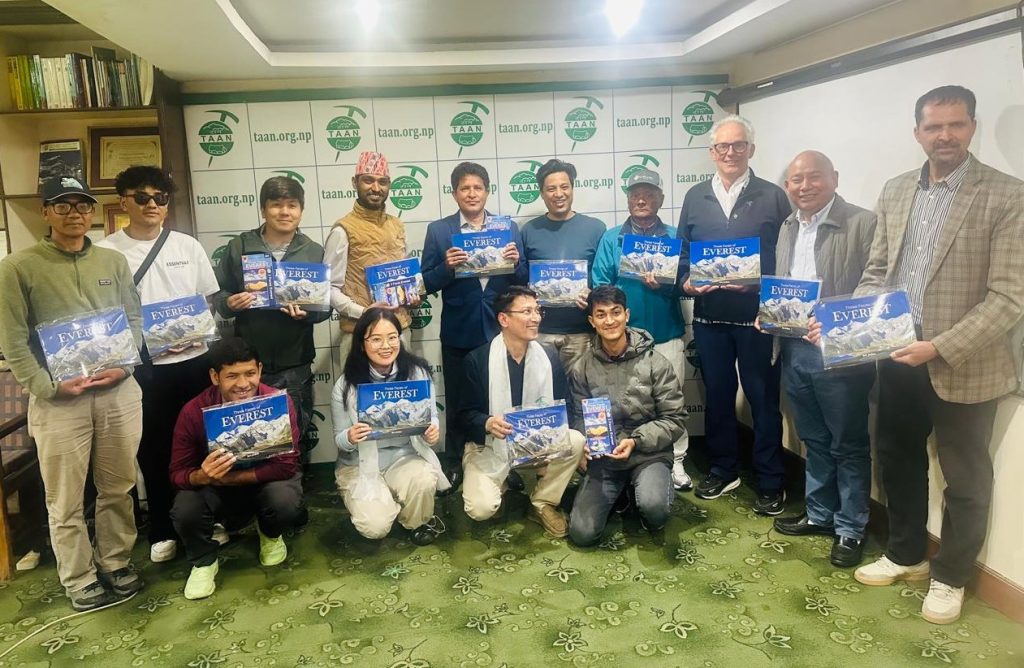
The guidebook and its corresponding trekking and expedition map were jointly launched by the Trekking Agencies’ Association of Nepal (TAAN), Map House, and Concept Nepal during a formal ceremony held at the TAAN Secretariat in Maligaon, Kathmandu. The event highlighted the importance of collaboration between tourism stakeholders, publishers, and international experts in promoting Nepal’s mountain tourism sector.

The publication stands out for presenting the key geographical, cultural, and logistical aspects of all three faces of Mount Everest within a single volume, an approach that has rarely been attempted in previous mountaineering literature.
Book Launch Ceremony
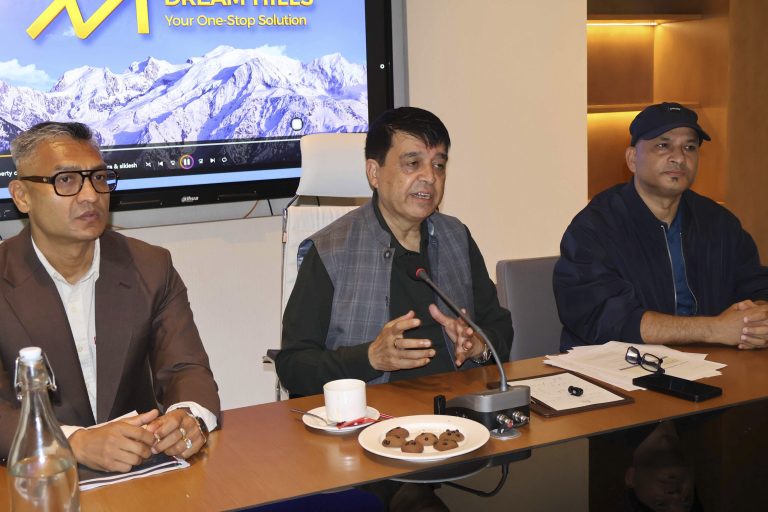
The unveiling ceremony was jointly conducted by TAAN President Sagar Pandey, author Bart Jordans, publisher Pawan Shakya, and TAAN General Secretary Sonam G. Sherpa. The dignitaries emphasized the significance of the publication in enhancing route planning and expanding trekking opportunities across different regions surrounding Everest.
Speaking at the event, President Pandey expressed appreciation for the efforts of the author and publisher, stating that the book will serve as a practical and informative resource for trekking and expedition agencies. He noted that such initiatives contribute to diversifying tourism products and encouraging exploration beyond traditional routes.

A Unique Perspective on Everest
Unlike conventional guidebooks that focus primarily on the southern approach from Nepal, The Three Faces of Everest provides a holistic perspective by incorporating detailed insights into the northern (Tibet/China) and eastern (Kangshung Face) routes as well. This inclusive approach not only broadens the scope for expedition planning but also strengthens cross-border tourism understanding between Nepal and China.
The book is richly illustrated with photographs, maps, and route descriptions, offering both visual appeal and practical utility. It aims to assist trekking agencies, guides, and climbers in better understanding terrain conditions, access points, and logistical considerations associated with each face of Everest.
Participation of Tourism Stakeholders
The launch event witnessed the presence of key tourism stakeholders and industry leaders. Among them were TAAN Executive Committee Member Rajendra Amgain, MoGAN President Sanjib Gurung, and NITWOG President Ram K. Tiwari. Tourism professionals, mountaineering experts, and media representatives from both Nepal and China also attended the ceremony, reflecting the growing international interest in Himalayan tourism. The presence of diverse stakeholders underscored the collective effort required to promote sustainable and well-informed trekking practices in the Everest region.
Strengthening Trekking and Expedition Planning
TAAN expressed its gratitude to the author and publisher for producing a resource that is expected to significantly benefit trekking and expedition agencies. According to the association, the guidebook and map will aid in planning routes to base camps and peaks across all three faces of Everest, thereby enhancing operational efficiency and safety.
The publication is also expected to support the diversification of trekking routes, helping distribute tourist flow more evenly and reduce pressure on overcrowded trails. Promoting lesser-explored areas, it aligns with Nepal’s broader strategy of sustainable tourism development.
A Step Toward Knowledge-Based Tourism
The launch of The Three Faces of Everest marks a significant step toward knowledge-based tourism in Nepal. By combining expert insights, accurate mapping, and visual storytelling, the publication is poised to become an essential reference for the global mountaineering community. As Nepal continues to position itself as a premier destination for adventure tourism, initiatives like this not only enhance the quality of information available to travelers but also strengthen the country’s reputation as a hub for mountaineering excellence.