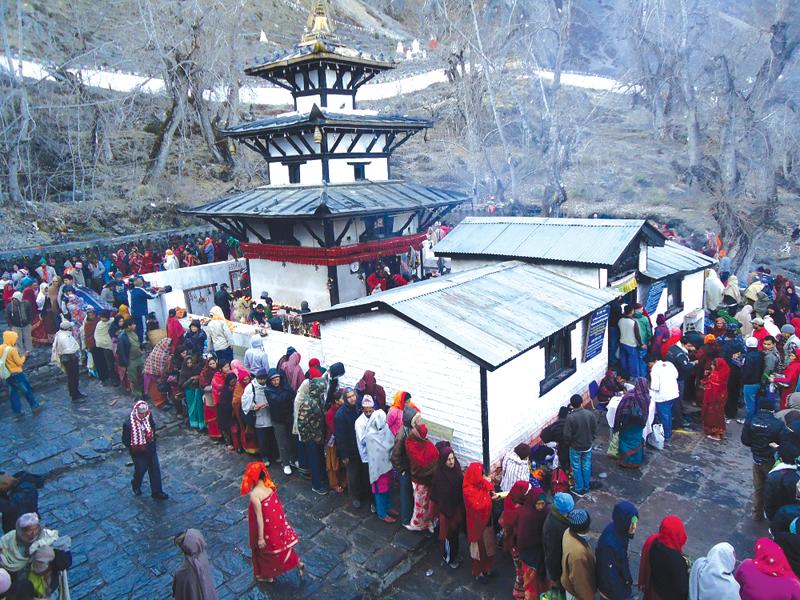
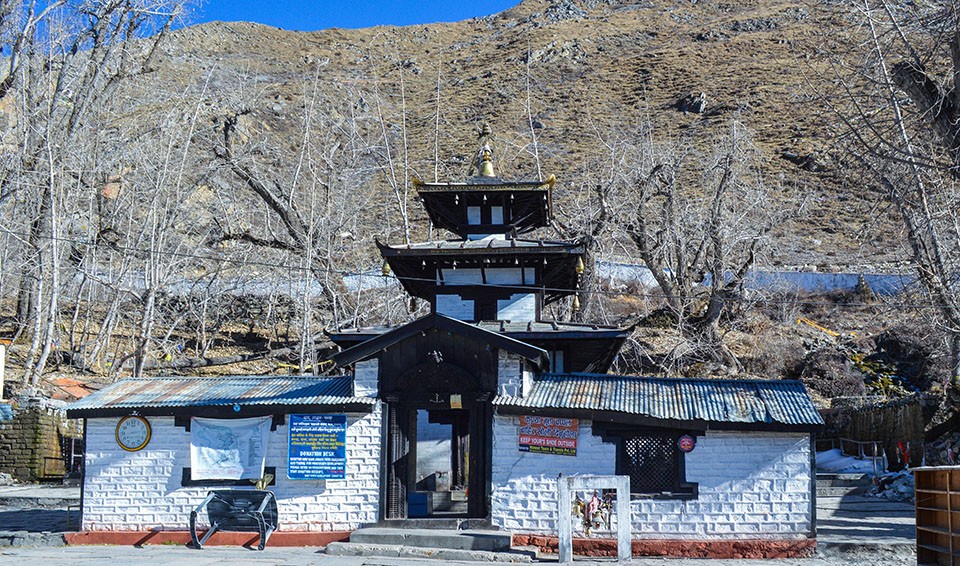
The sacred Muktinath Temple witnessed an overwhelming influx of pilgrims on the first day of the Nepali New Year 2083, with approximately 12,000 devotees offering prayers and worship. According to the Muktinath Development Committee, both domestic and international visitors thronged the temple premises, seeking blessings for good health, longevity, and prosperity in the year ahead. The Muktinath temple, regarded as one of the holiest pilgrimage sites in Nepal, became a focal point of spiritual devotion as early as dawn.
Surge Beyond Seasonal Average
Following the winter season, the temple had been receiving an average of 4,000 to 5,000 pilgrims daily. However, the New Year celebrations nearly doubled the turnout. Committee manager Dinesh Bhusal noted that the number of visitors significantly exceeded normal figures, with the temple premises remaining crowded even after 2 PM, an unusual occurrence compared to regular days. The festive spirit and cultural significance of visiting the Muktinath temple on the first day of the year contributed to the unprecedented surge.
Devotion Despite Challenges
The large turnout was observed despite ongoing challenges such as fuel shortages caused by geopolitical tensions in the Middle East. Bhusal highlighted that devotees traveled from distant regions, undeterred by logistical difficulties. Favorable weather conditions during this time of year also played a crucial role in encouraging pilgrims to undertake the journey to Mustang. The belief that visiting Muktinath on New Year’s Day brings blessings for the entire year further motivated thousands to make the pilgrimage.
Temple Premises Filled
From as early as 6 AM, the temple area experienced heavy footfall, with devotees lining up for hours to perform rituals. Key attractions within the temple complex, including the famous 108 water spouts, were fully occupied by worshippers throughout the day.
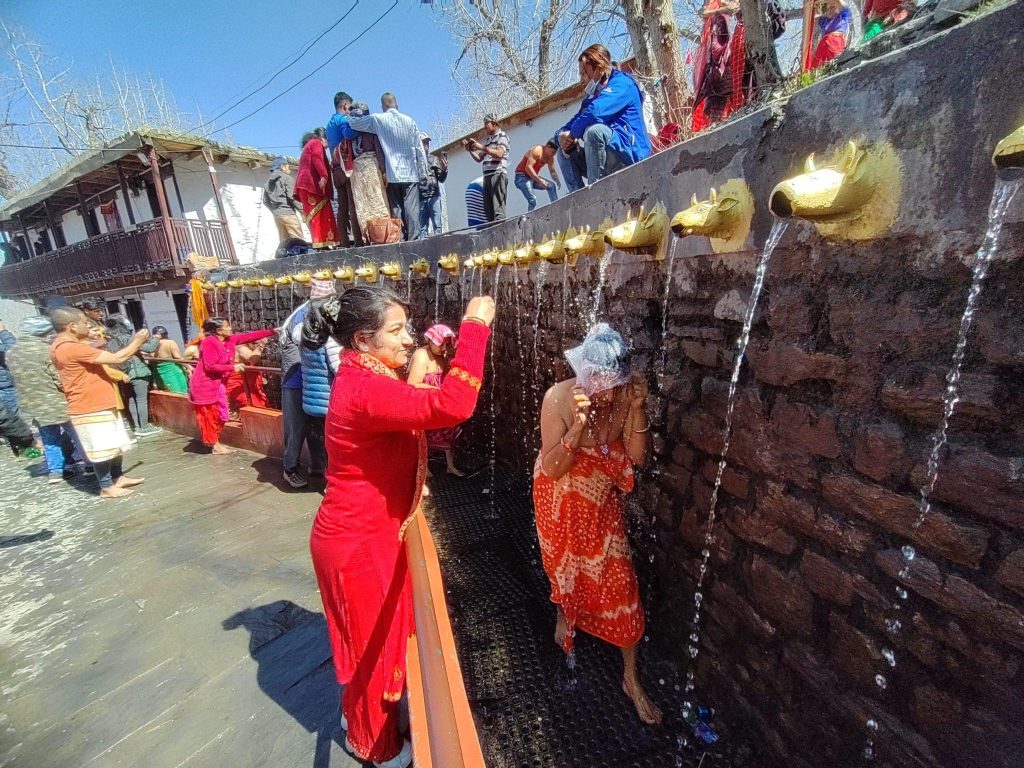
The entire premises remained packed, reflecting the deep-rooted religious faith associated with the site. The steady stream of visitors continued well into the afternoon, marking one of the busiest days in recent times.
Local Participation and Administrative Management
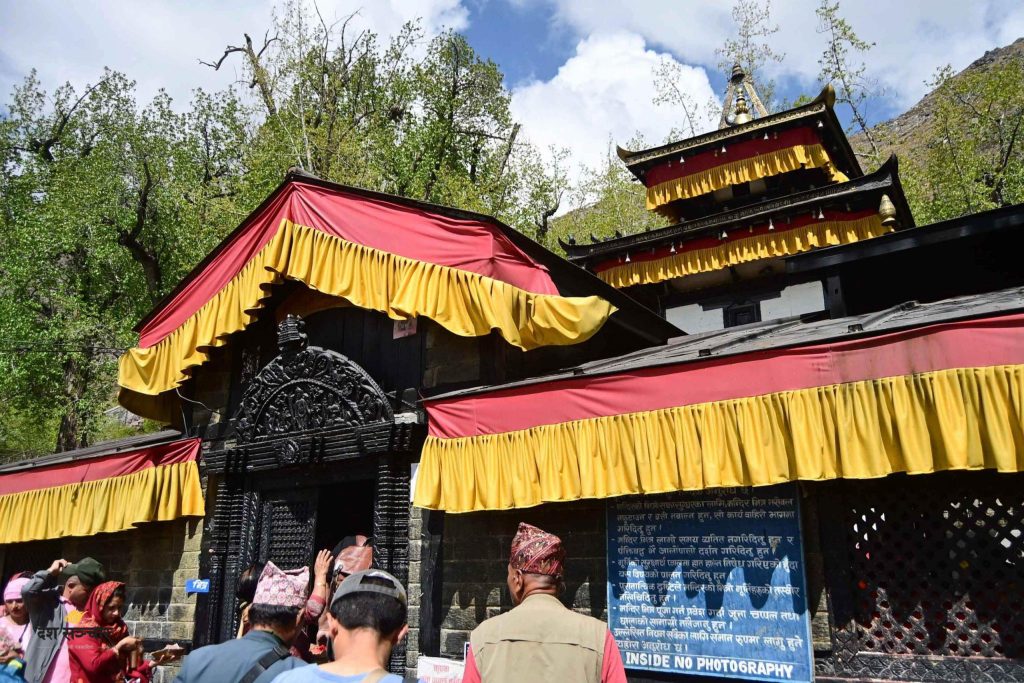
In addition to tourists, a significant number of government employees and residents from the Mustang district also visited the temple to mark the New Year. To manage the large crowd, the temple committee implemented systematic queue arrangements, ensuring that devotees could worship in an orderly manner. Volunteers and officials were mobilized to facilitate smooth movement and maintain safety within the premises.
Parking Constraints and Tourism Boost
The surge in visitors led to logistical challenges, particularly in vehicle management. Both bus parks at Ranipauwa were filled, creating parking difficulties for incoming vehicles. Despite these challenges, the increased number of pilgrims brought economic benefits to the region. Tourist hubs such as Jomsom and Marpha saw a noticeable rise in activity, with hotels, restaurants, and local businesses experiencing heightened demand.
Strengthening Religious Tourism
The remarkable turnout at Muktinath Temple highlights the growing importance of religious tourism in Nepal. The New Year pilgrimage not only reinforces cultural and spiritual traditions but also contributes to the local economy. Authorities believe that with improved infrastructure and better management, such cultural destinations can continue to attract even larger numbers of visitors in the future.