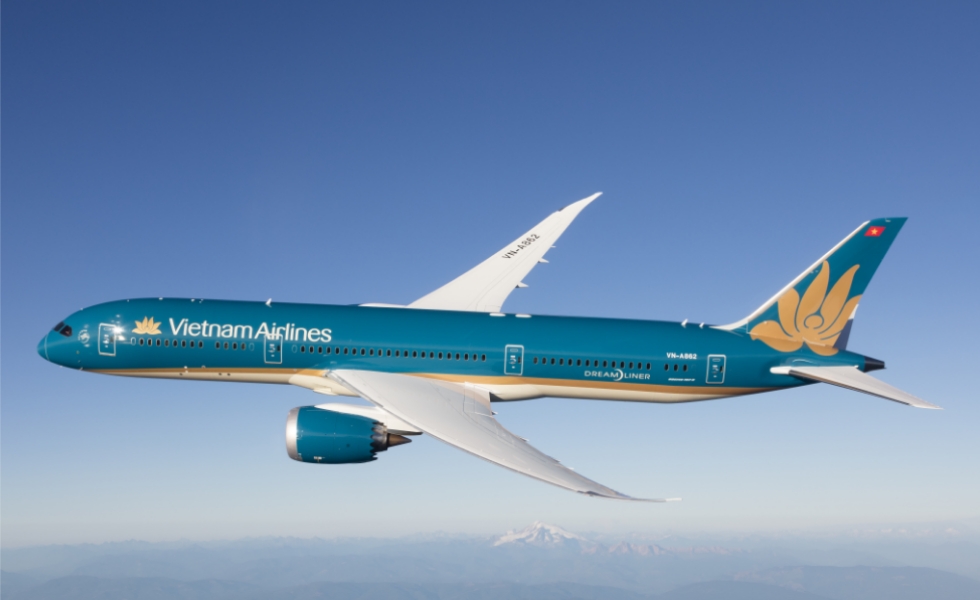
Vietnam Airlines officially launched its first-ever nonstop service between Hanoi and Amsterdam Schiphol on June 16, 2026, marking a landmark moment in the country’s aviation history. Operating three times weekly aboard the Airbus A350, the new route establishes a direct intercontinental bridge between Southeast Asia and one of Europe’s most strategically important gateway airports, without a layover in Dubai, Doha, Istanbul, or any other transit hub. For the hundreds of thousands of travellers who annually make the Vietnam–Netherlands journey, the launch represents a fundamental change in how that trip will be experienced.
Why Amsterdam, and Why Now
The choice of Amsterdam Schiphol as the European terminus is a deliberate and well-considered strategic decision. Schiphol ranks consistently among Europe’s top three busiest international airports, processing over 60 million passengers annually. Its extensive onward connectivity, spanning Germany, France, Italy, Spain, the United Kingdom, and transatlantic destinations, means that passengers arriving from Hanoi gain immediate access to a vast network of European and global destinations without the complexity of an intermediate hub transfer.

The timing of the launch is equally deliberate. The Vietnam–Netherlands travel corridor recorded over 122,000 travellers in 2024, accompanied by a growth surge exceeding 40% in bilateral travel demand. That surge, driven by deepening business ties, a growing Vietnamese diaspora in Europe, and rising interest among European tourists in Vietnam’s heritage destinations, created a clear commercial case for direct service. Vietnam Airlines has moved to capitalise on that demand before a competitor does.
The End of the Forced Layover
For decades, travellers between Vietnam and Europe had little choice but to route through the mega-hubs of the Middle East or through Paris. While carriers such as Emirates, Qatar Airways, Turkish Airlines, KLM, and Air France built highly efficient connecting networks through Dubai, Doha, Istanbul, and Paris respectively, the experience of transiting through these hubs carries a cost, in time, in physical fatigue, and in the risk of missed connections and mishandled baggage.
The Airbus A350, deployed by Vietnam Airlines on this route, is particularly well suited to eliminating that burden. A twin-engine widebody aircraft renowned for its fuel efficiency, range, and passenger comfort, the A350 features a quieter cabin, higher cabin pressure, and improved humidity levels compared to older long-haul aircraft, conditions that meaningfully reduce the physical toll of an intercontinental flight. Passengers departing Hanoi can now board once and disembark in Amsterdam, with no intermediate stop, no transfer terminal, and no additional security or immigration queue along the way.
Competitive Implications for Legacy Carriers
The launch places Vietnam Airlines in direct competition with some of the world’s most powerful and well-resourced airlines on one of aviation’s most lucrative long-haul corridors. Emirates and Qatar Airways in particular have built substantial market share on Southeast Asia–Europe routes by leveraging their vast hub operations in Dubai and Doha. Turkish Airlines offers a compelling alternative via Istanbul, while KLM and Air France operate their own Asia services feeding through Amsterdam and Paris respectively.
The entry of a nonstop competitor on the Hanoi–Amsterdam segment does not immediately dismantle those networks, but it does change the competitive dynamics. Passengers who previously had no nonstop option now do, and that choice, even at a premium, will attract a meaningful segment of travellers who value time and convenience above all else. Industry analysts also note that the presence of a direct competitor typically exerts downward pricing pressure on connecting itineraries, ultimately benefiting the broader travelling public regardless of which airline they choose.
A Boost for Tourism and Trade
The strategic significance of the Hanoi–Amsterdam route extends well beyond passenger convenience. Vietnam welcomed 17.5 million international arrivals in 2024 and is actively working to surpass its pre-pandemic peak of 18 million tourists. Europe represents one of the fastest-growing and highest-spending source markets for long-haul tourism to Vietnam, and a direct air link to northern Vietnam opens more accessible routes to iconic destinations including Ha Long Bay, Ninh Binh, Hoi An, and Hanoi’s own historic old quarter.
On the cargo side, the route carries considerable economic weight. Vietnam has established itself as one of Asia’s most dynamic manufacturing and export economies, with electronics, semiconductors, textiles, garments, seafood, and agricultural products among its key export categories. Direct widebody freight capacity into Amsterdam, Europe’s premier logistics hub with direct connections to the continent’s road and rail freight networks, provides Vietnamese exporters with faster, more reliable access to European markets.
What It Means for the Broader Industry
Aviation analysts view the Hanoi–Amsterdam launch as part of a broader and accelerating trend. As next-generation, fuel-efficient twin-engine aircraft like the A350 and Boeing 787 extend the range of point-to-point operations, airlines no longer need to route passengers through large transfer hubs to make long-haul routes commercially viable. This shift is gradually eroding the structural advantage that Middle Eastern and European mega-hub carriers have long enjoyed, enabling carriers from secondary markets to compete directly on intercontinental routes that would previously have been beyond their reach.
Vietnam Airlines is not alone in pursuing this strategy, but its move onto the Hanoi–Amsterdam route is among the more significant point-to-point launches of 2026, both for its distance and for the competitive strength of the incumbents it is challenging.

Practical Information for Travellers
The new Hanoi–Amsterdam service operates three times weekly using the Airbus A350. Given the limited weekly frequency, seats, particularly during peak summer and winter travel periods, are expected to be in high demand. Travellers are advised to book well in advance to secure preferred fares and cabin classes.
Passengers arriving at Amsterdam Schiphol benefit from the airport’s direct rail connection to Amsterdam city centre and onward high-speed rail services to major European cities including Brussels, Paris, and London, offering a cost-effective and time-efficient alternative to short-haul connecting flights across the continent. Travellers should also ensure Schengen visa arrangements are in order well ahead of departure, as the Netherlands will serve as the port of entry into the European Union for passengers on this route.