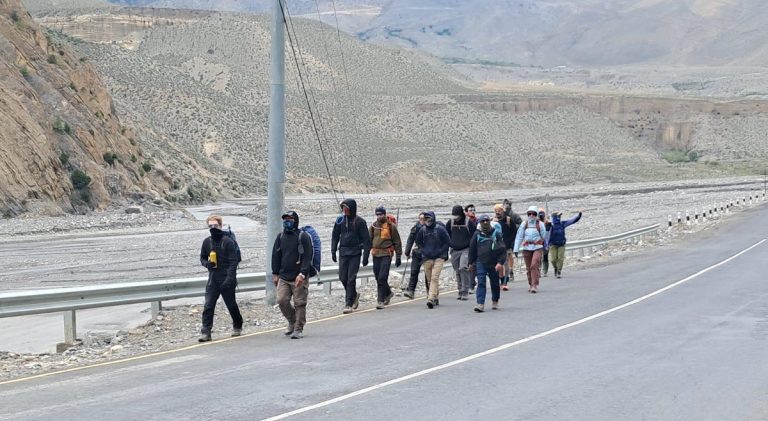
The Manaslu Conservation Area has recorded a significant rise in tourist arrivals during the fiscal year 2082/83, with a total of 16,671 visitors exploring the region. The figure represents a remarkable increase compared to the previous fiscal year, reflecting the growing popularity of Manaslu as one of Nepal’s premier trekking destinations.
The achievement has been attributed to the collective efforts of Chumnubri Rural Municipality, local communities, tourism entrepreneurs, conservation groups, and other stakeholders working together to promote sustainable tourism while preserving the region’s natural and cultural heritage.
Foreign Tourists Dominate Manaslu Visitor Numbers
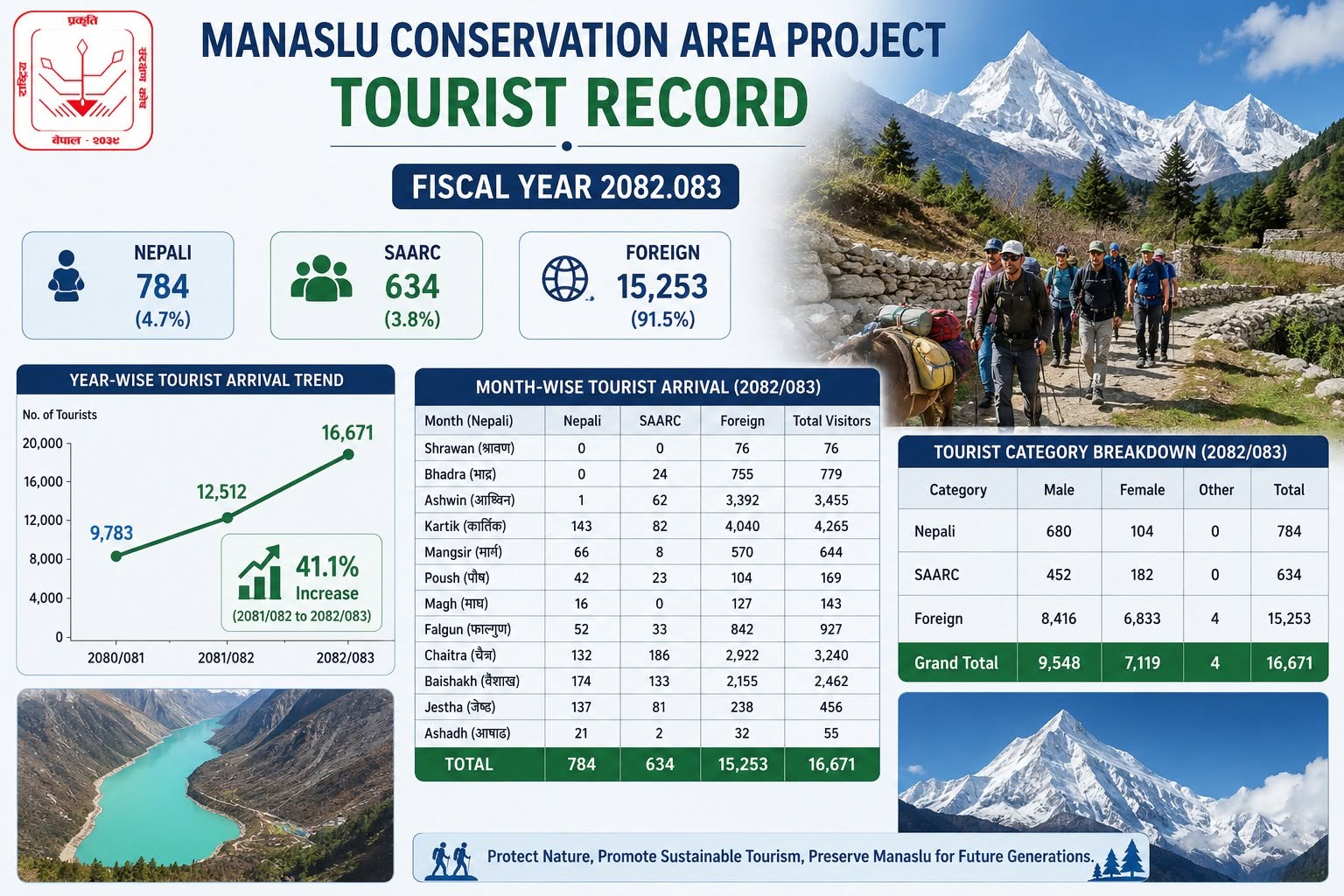
According to the latest record from the Manaslu Conservation Area Project, foreign tourists accounted for the largest share of visitors during the fiscal year 2082/83. A total of 15,253 foreign tourists visited the conservation area, representing 91.5 percent of total arrivals. Meanwhile, 784 Nepali tourists visited the region, making up 4.7 percent, while 634 tourists from SAARC countries accounted for 3.8 percent of total visitors. The overall tourist arrival figure reached 16,671, highlighting increasing international interest in the Manaslu trekking route.

Tourist Arrivals Increase by More Than 41 Percent
The latest figures show a substantial growth in visitor numbers compared to previous years.
Manaslu Conservation Area recorded:
- 9,783 tourists in fiscal year 2080/81
- 12,512 tourists in fiscal year 2081/82
- 16,671 tourists in fiscal year 2082/83
The increase from 12,512 visitors to 16,671 visitors represents a 41.1 percent growth compared to the previous fiscal year. The steady rise indicates growing recognition of Manaslu’s unique combination of Himalayan landscapes, cultural diversity, and adventure tourism opportunities.
October and November See Highest Tourist Flow
Monthly data shows that tourist arrivals peaked during the autumn trekking season, which is considered one of the best periods for trekking in Nepal.

The highest number of visitors was recorded in:
- Kartik (October–November): 4,265 tourists
- Ashwin (September–October): 3,455 tourists
- Chaitra (March–April): 3,240 tourists
- Baishakh (April–May): 2,462 tourists
The autumn and spring seasons attracted the majority of trekkers due to favorable weather conditions, clear mountain views, and ideal trekking conditions.
Visitor Breakdown by Category
The tourist records show a diverse mix of visitors from Nepal, SAARC nations, and other foreign countries.
Nepali Visitors
A total of 784 Nepali tourists visited Manaslu during the fiscal year, including:
- Male visitors: 680
- Female visitors: 104
SAARC Visitors
A total of 634 tourists from SAARC countries visited the region, including:
- Male visitors: 452
- Female visitors: 182

Foreign Visitors
Foreign arrivals remained the dominant category, with:
- Total foreign visitors: 15,253
- Male visitors: 8,416
- Female visitors: 6,833
- Other category: 4
The total visitor breakdown recorded 9,548 male visitors, 7,119 female visitors, and four visitors in the other category, bringing the overall total to 16,671.
Focus on Sustainable Tourism and Conservation
The Manaslu Conservation Area Project has emphasized the importance of balancing tourism growth with environmental protection. Authorities and local stakeholders have called for continued efforts to protect the fragile Himalayan ecosystem while promoting responsible and sustainable tourism practices.
“Protect nature, promote sustainable tourism, and preserve Manaslu for future generations” remains the key message behind conservation and tourism initiatives in the region.
The increasing number of visitors demonstrates Manaslu’s growing position as a major trekking destination, while continued cooperation among communities, conservation organizations, and tourism stakeholders will remain essential for protecting its natural beauty and cultural heritage.