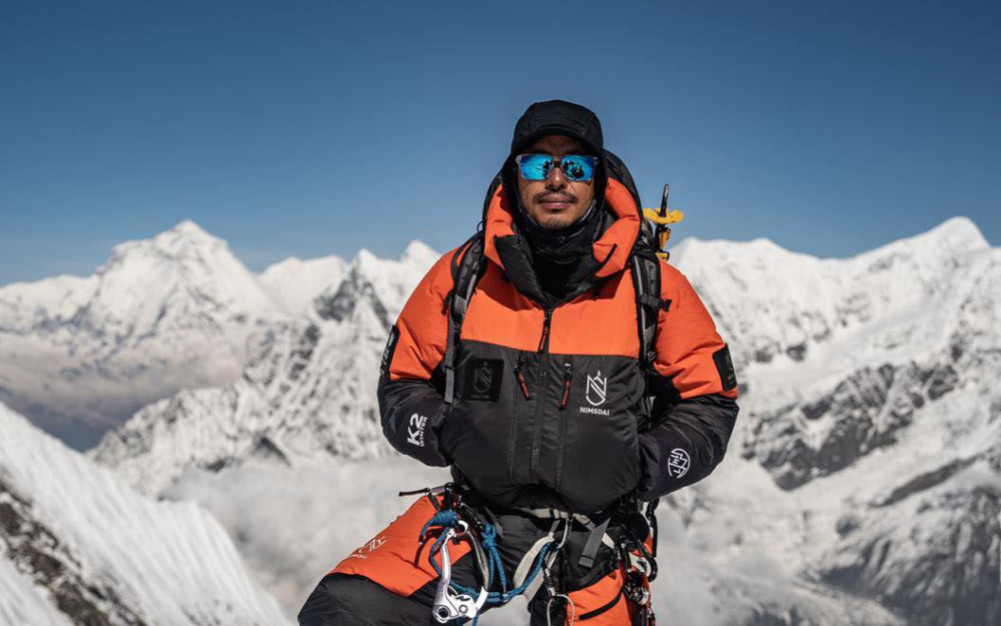
From a humble village in Nepal to becoming one of the greatest mountaineers in history, Nirmal Purja’s (Nimsdai) extraordinary journey was defined not only by world records but by courage, resilience, leadership, and an unwavering belief that nothing is impossible. His tragic death on Broad Peak has left the mountaineering world mourning a man whose legacy extends far beyond the mountains he conquered.
A Hero Whose Greatest Victory Was Inspiring the World
Most mountaineering stories celebrate those who stand triumphantly on the summit after overcoming nature’s greatest obstacles. Their achievements are measured by altitude, speed, records, and medals. Yet only a handful of climbers leave behind a legacy that transcends statistics and transforms the very identity of mountaineering itself. Nirmal “Nimsdai” Purja belonged to that rare category.
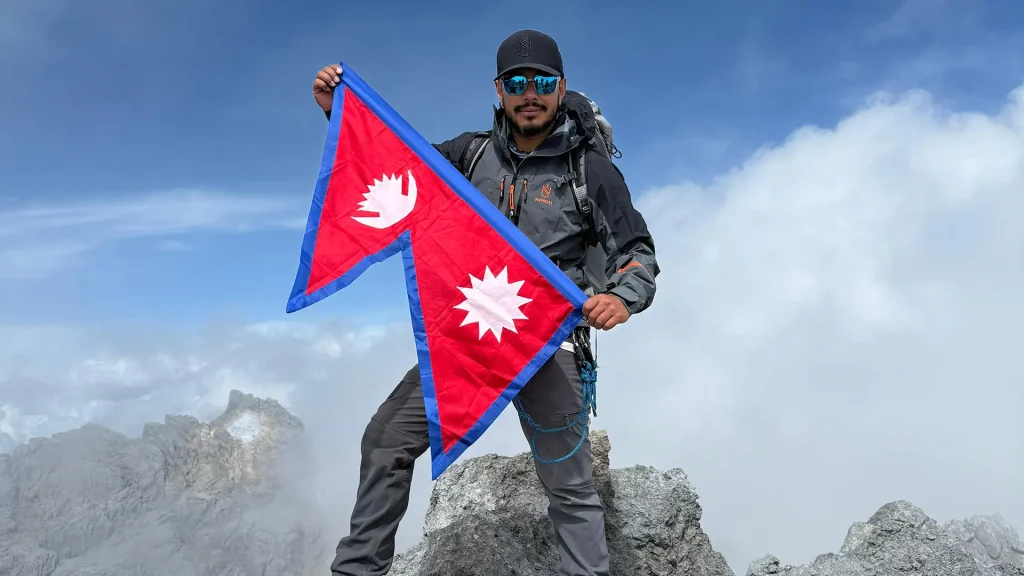
For millions across Nepal and around the world, Nimsdai was much more than an elite climber. Nimsdai became a symbol of determination, self-belief, national pride, and humanitarian leadership. His life demonstrated that extraordinary achievements are not reserved for those born into privilege or surrounded by opportunity. Instead, they belong to individuals who dare to challenge limitations that others consider impossible.
The tragic avalanche on Pakistan’s Broad Peak in July 2026, which claimed the lives of Purja and several fellow climbers, marked the end of one of the most inspirational careers in modern mountaineering. Yet even in death, his influence continues to inspire climbers, adventurers, military personnel, and young dreamers who see in his story proof that perseverance can rewrite destiny.
His journey was never simply about reaching mountain summits. It was about elevating Nepal’s identity on the world stage, changing perceptions of Nepali climbers, and proving that courage, discipline, and teamwork could accomplish what conventional wisdom declared impossible.
From Poverty and Hardship to Dreams Beyond the Horizon of Nimsdai
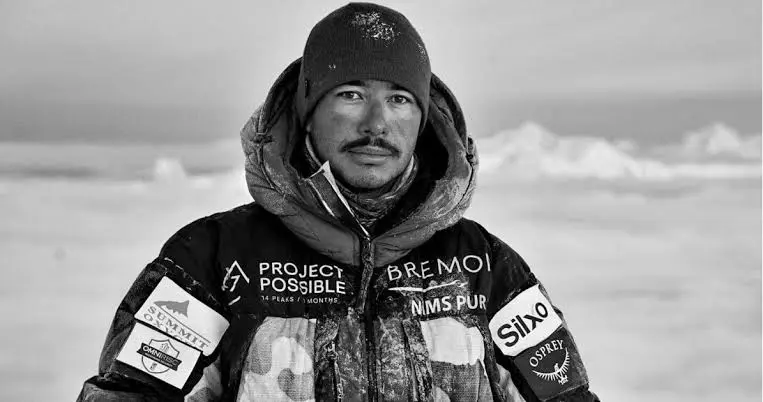
The story of Nirmal Purja began far away from international fame or elite expeditions. Born on 25 July 1983 in Dana village of Myagdi District, near the majestic Dhaulagiri range, his childhood was marked by financial hardship rather than comfort. Growing up in a poor family, daily life revolved around survival rather than ambition. Like many rural Nepali children, Nimsdai understood struggle from an early age. Resources were limited, opportunities were scarce, and the future appeared uncertain. The mountains towering above his village were magnificent, but they represented nature rather than destiny.
His challenges extended beyond poverty. As a child, he battled serious health conditions, including tuberculosis and asthma. These illnesses would have discouraged many from imagining an active career, let alone one involving some of the world’s harshest environments. Yet fate had prepared him for a life built on overcoming obstacles. Instead of allowing hardship to define him, Purja developed resilience. Every difficulty became a lesson in endurance. Every limitation became another barrier waiting to be broken. These early experiences shaped a mindset that later became the foundation of Nimsdai’s remarkable career. Long before Nimsdai became known as “Nimsdai,” he had already learned one of life’s greatest lessons: that circumstances do not determine destiny.
The Military That Forged a Leader
Nimsdai’s first major transformation came not in the Himalayas but in the military. In 2003, seeking opportunity and purpose, he joined the British Army as a Gurkha soldier. For countless young Nepalis, becoming a Gurkha represents honour, discipline, and service. For Nimsdai, however, it became much more than a career. Military life introduced him to values that would later define every expedition he undertook. Discipline became instinctive. Risk management became second nature. Leadership became an everyday responsibility rather than a title.
His exceptional dedication soon earned him a place in one of Britain’s most elite military units, the Special Boat Service (SBS). Becoming the first Gurkha ever accepted into the SBS was itself a historic accomplishment, reflecting his physical ability, mental toughness, and unwavering determination. The demanding environment of special forces training taught him to remain calm under immense pressure, make rapid decisions in life-threatening situations, and trust the strength of teamwork above individual glory.
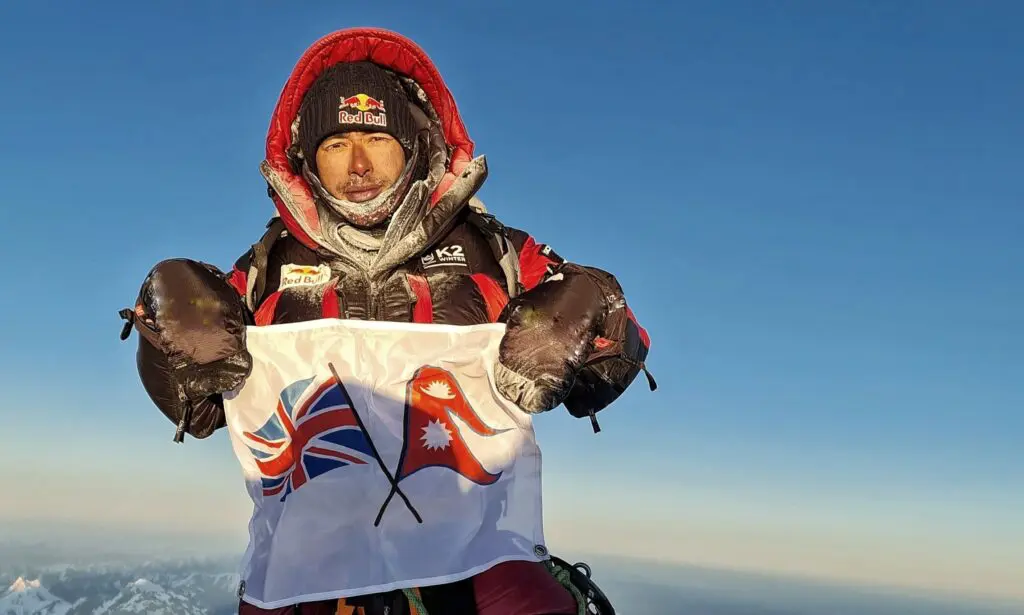
These lessons would later become invaluable in the dangerous world of high-altitude climbing, where survival depends on discipline, preparation, and mutual trust. Looking back, Nimsdai often credited his military career with giving him the confidence to believe that seemingly impossible challenges could be achieved through careful planning, relentless commitment, and courage.
Discovering a New Purpose Among the Himalayas
Although mountains surrounded his childhood, Nimsdai did not initially dream of becoming a mountaineer. His first significant encounter with the Himalayas came in 2012 during a visit to Everest Base Camp. What began as a journey soon evolved into a life-changing revelation. For Nimsdai, mountains were no longer simply breathtaking landscapes. They became places where human potential could be tested to its absolute limits.
Nimsdai discovered that climbing was not merely a sport or profession. It was an opportunity to explore physical endurance, mental resilience, leadership, and self-discovery. Unlike many climbers who spend decades gradually building experience, Nimsdai progressed with astonishing speed. Within just a few years, he successfully climbed some of the world’s most dangerous mountains, astonishing experienced climbers with both his physical capabilities and decision-making skills.
Eventually, the call of the mountains became impossible to ignore. In 2018, Purja made one of the boldest decisions of his life by resigning from the Special Boat Service. Leaving behind the financial security, prestige, and stability of an elite military career required immense courage. Many questioned his decision. Few could imagine that this choice would ultimately reshape the history of world mountaineering.
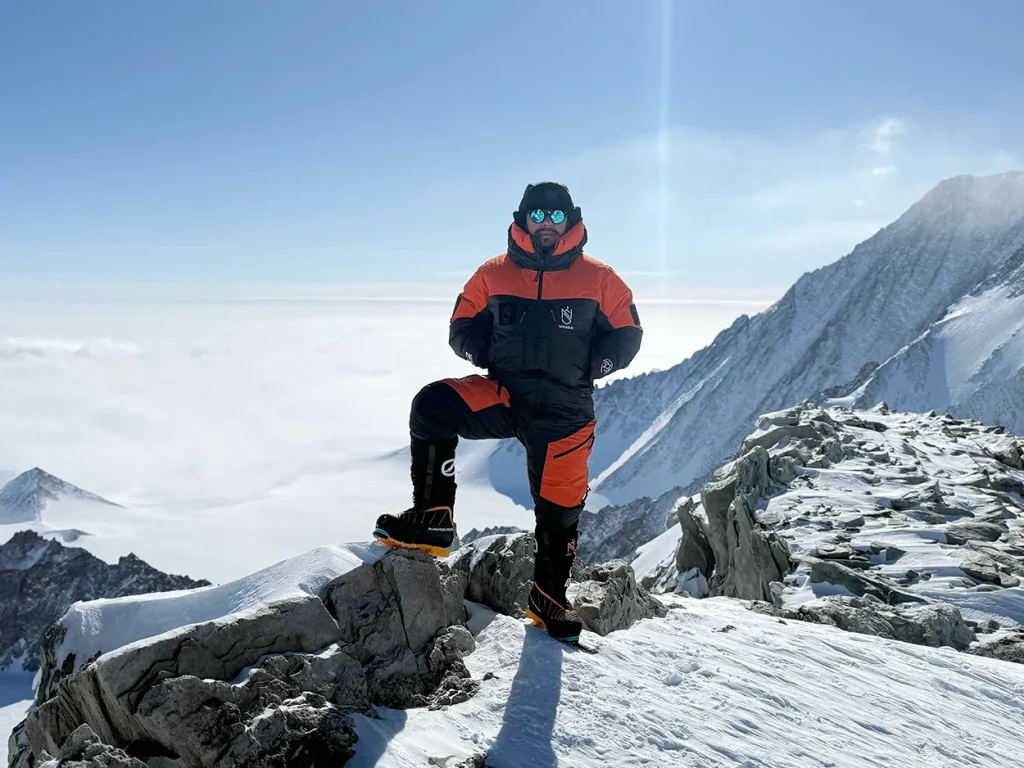
Project Possible: Turning an Impossible Dream into Reality
The defining chapter of Nimsdai’s career began with an idea so ambitious that many dismissed it as fantasy. In 2019, Nimsdai announced Project Possible, an expedition aimed at climbing all 14 mountains above 8,000 metres within just seven months. At that time, the existing record had taken years to accomplish. Many experienced climbers believed the objective was physically impossible. Sponsors doubted the project. Financial institutions showed little confidence. Potential supporters declined to invest.
Despite widespread scepticism, Nimsdai refused to abandon his dream. Instead, Nimsdai made enormous personal sacrifices. According to his memoir Beyond Possible, Nimsdai even mortgaged his own house to finance the expedition when sponsors failed to provide adequate support. For many people, the word “impossible” signals defeat. For Nimsdai, it became motivation.
His philosophy was remarkably simple: limitations often exist more in human perception than in reality. That belief transformed Project Possible into one of the greatest achievements in the history of mountaineering. Between April and October 2019, Nimsdai climbed all fourteen of the world’s highest mountains in an astonishing six months and six days, shattering the previous world record. The accomplishment stunned the global climbing community.

It required navigating multiple countries, unpredictable weather, logistical complexities, physical exhaustion, and life-threatening risks at extreme altitudes. Yet Nimsdai accomplished what experts had declared impossible. More importantly, he demonstrated that extraordinary success is built upon preparation, teamwork, and unwavering belief rather than luck. The achievement of Nimsdai instantly elevated him into the ranks of the world’s greatest mountaineers while simultaneously bringing unprecedented global recognition to Nepal’s climbing community
Redefining the World’s Perception of Nepali Mountaineers
While Nimsdai’s extraordinary speed records attracted global headlines, perhaps his greatest contribution to mountaineering was his determination to change how the world viewed Nepali climbers. For decades, the international climbing industry had largely celebrated foreign mountaineers as the heroes of Himalayan expeditions, while Nepali Sherpas and high-altitude guides, despite carrying heavy loads, fixing ropes, establishing routes, and rescuing stranded climbers, often remained behind the scenes. Their contributions were frequently overlooked, even though many expeditions depended entirely on their expertise.
Nimsdai believed this imbalance was deeply unfair. Throughout his career, he consistently argued that mountaineering is never an individual accomplishment but a collective effort involving guides, rope-fixing teams, porters, weather experts, support staff, and fellow climbers. Nimsdai rejected the notion of the “solo hero” and instead championed teamwork as the true foundation of success in the mountains.
Nimsdai often reminded the world, “A successful expedition is not about individual effort or personal achievement; it is the collective achievement of the entire team.” This philosophy was not merely something he spoke about during interviews; it guided his actions in the mountains. Every major expedition he led highlighted the professionalism, courage, and technical skills of Nepali climbers. International documentaries, media interviews, and public appearances became opportunities for Nimsdai to emphasize that Nepali mountaineers were not simply support staff but among the finest climbers in the world.
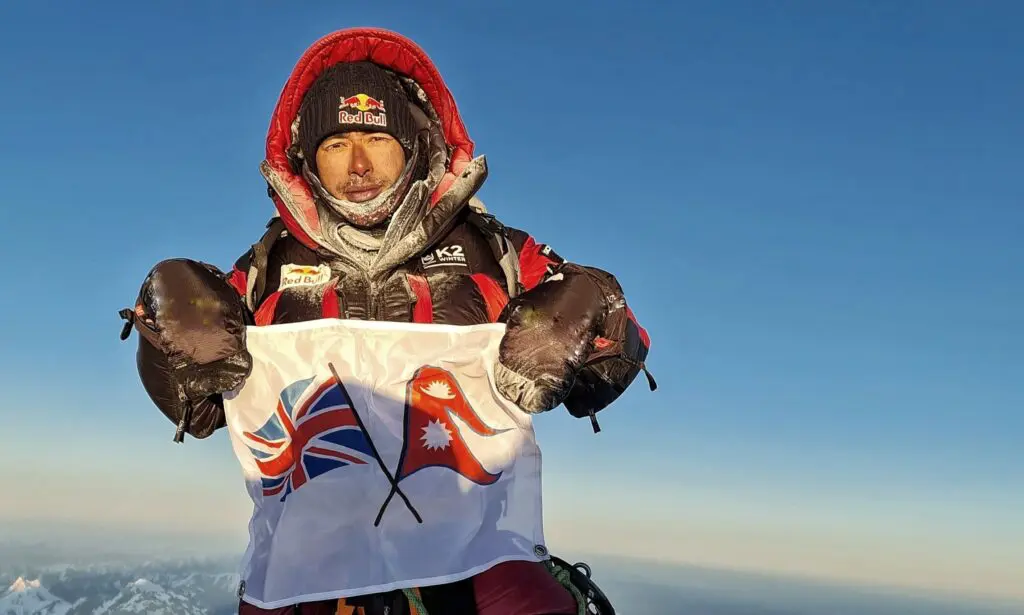
His achievements elevated not only his own reputation but also the global standing of Nepal’s climbing community. By placing Nepali expertise at the center of the global mountaineering narrative, Nimsdai helped inspire a new generation of young climbers who saw themselves not merely as assistants to foreign expeditions but as world-class athletes capable of leading some of the most ambitious mountaineering projects ever attempted.
Historic Winter Ascent of K2: A Victory for Nepal
One of the defining moments of Nimsdai’s career came in January 2021 when he participated in one of the most remarkable achievements in mountaineering history, the first successful winter ascent of K2. Standing at 8,611 metres, K2 in Pakistan is regarded as one of the world’s most difficult and dangerous mountains. Unlike Everest, K2 combines steep technical climbing, unstable weather, and extreme winter conditions that had defeated numerous expeditions for decades. Since the first attempts of Nimsdai began in the late 1980s, no climber had managed to reach its summit during winter.
Nimsdai joined nine other elite Nepali climbers on this historic mission. Rather than competing against one another, the members of three different expedition teams chose to combine their strengths after severe weather damaged camps and equipment on the mountain. As they approached the summit, Nimsdai proposed an extraordinary gesture that perfectly reflected his philosophy. Instead of racing individually to become the first person on top, he asked every climber to stop just below the summit and wait until the entire team had gathered. Together, the ten Nepali climbers linked arms, sang Nepal’s national anthem, and took their final steps onto the summit simultaneously.
The emotional moment instantly became one of the greatest symbols of teamwork in mountaineering history. Rather than celebrating personal glory, the climbers presented the achievement as a victory for Nepal and for all those who had contributed to Himalayan climbing for generations. Nimsdai added another remarkable accomplishment by becoming the only member of the summit team to climb K2 in winter without supplemental oxygen, demonstrating both exceptional physical endurance and extraordinary mental resilience. The successful winter ascent fundamentally changed global perceptions of what Nepali climbers could achieve. It also reinforced Nimsdai’s belief that unity often accomplishes what individual ambition cannot.
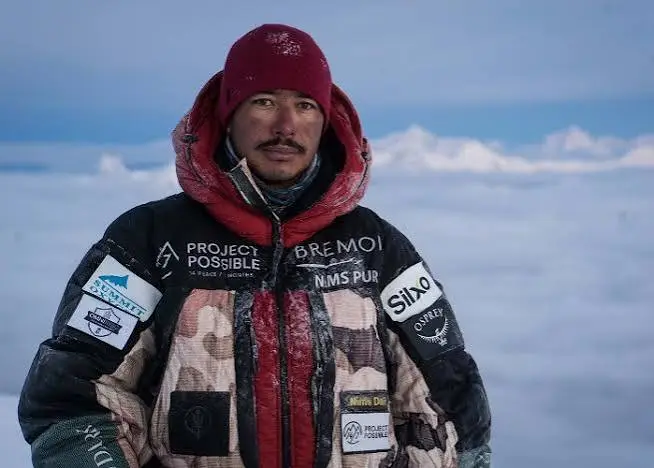
Breaking Records of Nimsdai That Redefined Human Endurance
Although Project Possible established Nimsdai as one of the fastest climbers in history, his record-breaking journey did not end there. Throughout the following years, Nimsdai continued pushing the boundaries of high-altitude mountaineering. Nimsdai’s achievements reflected not only physical strength but also meticulous planning, exceptional logistics, and years of military discipline. Among his most celebrated accomplishments was becoming the first person to summit Mount Everest, Lhotse, and Makalu within just 48 hours, a feat previously considered nearly impossible because of the enormous physical demands and dangerous transitions between the mountains.
Nimsdai later continued setting new benchmarks by climbing the world’s highest peaks without supplemental oxygen. In 2022, he completed Kangchenjunga, Everest, and Lhotse in less than nine days without bottled oxygen, setting another world record that astonished the international climbing community. Nimsdai’s achievements continued in 2024 when he completed all fourteen 8,000-metre peaks without supplemental oxygen in record time. Later that year, Nimsdai became the first climber to complete both the Seven Summits and all fourteen eight-thousanders with and without supplemental oxygen. In 2025, Nimsdai announced an ambitious “Hat-Trick Challenge,” aiming to climb the fourteen highest mountains and the Seven Summits for the third time.
Rather than seeking commercial profit, Nimsdai stated that sponsorships and donations associated with the challenge would support the Nimsdai Foundation and its humanitarian initiatives. Even during the 2026 climbing season, shortly before his final expedition, Nimsdai continued rewriting history by breaking his own record for the fastest traverse between Everest and Lhotse without supplemental oxygen. Nimsdai later climbed Makalu, extending his record for the highest number of successful ascents of 8,000-metre peaks. His extraordinary achievements demonstrated that human endurance is often limited less by physical ability than by determination, preparation, and mindset.
The Viral Everest Photograph That Sparked Global Debate
Not every contribution Nimsdai made involved standing on a summit. Sometimes, a single photograph carried more influence than an expedition itself. In May 2019, while participating in Project Possible, Nimsdai captured an image of a long queue of climbers waiting near the summit of Mount Everest. The photograph quickly spread across international media and became one of the most recognizable images in modern mountaineering. For many viewers, the picture represented overcrowding on Everest. For Nimsdai, however, it highlighted a far more complex issue.
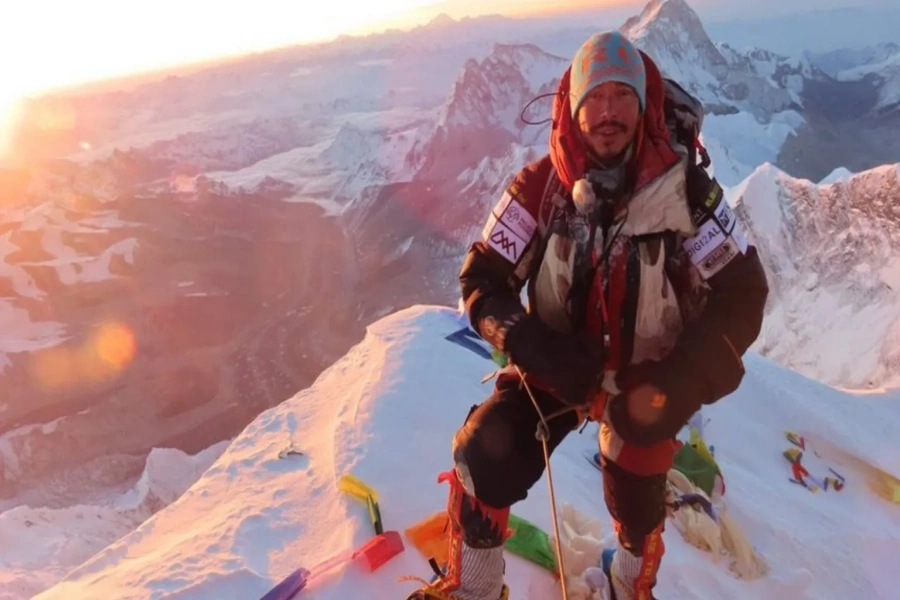
Nimsdai explained that climbers were not gathering because of poor planning alone but because extremely short weather windows forced hundreds of climbers to move toward the summit simultaneously. The image encouraged worldwide discussion about commercial expeditions, permit management, safety regulations, and sustainable mountain tourism. The photograph appeared in leading international newspapers and generated debates among governments, expedition companies, conservation organizations, and mountaineers regarding the future management of the world’s highest peak. By documenting what Nimsdai witnessed firsthand, Nimsdai once again demonstrated that leadership involves addressing uncomfortable realities rather than simply celebrating achievements.
Choosing Humanity Over Records
Perhaps one of the least publicized yet most admirable aspects of Nimsdai’s career was his unwavering commitment to saving lives in the mountains. Throughout numerous expeditions, Nimsdai repeatedly placed humanitarian responsibility above personal ambition. On several occasions, Nimsdai interrupted summit attempts or delayed record-breaking objectives to assist climbers in distress. High-altitude rescue operations rank among the most dangerous missions in mountaineering. Thin air, freezing temperatures, avalanches, and unpredictable weather leave rescuers facing the same life-threatening risks as those they attempt to save.
Yet Nimsdai consistently believed that no world record could ever be more valuable than a human life. His military background proved invaluable during rescue operations. Calm decision-making, rapid assessment of risks, and disciplined teamwork enabled him to coordinate difficult evacuations under extreme conditions. These acts of compassion strengthened his reputation far beyond mountaineering circles. To many people, Nimsdai’s willingness to risk his own life for others represented the highest form of courage. Friends, fellow climbers, and expedition members frequently described him not simply as an extraordinary athlete but as a dependable leader who inspired confidence during the most dangerous moments.
From the Himalayas to Global Recognition
Nimsdai’s remarkable achievements attracted international attention far beyond the climbing community. In 2021, Netflix released the documentary 14 Peaks: Nothing Is Impossible, chronicling Project Possible and introducing millions of viewers to his extraordinary journey. The film showcased not only Nimsdai’s physical accomplishments but also the determination, sacrifices, and teamwork that made the seemingly impossible expedition successful. The documentary transformed Nimsdai into a global inspirational figure, particularly among young audiences who viewed his story as proof that perseverance and courage could overcome overwhelming obstacles.
His memoir, Beyond Possible, offered readers a deeply personal account of his struggles, from financial hardship and military life to world-record expeditions. In the book, Nimsdai candidly described mortgaging his home to fund Project Possible after potential sponsors declined to support his vision. The memoir revealed that his greatest obstacle was not the mountains themselves but convincing others that his dream deserved belief. By sharing both his victories and struggles, Nimsdai inspired countless readers to challenge conventional limits in their own lives.