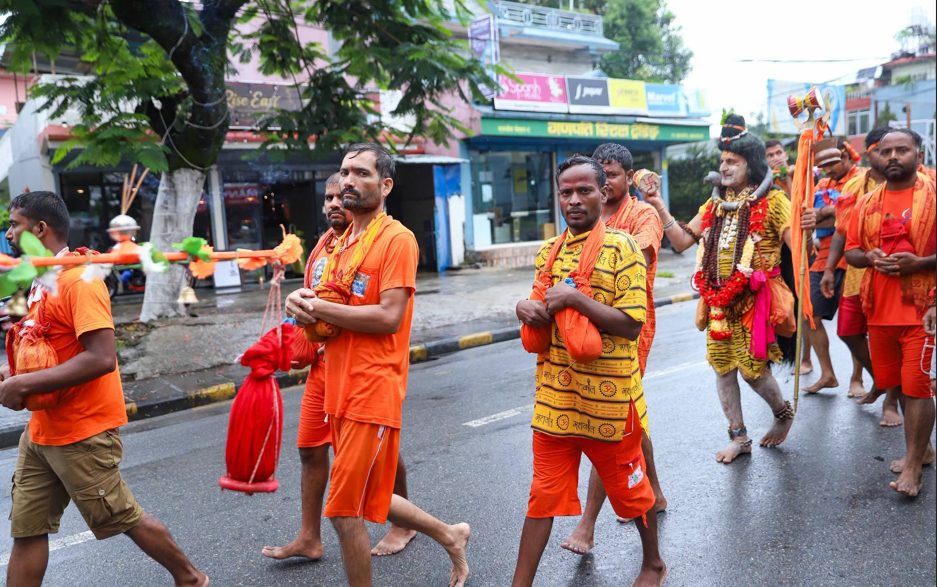
More than 10,000 devotees gathered at Sundarijal to participate in the traditional Bol Bam pilgrimage to Pashupatinath Temple on the final Monday of Shravan, continuing one of Nepal’s prominent annual religious journeys. The pilgrimage, organized on the occasion of Shravan’s final Monday according to the solar calendar, brought large numbers of devotees to Sundarijal, where they collected holy water from the Bagmati River before beginning their barefoot journey to Pashupatinath.
Devotees Gather at Sundarijal for Annual Pilgrimage
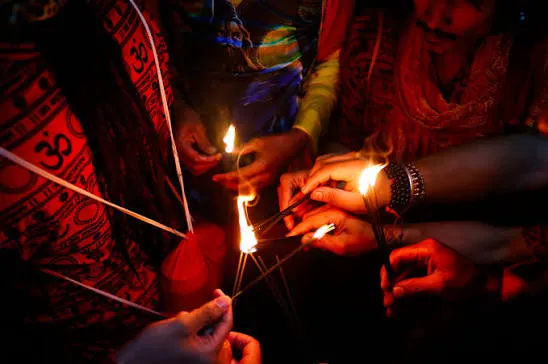
Every Monday during the month of Shravan, devotees traditionally gather at Sundarijal, take a ritual bath, wear clean clothes, and collect holy water to offer to Lord Pashupatinath. For the final Bol Bam pilgrimage of this year’s Shravan, many devotees arrived at Sundarijal on Sunday night. After completing their regular religious rituals and bathing, they collected water and prepared to begin the pilgrimage to Pashupatinath. The Bol Bam journey was organized by the Bol Bam Kanwariya Sangh, Sanatan Yuwa Manch Nepal, and other religious and social organizations.

More Than 10,000 Devotees Take Part
According to Police Assistant Sub-Inspector Nabin Bikram Thapa, chief of the Sundarijal Police Division, more than 10,000 devotees participated in the Bol Bam pilgrimage. Devotees stayed at Sundarijal overnight, taking part in devotional singing and prayers until midnight. After midnight, they took ritual baths, collected holy water, and began walking barefoot toward Pashupatinath. The pilgrimage combined religious devotion with a long physical journey, with participants carrying water throughout the route as an offering to their revered deity, Lord Shiva.
Barefoot Journey to Pashupatinath
After collecting holy water, devotees traveled on foot from Sundarijal to Pashupatinath. The traditional pilgrimage requires participants to carry the sacred water without placing the containers down during the journey. The practice is rooted in the belief that offering holy water to Lord Pashupatinath during Shrawan, particularly on Mondays, brings spiritual merit and fulfills devotees’ religious wishes. The annual movement also creates a significant flow of domestic religious visitors between Sundarijal and the Pashupati area.
Special Entrance Arranged for Bol Bam Pilgrims
The Pashupati Area Development Trust made special arrangements at Pashupatinath Temple for the Bol Bam participants. A dedicated route was arranged through the northern entrance of the temple. According to Pashupati Area Development Trust Member Secretary Tirtha Shrestha, Bol Bam pilgrims were directed toward the northern gate through the Basuki area to offer the holy water they had carried from Sundarijal. The arrangement was intended to separate the Bol Bam pilgrims from other visitors and make the water-offering ritual more organized.
Pashupatinath Opens All Four Doors for Devotees
To accommodate the large number of devotees visiting Pashupatinath on the final Monday of Shravan, all four main doors of the temple were scheduled to open from 3:00 AM. The arrangement was aimed at facilitating smoother entry and reducing congestion as large numbers of pilgrims arrived for worship. Pashupatinath, one of Nepal’s most important Hindu pilgrimage sites, experiences a major increase in visitors during Shravan, particularly on Mondays when devotees traditionally worship Lord Shiva.

Bol Bam Strengthens Religious Tourism in Kathmandu
The annual Bol Bam pilgrimage has become an important part of Nepal’s religious tourism calendar. The movement of thousands of devotees from Sundarijal to Pashupatinath connects two significant religious locations while creating a large-scale pilgrimage experience in Kathmandu.
Beyond its religious importance, the event also contributes to domestic tourism by bringing visitors from different parts of the country to Kathmandu and encouraging movement around important cultural and heritage sites. The combination of traditional rituals, devotional music, mass participation and the barefoot pilgrimage makes the Bol Bam journey a distinctive example of Nepal’s living religious and cultural heritage.