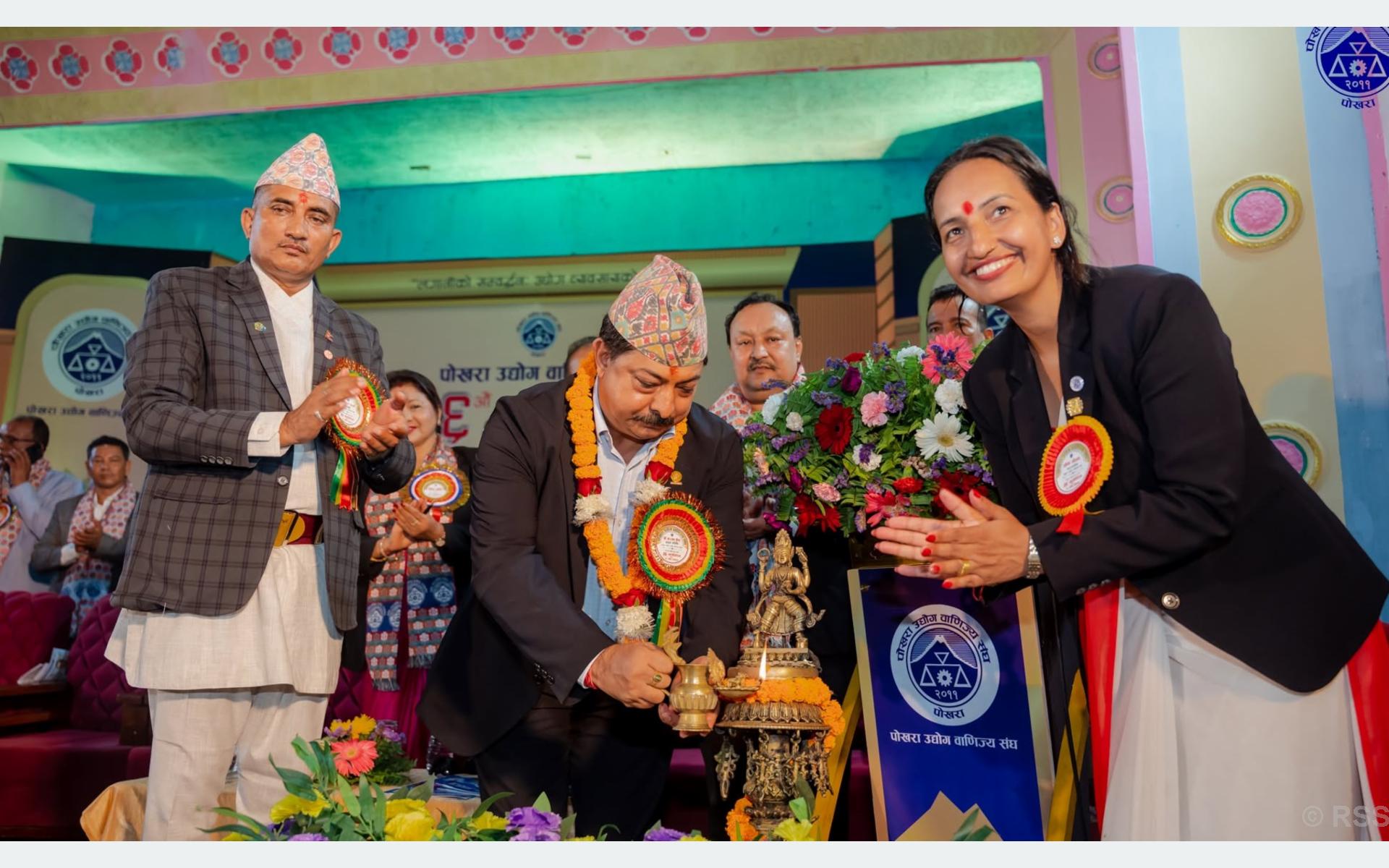
The devastating Bhotekoshi River flood has triggered growing concern among Nepal’s private-sector leaders over its potential spillover effects on Pokhara’s tourism industry and the wider local economy, with tourism entrepreneurs warning that negative international perceptions could discourage visitors even from destinations that remain safe and fully operational. Speaking at the inauguration of the 36th General Convention of the Pokhara Chamber of Commerce and Industry (PCCI) on Saturday, business and tourism representatives stressed the urgent need to communicate clearly to international markets that the disaster was concentrated in specific areas and that major destinations such as Pokhara remain open and suitable for travel.
Private Sector Warns Of A Perception-Driven Tourism Setback
The concern comes at a particularly sensitive time for Nepal’s tourism industry, which is entering its traditionally important autumn season. Business leaders said the impact of a major disaster in Bhotekoshi should not be allowed to create the impression that the entire country has become unsafe, arguing that such a perception could hurt destinations far beyond the areas directly affected by the flood.
They called for a coordinated promotional effort involving the government, tourism agencies and the private sector to reassure international travellers that Pokhara remains accessible, operational and ready to welcome visitors, while also providing accurate information about areas directly affected by the disaster. The need for such messaging has become more pressing as Nepal seeks to protect its tourism recovery during the September-November peak period, which accounts for a significant share of annual visitor arrivals.

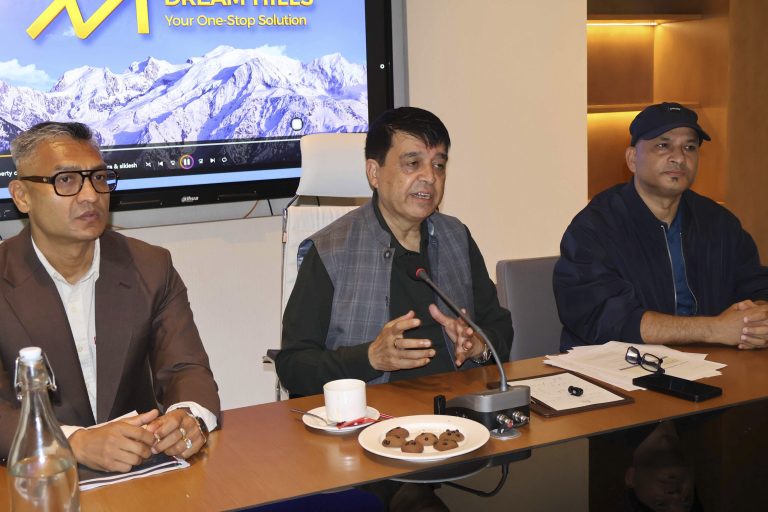
Former Federation of Nepalese Chambers of Commerce and Industry (FNCCI) President Ananda Raj Mulmi said the consequences of the disaster in Bhotekoshi were already beginning to be felt in Pokhara’s tourism sector and warned that prolonged declines in visitor numbers could have a wider economic impact.
He urged stakeholders to begin planning immediately rather than waiting for the effects to deepen, stressing that tourism businesses, hotels, restaurants, transport operators and other sectors dependent on visitor spending could face increasing pressure if international travelers postpone or cancel their Nepal trips. “If tourists do not come for a long time, what kind of impact will that have on Pokhara’s economy?” Mulmi asked, emphasizing the need for timely action and practical solutions.
Pokhara Seeks A Clear Message: Nepal Is Open Beyond Disaster Zones
Nepal Tourism Board member Santosh Pokharel likewise emphasized the importance of delivering a clear and credible message to international audiences that most tourist destinations outside the disaster-affected areas remain open and safe. He said the decline in tourism activity is not necessarily confined to locations directly hit by the flood, as uncertainty and negative perceptions can influence travel decisions across the country. According to Pokharel, Nepal needs to strengthen international promotion of destinations including Pokhara while working more actively with tourism businesses and relevant institutions to ensure that accurate information reaches prospective travelers.
The concern reflects a broader challenge facing Nepal’s tourism industry after the Bhotekoshi disaster. Recent reporting has shown that the flood came just as businesses were preparing for the peak autumn tourism season, with some hotels already reporting cancellations following the disaster. The Nepal Tourism Board has also publicly emphasized that Nepal remains open to visitors, while government and tourism stakeholders have been working to counter the perception that the entire country has been affected.
Business Community Steps Up Relief And Recovery Efforts
FNCCI President Anjan Shrestha said the private sector was also seeking international support for relief and rehabilitation efforts in areas devastated by the Bhotekoshi disaster. He said the federation had written to 70 chambers of commerce and industry around the world, appealing for assistance for disaster recovery and reconstruction. Shrestha stressed that the scale of the disaster would require substantial financial resources and that both the state and private sector would need to work together to support affected communities.
He called on businesses across Nepal to contribute to relief efforts in a spirit of social responsibility, saying the private sector had a role to play alongside government agencies during a national emergency. The business community has already been involved in relief initiatives following the disaster, with companies, financial institutions and tourism-related organisations contributing funds and other forms of assistance to affected communities.
Shrestha also warned that Nepal’s exposure to natural disasters is increasing and called for stronger disaster preparedness, risk-sensitive planning and long-term development strategies. He highlighted unmanaged settlement expansion along rivers and streams, as well as risks associated with glacial lakes and other natural hazards, as issues requiring greater attention. At the same time, he urged the government to avoid measures that could further discourage businesses at a time when the private sector is already facing significant challenges, calling instead for a more investment-friendly environment that would enable enterprises to remain operational and support economic recovery.
Three Students Honoured With Lakshmi Vidya Padak
The convention also featured the presentation of the Lakshmi Vidya Padak 2082, an academic recognition established by Laxmi Group Pvt. Ltd. and administered by the Pokhara Chamber of Commerce and Industry to honour outstanding management students from Kaski district. Three students were recognised for achieving the highest results at different academic levels. Jyoti Tamang of Janapriya Multiple Campus was honoured at the postgraduate level, while Samiksha Timilsina of Pokhara College of Management received the award in the Bachelor of Business Administration (BBA) category and Santosh Thapa of Janapriya Multiple Campus was recognised in the Bachelor of Business Studies (BBS) category.

The recipients were presented with garlands, shawls, copper plaques, academic medals and cash prizes in recognition of their achievements. The award programme has so far honoured 76 students, reflecting the continued focus of the initiative on encouraging academic excellence among management students in Kaski.
PCCI Leadership Election Set To Shape The Chamber’s Next Chapter
The 36th general convention is also set to determine the chamber’s new leadership, with voting scheduled for Sunday. Uttam Man Buddhacharya, Shobha Gautam, Balram Acharya and Arjun Pokharel have registered their candidacies for the leadership contest, putting the chamber’s next direction under the spotlight at a time when Pokhara’s business community is confronting the combined challenges of disaster-related uncertainty, tourism recovery and the need to maintain investor confidence.
For Pokhara, the issue extends beyond protecting visitor numbers alone. Tourism is deeply connected to the city’s hotels, restaurants, transport services, adventure operators, retail businesses and wider service economy. As Nepal works to reassure international travelers that the country remains open beyond the areas directly affected by the Bhotekoshi disaster, private-sector leaders are pressing for faster communication, stronger destination promotion, and coordinated recovery measures to prevent a regional disaster from becoming a nationwide tourism perception crisis.