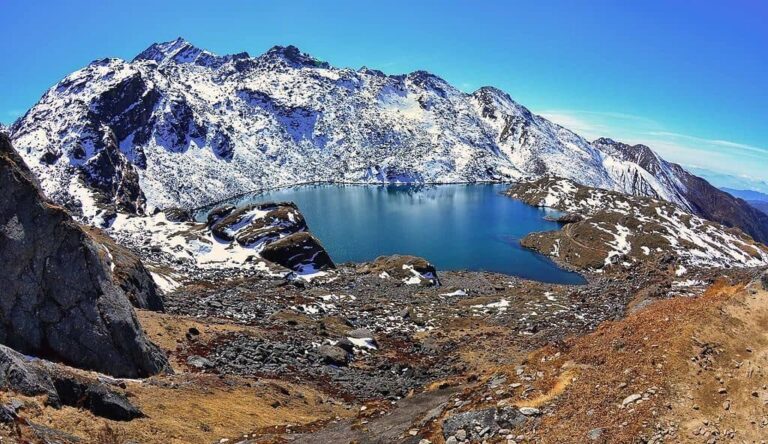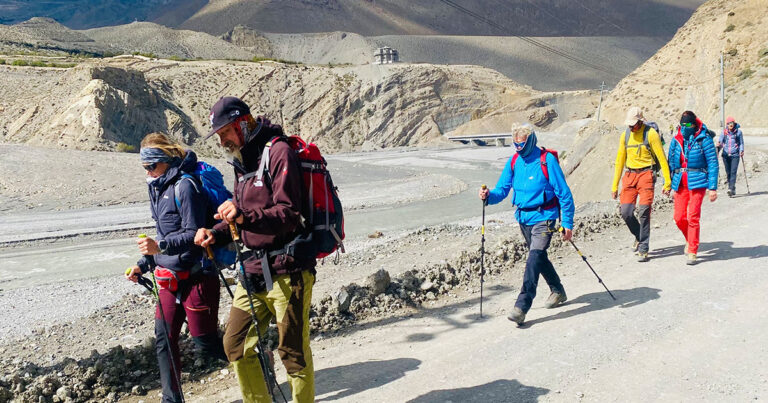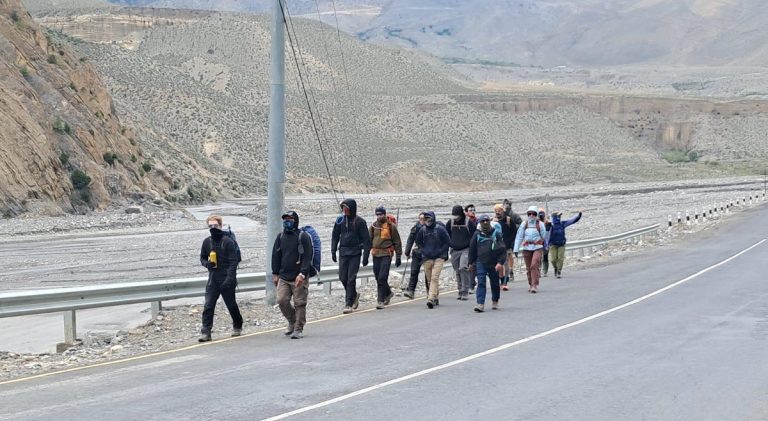
The Nepal Mountaineering Association (NMA) has sent a team of trainees and instructors to the Kanchenjunga Peak of Taplejung for a week-long practical mountaineering training programme at Danga Peak. The programme is designed to take mountaineering education beyond the classroom and into a real Himalayan environment, allowing students and instructors to develop and test their technical skills under actual mountain conditions.
Following the training programme, a combined team of trainees and instructors is scheduled to make a summit attempt on Danga Peak, providing participants with an opportunity to apply the techniques and knowledge gained during the field sessions.

Danga Peak to Serve as Practical Training Ground
The NMA Training Team has travelled to the Kanchenjunga region as part of its practical field programme, with Danga Peak selected as the main training location. Unlike theoretical instruction conducted in classrooms or controlled environments, field-based training exposes aspiring mountaineers to the challenges they are likely to encounter during actual expeditions. Participants can practice climbing techniques, movement on mountainous terrain, rope work, safety procedures and other essential mountaineering skills in a natural setting.
The week-long programme will therefore combine technical training, mountain experience and a supervised summit attempt, allowing trainees to assess their abilities in challenging Himalayan conditions. The programme is particularly significant for developing professional mountaineering skills in Nepal, where high-altitude climbing and expedition tourism form an important part of the country’s adventure tourism industry.
NMA Leadership Sends Off Training Team
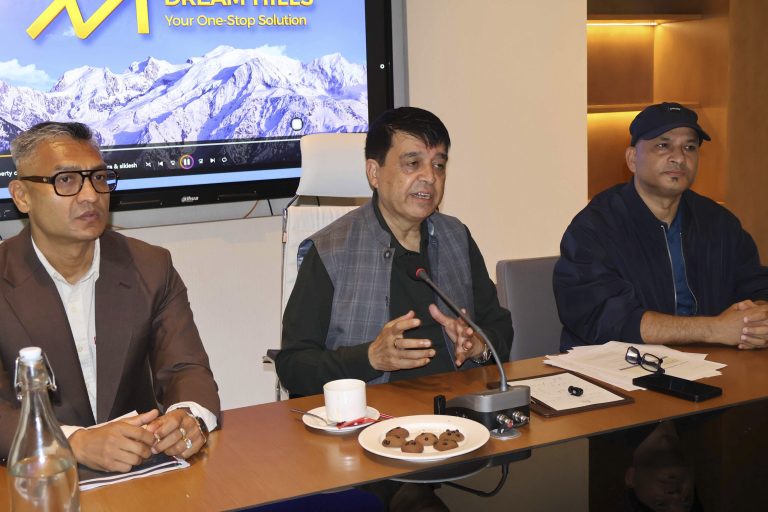
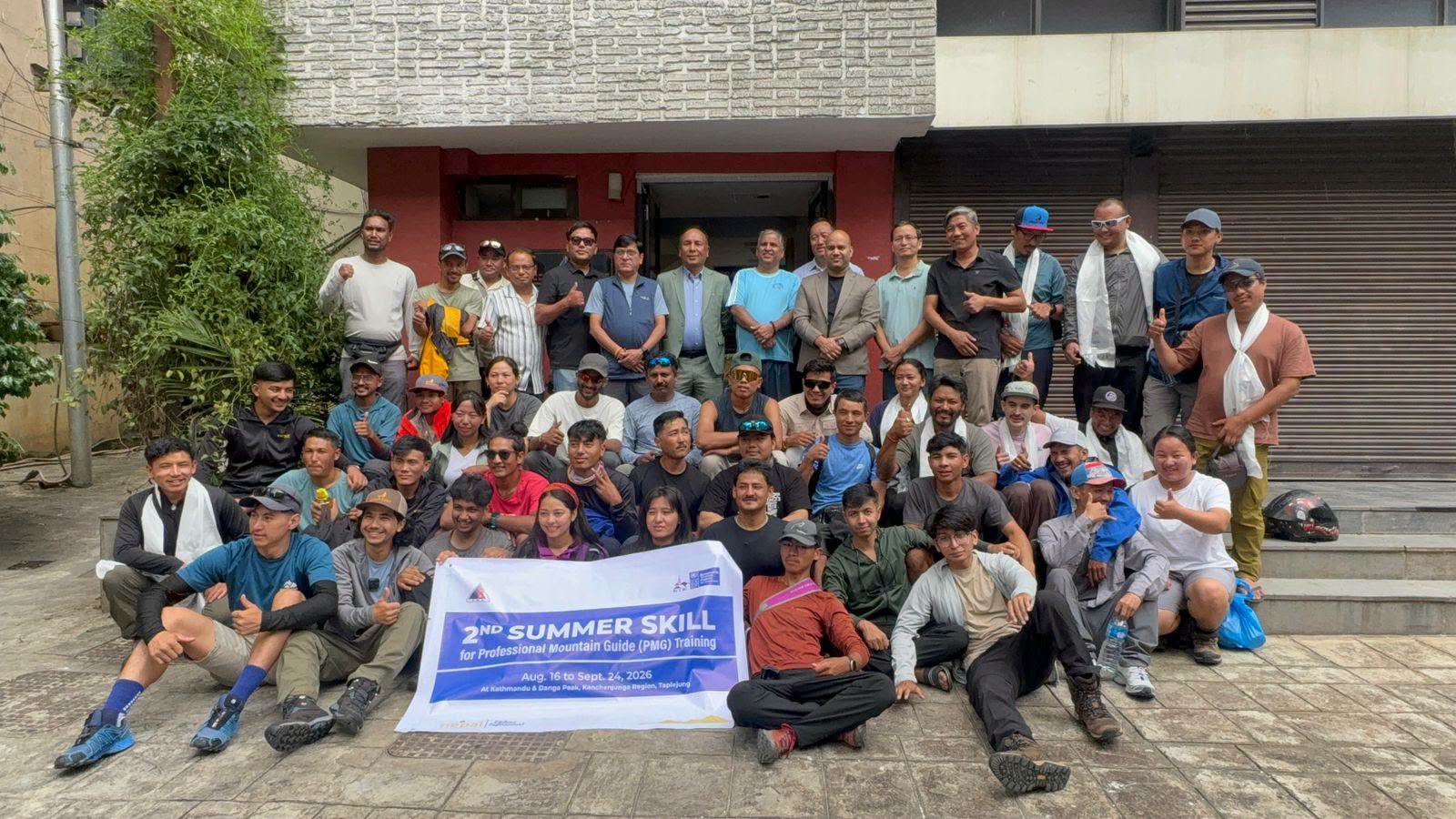
Senior officials of the Nepal Mountaineering Association were present to see off the training team before it departed for Taplejung. Those present included NMA President Fur Gelje Sherpa, Sustainable Tourism Project National Coordinator Khadga Bikram Shah and National Manager Dharma Dawadi.
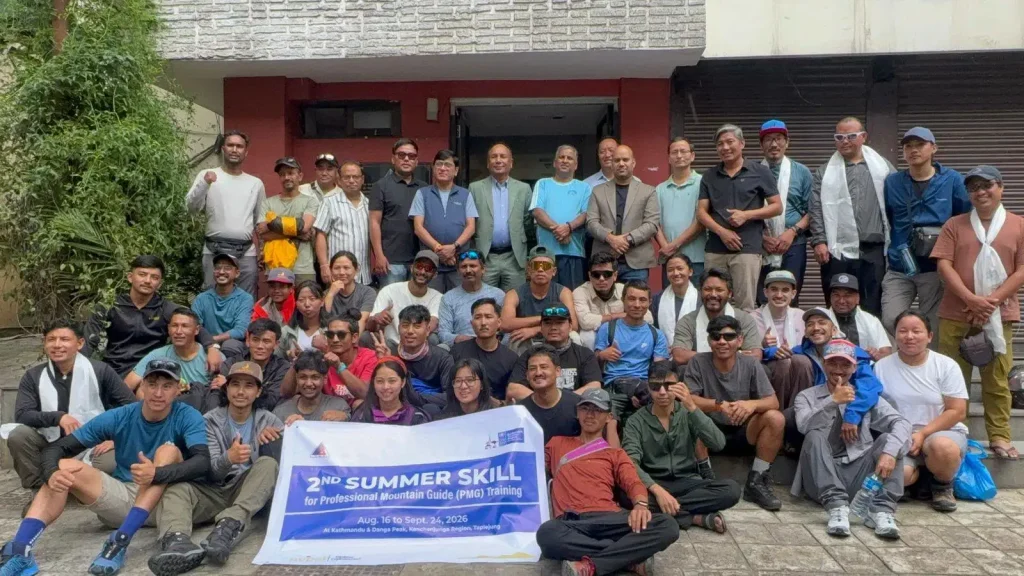
The send-off programme was also attended by Senior Vice President Iswari Paudel, Second Vice President Bodha Raj Bhandari, General Secretary Rajendra Bahadur Lama, and Training and Expedition Committee Convenor Phuri Geljen Sherpa, along with other members of the NMA executive board. The participation of senior association officials reflects the organisation’s emphasis on practical training and the development of capable mountaineers and instructors.
Combining Training With a Summit Attempt
A key feature of the programme is that the participants will not only receive practical instruction but will also have the opportunity to put their skills into practice through a summit attempt. The combined student-instructor team is expected to use the field programme to gain experience in planning and conducting a mountain ascent while working together in a real expedition environment.
Such practical exposure can help trainees understand the difference between learning mountaineering techniques and applying them when confronted with actual terrain, weather and altitude-related challenges. For instructors, the programme also provides an opportunity to evaluate trainees in real conditions and strengthen their own field-based teaching and leadership capabilities.

Strengthening Nepal’s Professional Mountaineering Training
The NMA’s Danga Peak programme comes as part of broader efforts to strengthen professional mountaineering education and technical capacity in Nepal. Nepal is internationally recognised for its Himalayan mountains and mountaineering destinations, but the development of safe and professional adventure tourism also depends on properly trained climbers, guides, instructors and expedition personnel. Field programmes such as this allow trainees to develop practical experience before progressing to more demanding climbing objectives.
By combining structured training with an actual summit attempt, the Danga Peak programme is expected to contribute to the development of a stronger pool of technically skilled mountaineering professionals. The Kanchenjunga region itself provides an appropriate setting for such training, with its remote Himalayan landscape and demanding mountain environment offering participants experience that cannot be fully replicated in an indoor training environment. The NMA said the initiative is expected to contribute to the continued development of professional mountaineering training in Nepal, while giving trainees valuable experience that can support their future involvement in Himalayan expeditions and adventure tourism.