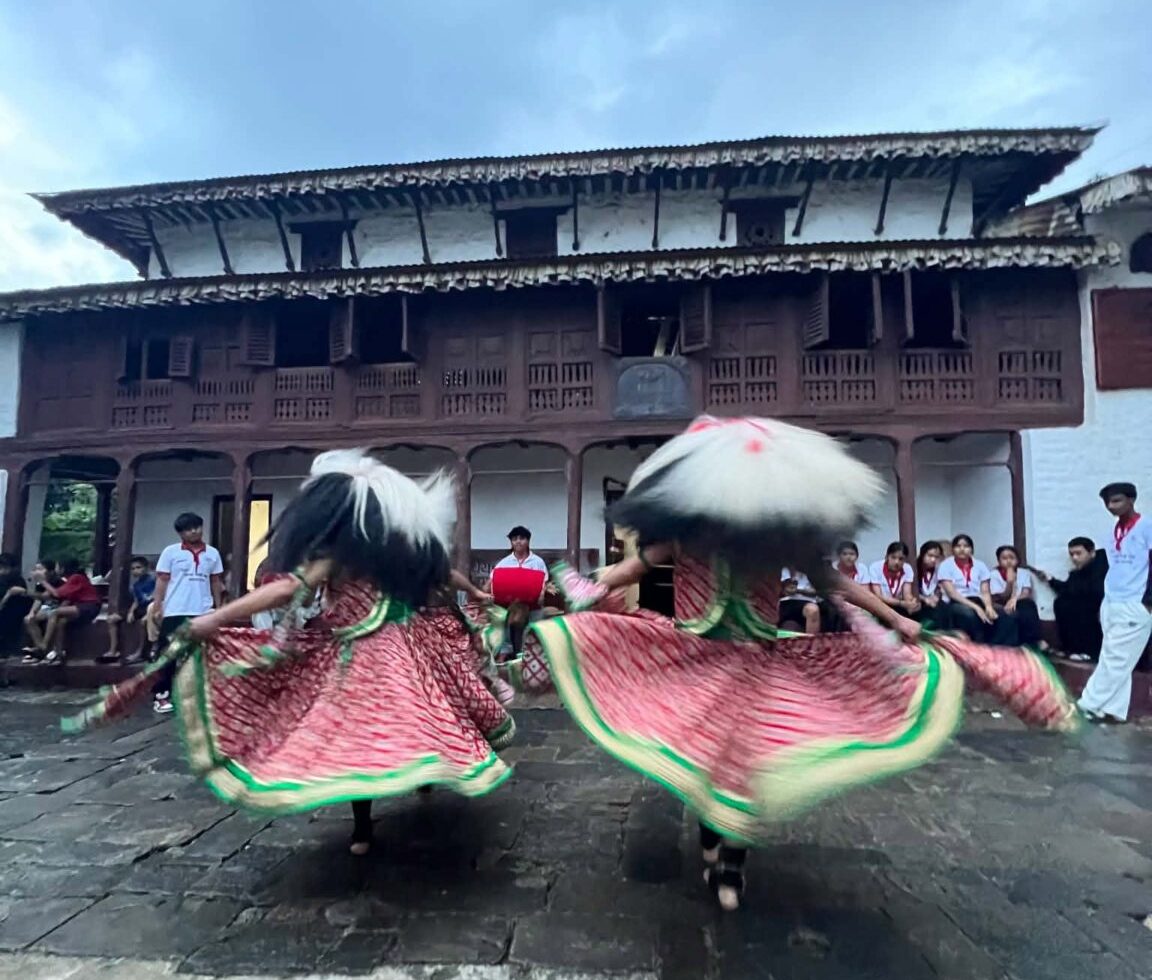
The streets and historic market area of Kushma, Parbat, took on a festive atmosphere Monday evening as the traditional Lakhe dance brought this year’s Bhadaure Jatra celebrations to a close. The courtyard of Shatabdi Ghar became the center of the celebration, where the Lakhe Integrated Society presented the final performance of the season. For local residents, the occasion was more than a cultural program it was a symbolic farewell to Lakhe until next year’s festivities.

Bhadaure Jatra is one of the occasions when Newar communities showcase their traditional dances, costumes, music and stories. Lakhe is among its most recognizable performances, while other traditional displays include Ropai Jatra, Gai Jatra, Bagh Jatra, Hanuman Naach and several other forms of cultural performance.
A Seasonal Tradition Deeply Rooted in Kushma
Lakhe performances in Kushma traditionally begin around Bhute Aunsi, the New Moon day of Shrawan, and continue until Teej. According to local resident Jayendra Kumar Joshi, the period is filled with a series of traditional celebrations that bring communities together. The tradition has become an important part of Kushma’s cultural landscape. Although the organized practice of Lakhe in the area has evolved over generations, local residents continue to stage the performance every year as an effort to keep Newar traditions alive.
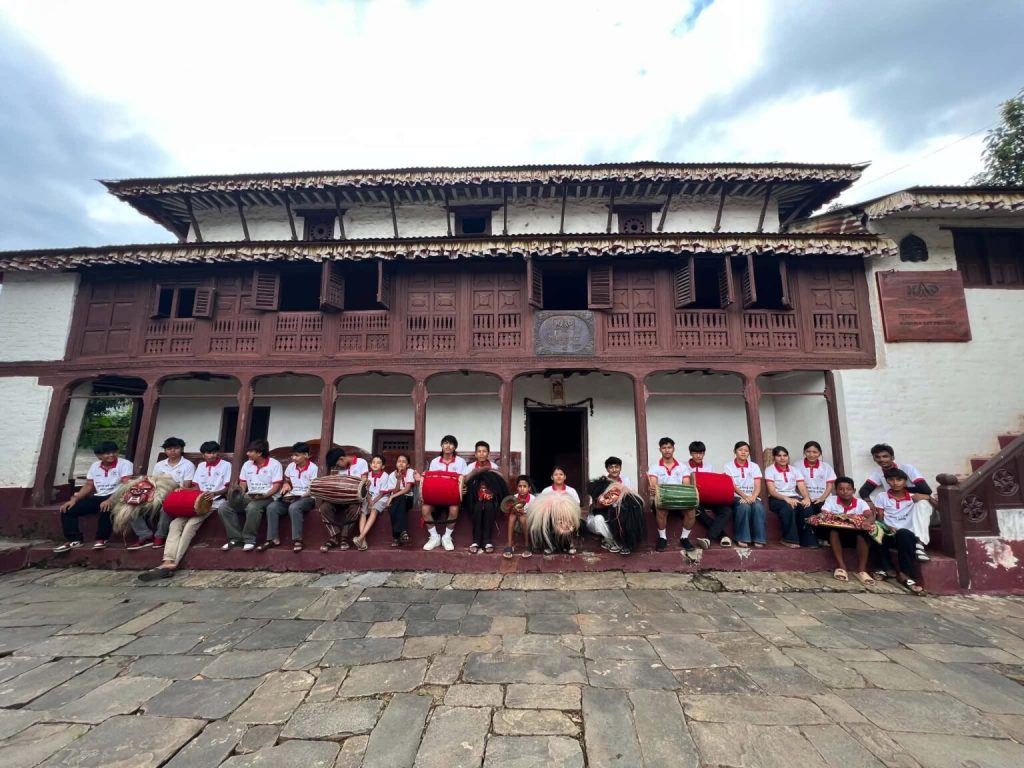
What makes the celebration particularly significant is the involvement of the wider community. While the Lakhe character is traditionally portrayed by members of the Newar community, preparations, organization and other aspects of the festivities receive support from residents across different communities. This shared participation has helped transform the festival into a broader community celebration rather than an event limited to one particular group.
Some Traditional Performances Are Slowly Fading
The celebration, however, also highlights a growing concern among cultural enthusiasts about the gradual disappearance of some traditional performances. Culturalist Shanti Narayan Shrestha said Bhadaure Jatra traditionally includes a wide variety of dances, such as Naga Naach, Krishna Jatra, Bakulla Naach, Hanuman Naach, and Bagh Jatra, alongside Lakhe.
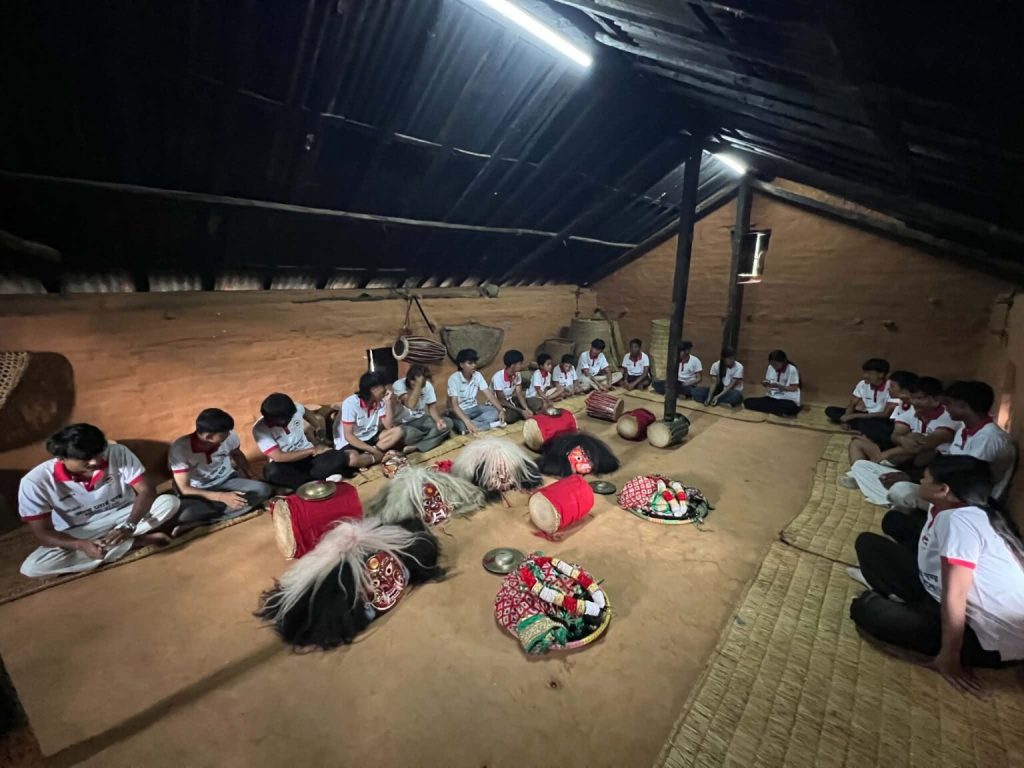
Some of these traditions are now becoming increasingly difficult to sustain. Bakulla Naach and Hanuman Naach, in particular, are considered vulnerable because fewer people are involved in keeping them alive. Rajatman Shrestha, program coordinator of the Lakhe Integrated Society, said this year’s celebration once again featured a procession through the town, with performers appearing in traditional costumes and characters.
The Lakhe tradition is also surrounded by different legends. One commonly told story connects the dance with Ghantakarna, a mythical demon, and the belief that such performances helped protect communities from harmful supernatural forces. Over time, the ritual has developed into a form of cultural entertainment that combines storytelling, music and dance.
Shatabdi Ghar Looks to Give Traditional Culture a New Platform
For cultural preservationists, keeping Lakhe alive requires more than staging an annual performance. They believe traditional knowledge must also reach younger generations. Conservation advocate RK Adipt Giri described Lakhe as an important part of Nepal’s intangible cultural heritage. According to local accounts, the tradition was brought to the area by Newar communities who migrated from places such as Bhaktapur and Dhulikhel centuries ago.
Giri emphasized that community initiatives need support from local and national authorities if traditional cultural practices are to survive in the long term. He called for policies and sustained programs that encourage communities to preserve their heritage. Shatabdi Ghar has been developed with a similar vision: to provide a place where local art, traditions, festivals, costumes and cultural practices can be remembered and practiced. There are also plans to organize a regular cultural series at the venue featuring traditional performances from different communities.

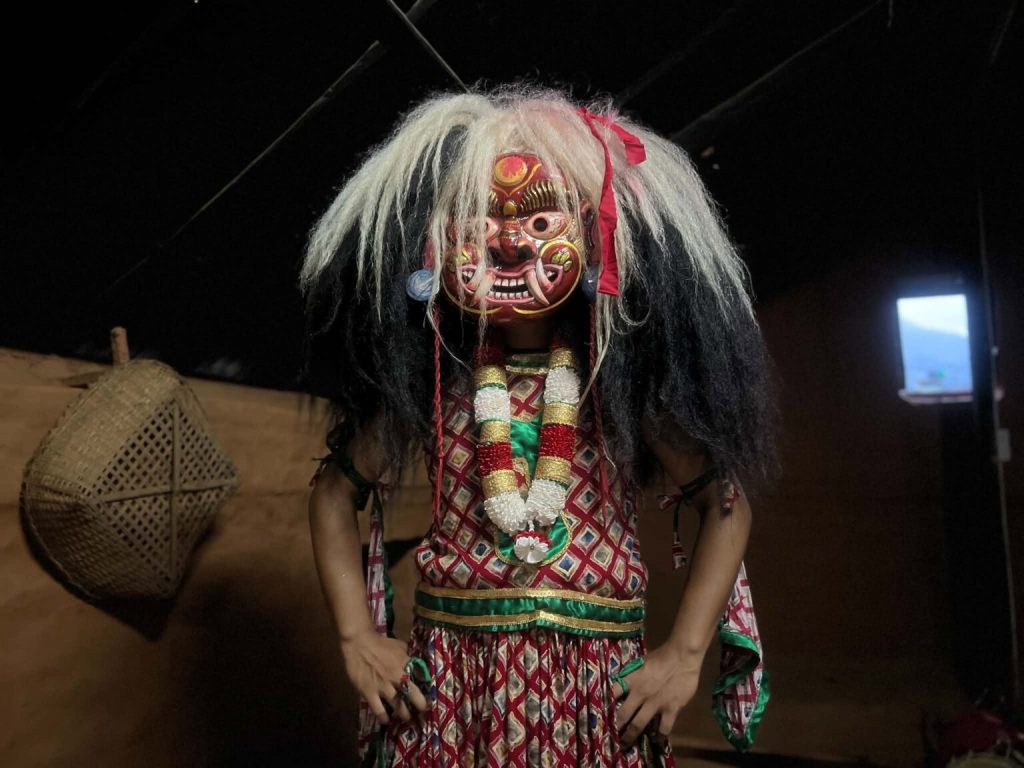
Lakhe itself is performed in different ways depending on the community and location. Performers typically wear elaborate masks and costumes representing supernatural characters, accompanied by traditional rhythms and movements. For generations, these festivals have offered communities an opportunity to celebrate together, share stories, and maintain social bonds. But as lifestyles change and younger people become less connected with traditional practices, preserving these cultural expressions is becoming increasingly challenging. The continuing Lakhe performances in Kushma therefore carry significance beyond a single festival. They represent an ongoing effort to ensure that a centuries-old cultural tradition remains part of community life for generations to come.