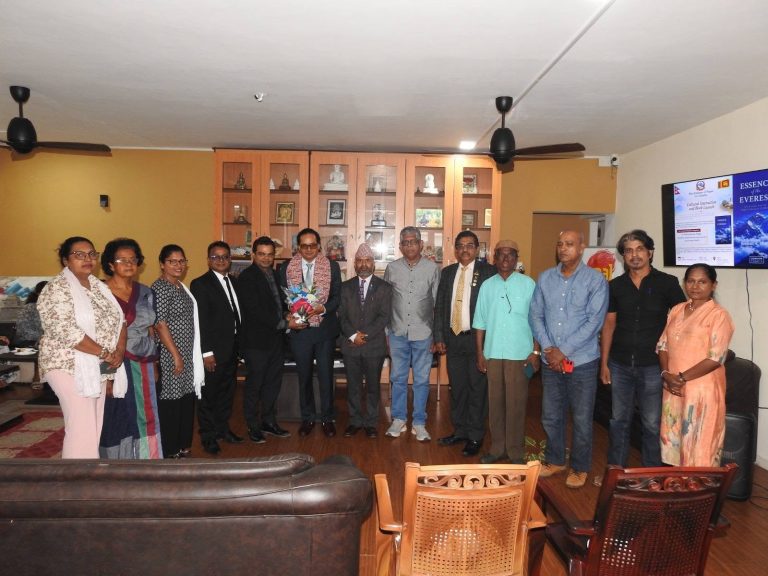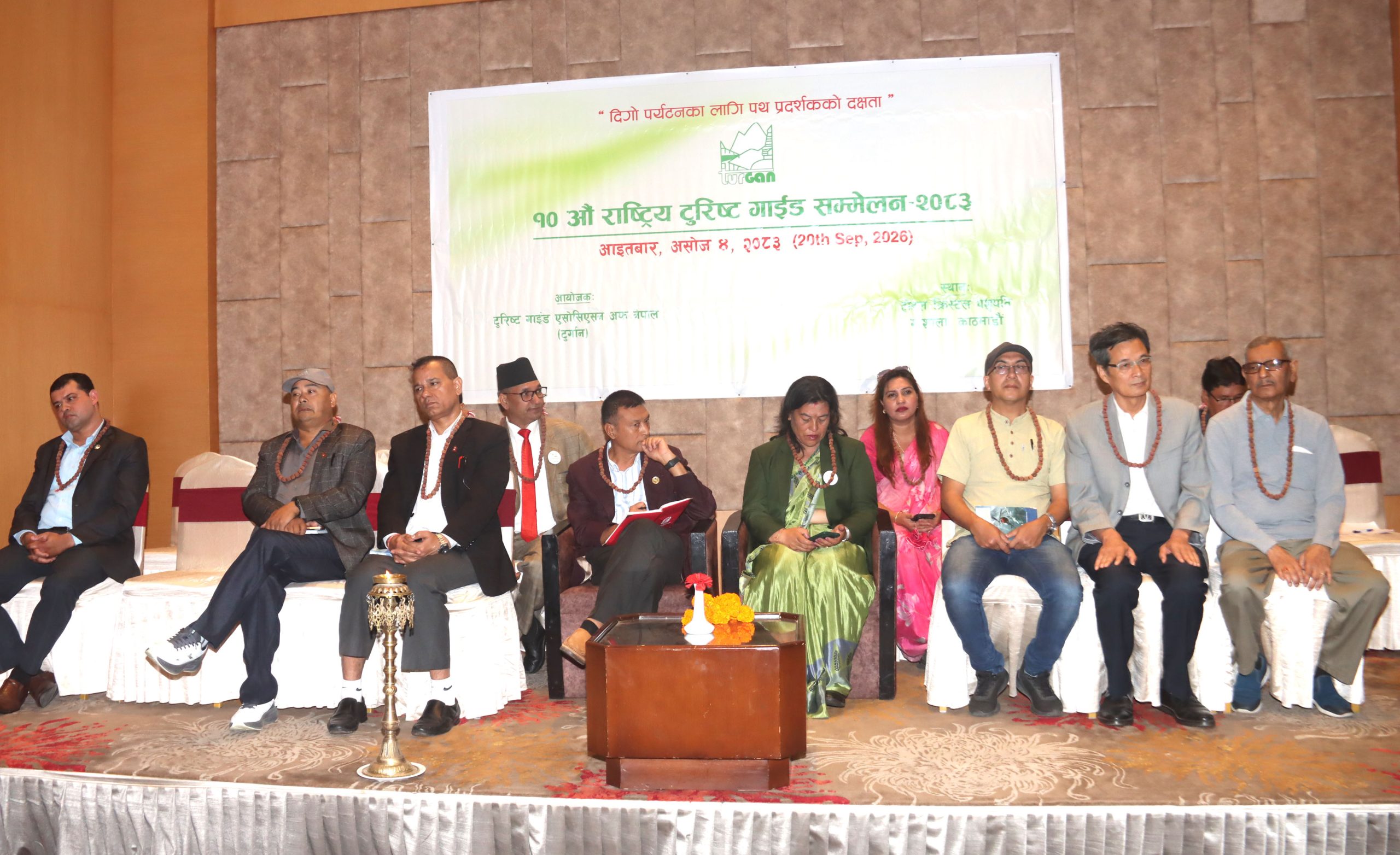
The 10th National Tourist Guide Conference has brought together tourism stakeholders to discuss how tourist guides can continue to develop professionally, improve visitor services and address current challenges facing the profession. The Tourist Guide Association of Nepal (TURGAN)hosted meeting, under the theme ‘Guide Competence for Sustainable Tourism’, has focused on building guide skills and capacities while identifying ways to improve visitor services in Nepal. It has also emphasized the need to increase levels of cooperation among tourism stakeholders and improve destination management practices.
The conference was opened by Rajendra Prajapati, Minister for Industry, Tourism, Labour and Transport, Bagmati Province, who emphasized that resolving major issues affecting tourist guides in his province will be a priority. He pointed out that immediate problems would be addressed on a priority basis while long standing ones would be resolved by developing appropriate policies and legal provisions. Prajapati described tourist guides as a key pillar of Nepal’s tourism industry, noting that their roles go beyond accompanying visitors: guides influence the development trajectory of Nepal’s tourism.

Enhancing Guide Competence To Improve Tourism Experience
The conference has stressed the need for upgraded skills, knowledge and professional competencies of guides as Nepal moves towards more sustainable and quality oriented tourism. TURGAN has organized the conference as a platform for discussing professional challenges confronting the guiding sector and identifying ways to improve working conditions and guide capabilities. The conference theme highlights the importance of professional competence as guides play a key role in delivering accurate information, effective communication and facilitating enhanced appreciation of Nepal’s diverse cultural, historical and natural attractions.
TURGAN President Prabha Laxmi Pradhanang called for strict actions against guides conducting tours without obtaining the required license. She called upon licensed guides to recognize their role in representing Nepal to international visitors and building a positive image of the country. Pradhanang noted that guides have a responsibility to do more than just take tourists from one place to another; they serve as a key link between visitors and Nepal’s culture, heritage, communities and tourism environment.
Heritage Destinations Need Upgraded Facilities And Management
Pradhanang also highlighted various operational challenges affecting major tourism and heritage destinations, particularly destinations that attract large numbers of visitors. She has called for improved parking facilities for green number plate vehicles that transport tourists to and around heritage sites. Authorities should prioritize the construction and upgrading of public toilets, she said. Pradhanang raised concerns about indiscriminate begging in tourism destinations, noting that such problems need to be managed if key visitor destinations are to maintain their quality and appeal.
The issues raised at the conference highlight the fact that improved tourism requires more than enhancing the professional skills of guides. Improved public toilets, parking facilities, destination management and visito friendly infrastructure are integral elements of a tourism experience. Upgraded management of these facilities can make heritage destinations more accessible and organized while also creating a better environment for visitors from both local and international markets. The issues raised therefore connect the professional roles of tourist guides with the key role of enhancing the quality of tourism destinations.
Guides At The Frontline Of The Image Of Nepal
NATTA Secretary General Raj Kumar Devkota stated that tourist guides play a key role in conveying a positive image of Nepal to the international community. He emphasized that tourism development is intricately linked to the overall economic development of the country and called for concerted efforts to strengthen the sector. As frontline tourism professionals who spend significant time with visitors, guides have opportunities to explain the attractions, traditions and culture of Nepal influencing the understanding of visitors on the country.
Former TURGAN President Hariram Baral also emphasized the role of tourist guides in helping foreign tourists to gain a proper understanding of Nepal. They escort visitors around cultural, natural and heritage destinations while providing explanations that can help them learn more about the country and its attractions. Guides’ expertise, communication abilities and professionalism therefore play a critical role in the overall tourism experience.
The themes raised at the conference therefore highlight the role of professional competence and responsible guiding in enhancing Nepal’s tourism services. Building on these areas can enable guides to meet the expectations of visitors while supporting the broader goals of building sustainable and quality oriented tourism experiences. The conference has also provided an opportunity for tourism stakeholders to engage in a wider discussion on how the guiding profession can contribute to the long term tourism development plans of Nepal.
More Than 5,000 Licensed Guides Nationwide
According to General Secretary Subin Sitikhu, TURGAN established in 2046 BS currently has more than 1,000 tourist guides affiliated to the organization across the country. He noted that more than 5,000 people nationwide have obtained tourist guide licenses, which highlights the scale of the professional workforce providing services to Nepal’s tourism industry. These numbers also emphasize the importance of upholding professional standards, ensuring compliance with licensing requirements and supporting opportunities for guide to continue to learn and expand their knowledge and skills.

The conference also acknowledged the contributions of seasoned professionals by recognizing Kedar Tamang, Shiva Prasad Sharma, Shree Krishna Kharel, Krishna Kamal Saiju, Ramila Pandey and Buddhilaxmi Shakya, among others, for their contributions to the tourist-guide sector. This recognition reflects the experience of professionals who have made valuable contributions to building guiding services in Nepal over the years.
The event has also planned to issue a Kathmandu Declaration, which will include the key issues and themes that have been raised at the conference. From guide licensing and professional development to visitor facilities and destination management, the declaration will encapsulate the issues raised at the conference. The conference has therefore provided a wider forum in which tourism stakeholders can engage in discussions on how tourist guides contribute to enhancing Nepal’s tourism services and promoting sustainable tourism in the country.