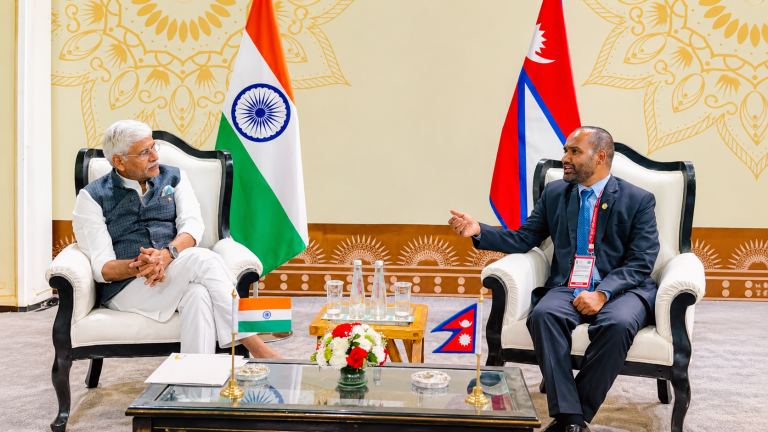
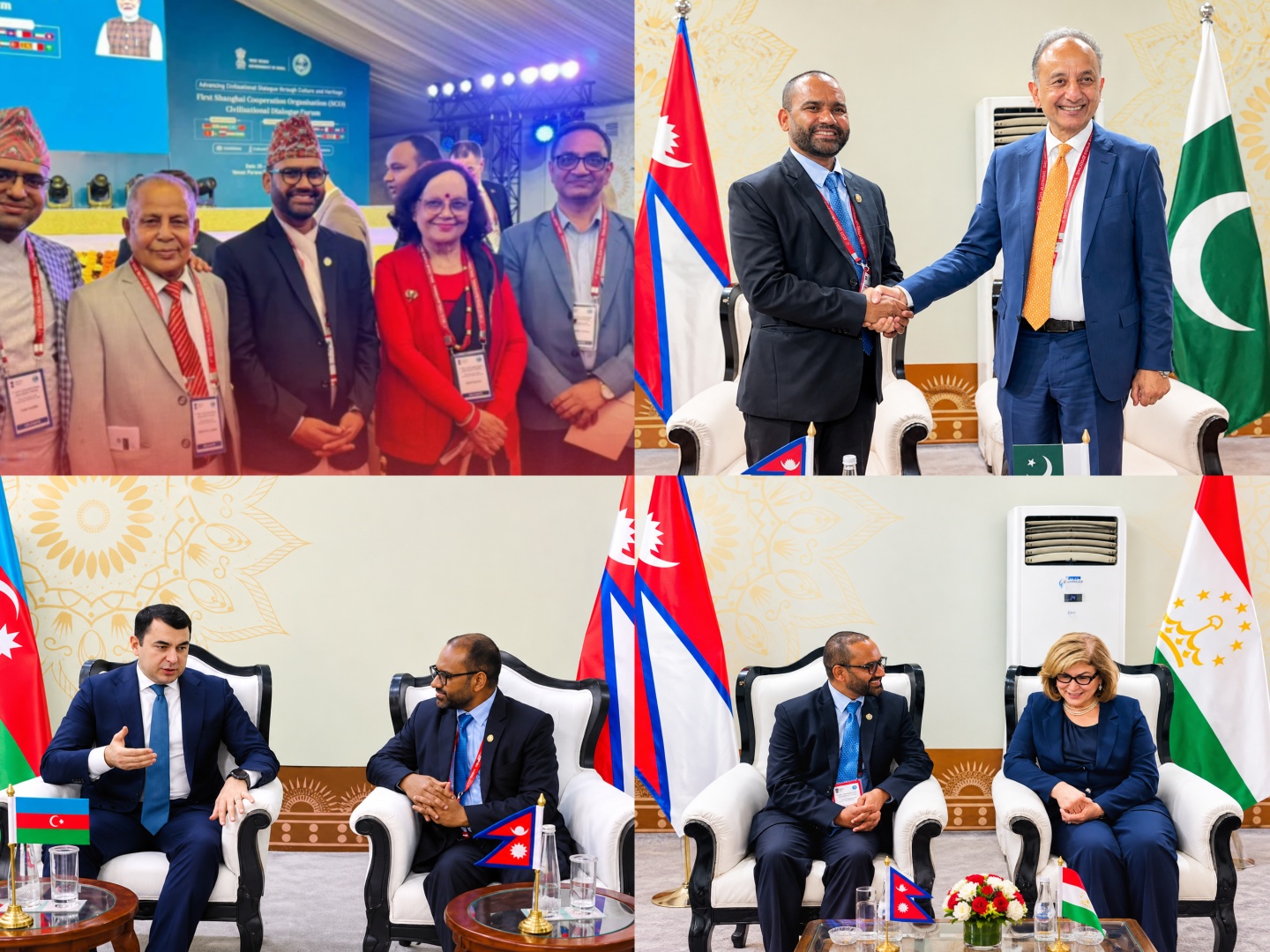
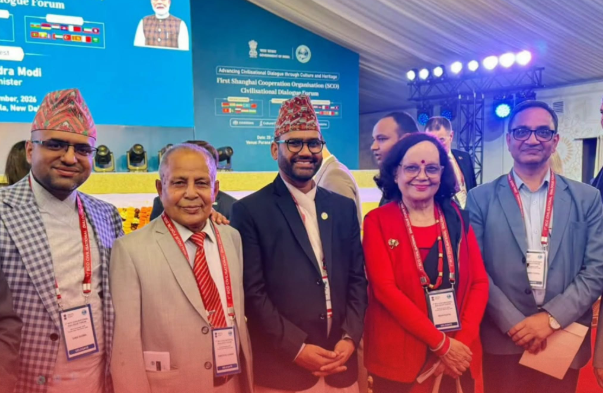
Nepal has sought to strengthen cooperation with Pakistan, Azerbaijan and Tajikistan in the areas of climate change, environmental protection, culture, heritage conservation and tourism during a series of bilateral engagements held on the sidelines of the First Shanghai Cooperation Organisation (SCO) Civilizational Dialogue Forum. Minister for Culture, Tourism and Civil Aviation Khadak Raj Paudel (Ganess) held separate bilateral meetings with Pakistan’s Federal Minister for Climate Change and Environmental Coordination Dr. Musadik Masood Malik, the Minister of Culture of the Republic of Azerbaijan, and the Minister of Culture of the Republic of Tajikistan.
The discussions focused on expanding bilateral cooperation in areas of common interest, particularly those affecting mountain countries, including climate change, glacier retreat, environmental degradation, biodiversity conservation, disaster preparedness and protection of natural and cultural heritage. The meetings also explored opportunities to promote tourism, enhance cultural exchanges, facilitate knowledge and technology sharing, and strengthen institutional cooperation between Nepal and the three countries.
Nepal-Pakistan Focus on Climate Change and Mountain Ecosystem Protection
During the bilateral meeting with Dr. Musadik Masood Malik, Federal Minister for Climate Change and Environmental Coordination of Pakistan, Minister Paudel discussed ways to strengthen Nepal-Pakistan cooperation on climate change, environmental conservation and the protection of fragile mountain ecosystems. The two sides highlighted the particular vulnerabilities faced by mountain countries as a result of rising temperatures, changing weather patterns and other climate-related challenges.
They emphasized the need for greater collaboration in protecting Himalayan and other mountain environments while improving preparedness and response mechanisms against climate-induced disasters. The discussions recognized that the impacts of climate change extend beyond national borders, making regional cooperation, technical exchanges and sharing of scientific knowledge increasingly important for countries dependent on mountain ecosystems and natural resources.
Mountaineering, Mountain Safety and Search and Rescue Highlighted
The Nepal-Pakistan discussions also placed emphasis on cooperation in Himalayan mountaineering, mountain safety and search and rescue operations. Both sides recognized the importance of strengthening technical and institutional capacities to respond to emergencies in high-altitude and mountainous areas. Nepal, with its globally recognized Himalayan peaks and extensive mountaineering sector, has considerable experience in mountain tourism and rescue operations, while Pakistan also possesses significant mountain tourism resources and experience in high-altitude activities.
Greater cooperation between the two countries could facilitate the exchange of knowledge, technical expertise and operational practices related to mountaineering safety, rescue preparedness and emergency response. Capacity-building programmes, knowledge-sharing mechanisms and technical cooperation were also identified as important areas through which the two countries could strengthen their respective capabilities.
Mountain Nations Share Responsibility for Climate Action
The meeting between Nepal and Pakistan also underscored the shared responsibility of mountain nations to address climate change and protect vulnerable ecosystems for future generations. Both sides highlighted the need to strengthen disaster preparedness and resilience while ensuring the conservation of natural resources and cultural heritage.
Mountain communities are particularly vulnerable to climate-related changes because their livelihoods and economies are closely linked to natural resources, agriculture, tourism and water systems. The discussions therefore emphasized the importance of coordinated efforts to protect mountain ecosystems while improving the resilience of local communities. Greater cooperation in climate adaptation, environmental protection, technical knowledge and disaster risk reduction could help both countries respond more effectively to emerging challenges.
Nepal-Azerbaijan Strengthen Cultural Cooperation and Heritage Partnership
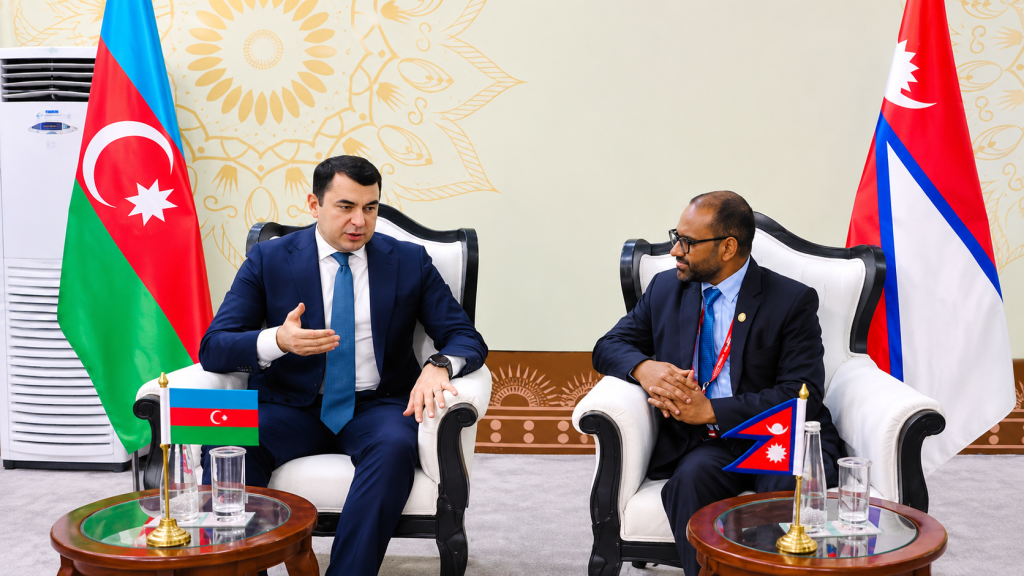
In a separate bilateral meeting, Minister Paudel held discussions with the Minister of Culture of the Republic of Azerbaijan on strengthening Nepal-Azerbaijan relations through expanded cultural cooperation. The two sides placed particular emphasis on exchanges between artists and cultural delegations, preservation and promotion of cultural and natural heritage, and stronger collaboration between cultural institutions.

The meeting recognized cultural exchange as an important instrument for strengthening mutual understanding and developing closer relations between the two countries. Both sides discussed opportunities to increase institutional engagement and facilitate greater interaction among artists, cultural practitioners and heritage-related organizations. Such exchanges could help showcase the cultural diversity of both countries while creating new avenues for cooperation in the preservation and promotion of their respective cultural assets.
Artists and Cultural Delegations to Facilitate People-to-People Exchanges
The proposed exchange of artists and cultural delegations was highlighted as an important component of Nepal-Azerbaijan cultural cooperation. Regular exchanges involving artists, cultural experts and institutional representatives can provide opportunities for both countries to learn from each other’s cultural practices, creative traditions and heritage management approaches.
Joint cultural programmes and institutional partnerships could also contribute to greater visibility of Nepalese culture in Azerbaijan and Azerbaijani culture in Nepal. The discussions emphasized that cultural diplomacy can complement traditional bilateral relations by creating stronger people-to-people connections and building mutual understanding through arts, heritage and shared cultural experiences.
Climate Change and Biodiversity Protection Also Discussed With Azerbaijan
The Nepal-Azerbaijan meeting also addressed the growing challenges posed by climate change, biodiversity loss and the degradation of natural ecosystems. Both sides exchanged views on the importance of protecting natural heritage and fragile mountain ecosystems while promoting sustainable approaches to tourism and development.
Nepal highlighted the need to safeguard its biodiversity and mountain environments, which are increasingly affected by changing climatic conditions. The two sides also discussed opportunities for knowledge sharing and cooperation in areas including sustainable tourism, heritage conservation and climate resilience. Such cooperation could enable the exchange of institutional experiences and technical knowledge on balancing tourism development with environmental protection.
Sustainable Tourism Emerges as Common Area of Cooperation
Sustainable tourism was identified as an area with significant potential for cooperation between Nepal and Azerbaijan. The two countries can benefit from sharing experiences in destination management, heritage-based tourism, environmental conservation and the development of tourism products that generate economic benefits while protecting natural and cultural resources.
Nepal’s mountain, cultural and spiritual tourism assets provide opportunities for expanding international cooperation, while Azerbaijan’s experience in cultural tourism and destination development could offer avenues for knowledge exchange. The discussions emphasized that sustainable tourism should be developed in a manner that protects heritage and ecosystems while creating economic opportunities for local communities.
Nepal and Tajikistan Highlight Common Mountain Challenges
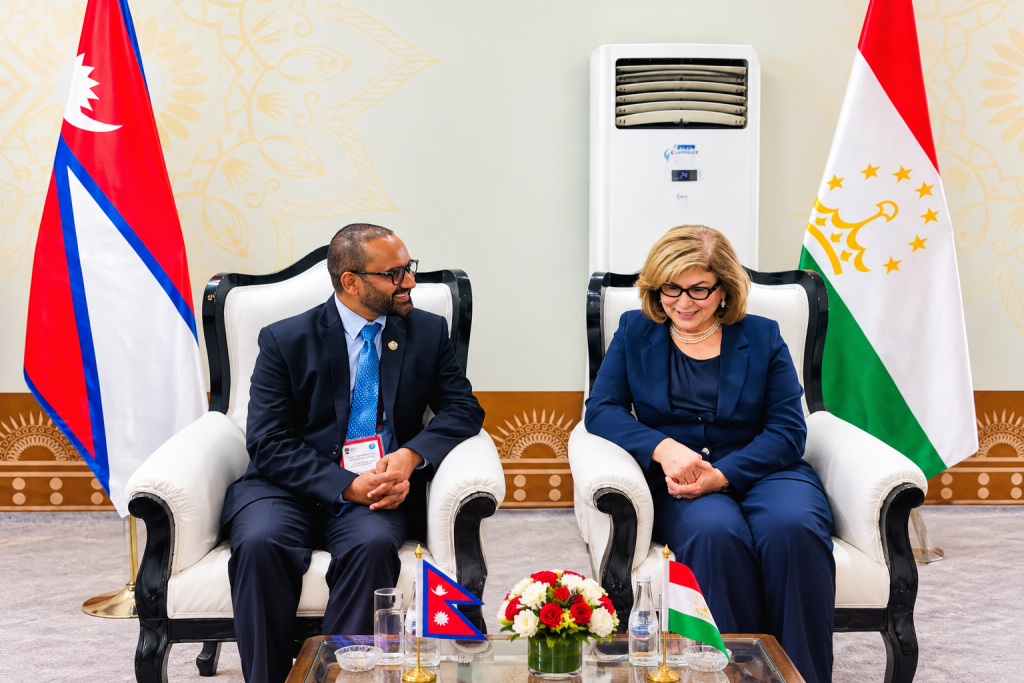
Minister Paudel also held a bilateral meeting with the Minister of Culture of the Republic of Tajikistan, focusing on strengthening Nepal-Tajikistan cooperation in tourism, culture, heritage conservation and climate change. As two predominantly mountainous countries, Nepal and Tajikistan face several common environmental challenges, including glacier retreat, rising temperatures and their impacts on water resources, mountain ecosystems and local communities.
The two sides discussed the importance of working together to address these shared challenges through knowledge exchange, technical cooperation and institutional collaboration. The meeting provided an opportunity to explore common areas of interest between two countries that possess significant mountain landscapes and cultural heritage but remain relatively less connected in terms of tourism and cultural exchanges.
Glacier Retreat and Rising Temperatures Raise Shared Concerns
The effects of climate change on mountain regions were a major component of the Nepal-Tajikistan discussions. Glacier retreat and rising temperatures can affect water availability, ecosystems, agriculture and the livelihoods of mountain communities, making climate resilience particularly important for countries such as Nepal and Tajikistan.
Changes in mountain environments can also have consequences for tourism and cultural heritage, as natural landscapes and ecosystems form an important part of the tourism appeal of both countries. The two sides therefore emphasized the value of exchanging knowledge and experiences related to climate adaptation, environmental protection and sustainable management of mountain resources.
Tourism and Cultural Exchange to Strengthen Nepal-Tajikistan Relations
Beyond climate issues, Nepal and Tajikistan emphasized the importance of tourism promotion and cultural exchange in strengthening bilateral relations. Both sides highlighted the potential of cultural programmes, institutional partnerships and increased tourism interaction to deepen friendship and mutual understanding.
Nepal’s Himalayan landscape and cultural heritage and Tajikistan’s Central Asian mountain and cultural assets provide opportunities for developing greater tourism cooperation and creating new connections between the two destinations. Increased exchanges among cultural institutions, tourism stakeholders and other relevant organizations could also contribute to greater awareness of each country’s heritage and tourism potential.
SCO Forum Provides Platform for Expanding Nepal’s Central Asian Outreach
The bilateral engagements with Pakistan, Azerbaijan and Tajikistan on the sidelines of the SCO Civilizational Dialogue Forum provided Nepal with an opportunity to expand its diplomatic, cultural and tourism engagement with countries in South and Central Asia. The discussions covered areas that align closely with Nepal’s priorities, including sustainable tourism, climate resilience, mountain ecosystem conservation, cultural heritage and people-to-people exchanges.
The forum also provided a platform for Nepal to highlight its experience and priorities as a Himalayan country while exploring partnerships with other nations facing similar environmental and cultural challenges. The meetings could contribute to creating new avenues for cooperation in tourism, culture, climate action and institutional knowledge exchange.
Focus on Shared Priorities to Deepen Bilateral Relations
The three bilateral meetings collectively highlighted Nepal’s efforts to use culture, tourism and environmental cooperation as instruments of international engagement. While discussions with Pakistan placed greater emphasis on climate change, mountain safety and search and rescue, the engagement with Azerbaijan focused strongly on cultural exchanges, heritage conservation and sustainable tourism, while the meeting with Tajikistan highlighted common mountain challenges, tourism promotion and cultural cooperation.
Despite differences in the areas of focus, all three engagements emphasized knowledge sharing, institutional collaboration and stronger people-to-people relations. The discussions also reflected the growing importance of cooperation among mountain countries in responding to climate change and protecting natural and cultural heritage.
Shared Commitment to Sustainable Development and Heritage Protection
The series of meetings reaffirmed Nepal’s commitment to strengthening international cooperation on issues affecting its tourism and cultural sectors while also addressing environmental challenges. The discussions emphasized that the protection of natural and cultural heritage requires sustained cooperation, particularly as climate change increasingly affects fragile mountain ecosystems.
Through expanded cultural exchanges, sustainable tourism initiatives, technical cooperation and knowledge sharing, Nepal and its partner countries can work toward preserving their natural and cultural assets while generating economic and social opportunities. The engagements at the SCO Civilizational Dialogue Forum have therefore provided a broader platform for Nepal to strengthen relations with Pakistan, Azerbaijan and Tajikistan and explore practical cooperation in areas of shared interest.