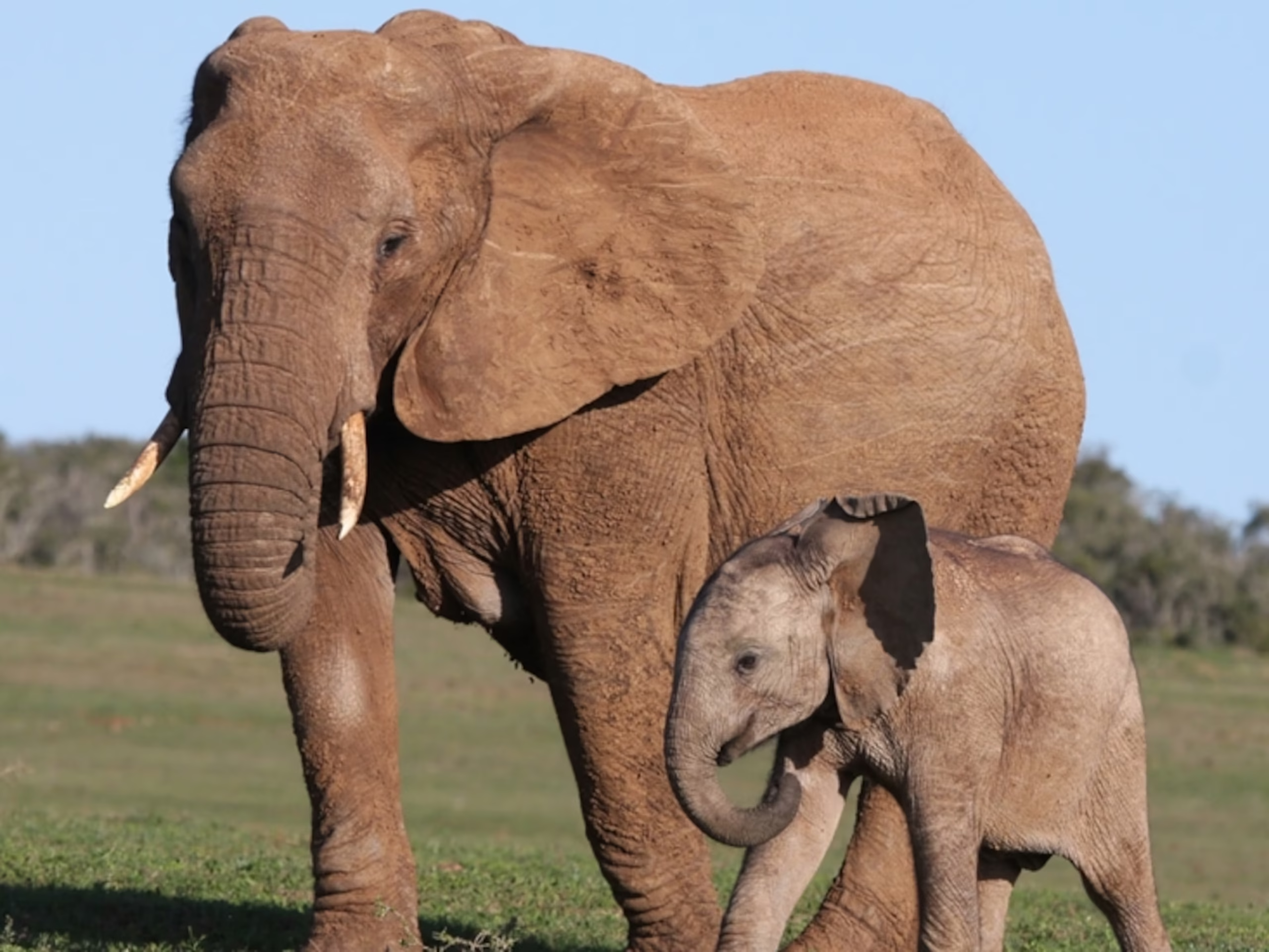
Jhapa district has recently witnessed a significant rise in the population of native elephants. Over the past five years, the number of these traditional (indigenous) elephants has nearly tripled, according to Meghraj Rai, Chief of the Division Forest Office, Jhapa. In 2075 B.S. (2018/19), the elephant population was estimated at around 10-12, but it has now surpassed 30.
Rai attributes this surge to elephants from India crossing into Nepal in search of food and deciding to settle here. “The increase in the elephant population is directly linked to their search for food,” Rai explained. “The elephants have expanded their habitat across the district.” A detailed study conducted last year confirmed the rise in their numbers, with elephants now being sighted throughout the district, a stark contrast to their previous confinement to specific areas.
This growing elephant population has led to an increase in human-wildlife conflict, particularly after the declaration of certain areas as rice and maize crop zones. Rai noted, “Elephants are now venturing into areas they never visited before, causing more damage as they change their routes due to the construction of roads, bridges, and other structures on their natural paths.”
As elephants enter villages during their route changes, the risk of human casualties and property damage has escalated. To address this, Rai emphasized the need for a comprehensive master plan to manage the human-elephant conflict. “A phased approach is necessary for human-elephant coexistence,” he stated. “There is no master plan for elephant control, and all three levels of government need to focus on this issue.”
Efforts are underway to mitigate the elephant problem in collaboration with the Nature Conservation Fund. Rai highlighted that plans are being formulated at the provincial level to tackle this issue. “Identifying elephant-affected areas and implementing community insurance, crop insurance, and property insurance could create a safer environment for residents,” he added.
The district has also seen an increase in the breeding of elephants, with the population growth attributed to the birth and nurturing of elephant calves. Forest Officer Devendra Upreti mentioned that during a recent trek in elephant-affected areas, led by the then-Chief Minister Kedar Karki, locals reported sightings of elephants with calves.
To keep elephants within the forest, recent initiatives include the construction of elephant ponds and the planting of fruit trees and other vegetation favored by elephants. Last year alone, eight elephant ponds were built in various forest areas of the district. Additionally, 9,969 bamboo plants and 6,000 elephant apple trees were planted, according to Anjana Puri, Information Officer at the Division Forest Office. Banana plants have also been introduced into the forest.
From fiscal year 2067/68 to 2080/81, 67 people have died due to elephant attacks in the district, while 21 elephants have also perished. Among the deceased, seven were non-Nepalis. During this period, Rs. 90 million has been distributed as a relief to 4,500 elephant-affected individuals.
The district has named 10 of its native elephants, including Sunaulo Dante Jag, Ghumante Yuv Gaj, Kandu Gaj, Ghumante Raj Gaj, Talbetal Gaj, Jalthale Gaj, Thute Anju Gaj, Sete Gaj, Ekdahare Sani Gaj, and Range Gaj.
This rise in the elephant population highlights the need for a balanced approach to ensure the safety and coexistence of both humans and elephants in Jhapa.