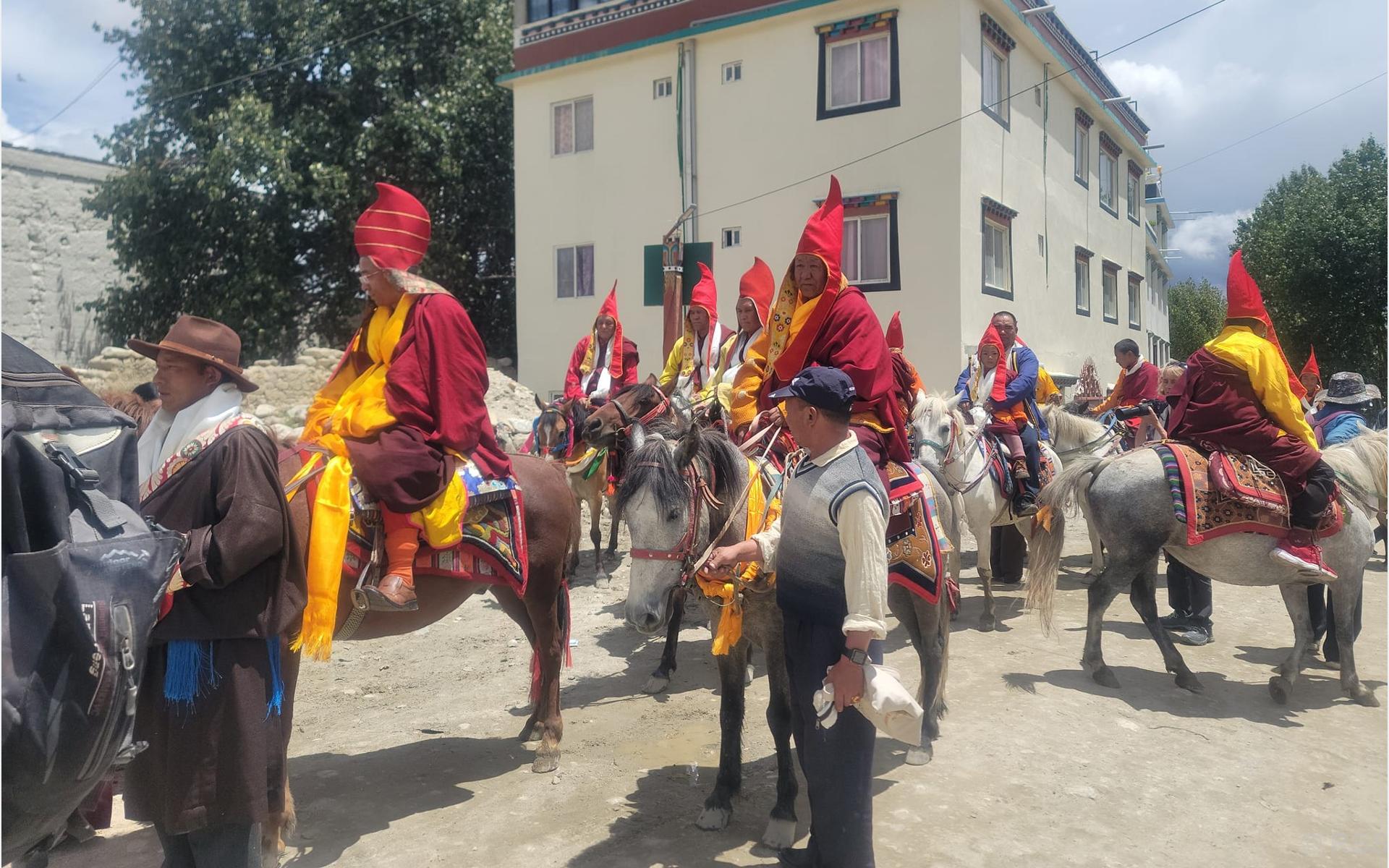
Upper Mustang has become vibrant with the celebration of the Yartung Festival. This festival is observed by the Bista, Gurung, and Lowa communities of Waragung Muktichhetra, Lho Ghekar Damodarkunda, and Lomanthang Rural Municipalities to bid farewell to the monsoon and welcome the winter season.
The Yartung Festival, traditionally held to mark the end of the monsoon, is celebrated not only in Mustang but also in other Himalayan districts, including Manang and Dolpa. The word “Yartung” originates from the Tibetan language. According to Chiyumi Bista, the Vice-Chairperson of Lomanthang Rural Municipality, the festival is a cultural hallmark of Upper Mustang, celebrated each year to pray for protection against natural disasters, diseases, and misfortunes as winter approaches.
During Yartung, Lamas perform rituals and offer prayers to deities for a good harvest. The festival is also known for its horse-riding competitions, where participants showcase their equestrian skills. Additionally, traditional Sebru dances and various cultural programs are organized as part of the celebrations. Karma Ghyacho Gurung, the Ward Chairperson of Ward No. 4, Kagbeni, Waragung Muktichhetra Rural Municipality, emphasized that Yartung plays a vital role in maintaining social harmony.
Locals celebrate Yartung for three days, aligning it with their schedules and availability. According to Kaishang Thokya Thakuri, the President of the Janapriya Youth Club of Purang in Ranipauwa, the festival is organized to preserve the cultural heritage of Yartung and promote sports and tourism.
Muktinath attracts both international and domestic tourists who come to witness the horse racing competitions during Yartung. In addition to horse racing, other sports competitions such as archery and football are also held.
After the Yartung Festival, locals begin harvesting and planting crops. Once the crops like barley, wheat, and buckwheat are harvested, the residents of Upper Mustang typically migrate to various cities, including Pokhara, Kathmandu, Chitwan, and Butwal, to escape the cold. These individuals often engage in mobile businesses in the cities and return to their homes when the weather warms up in Falgun (February/March).