
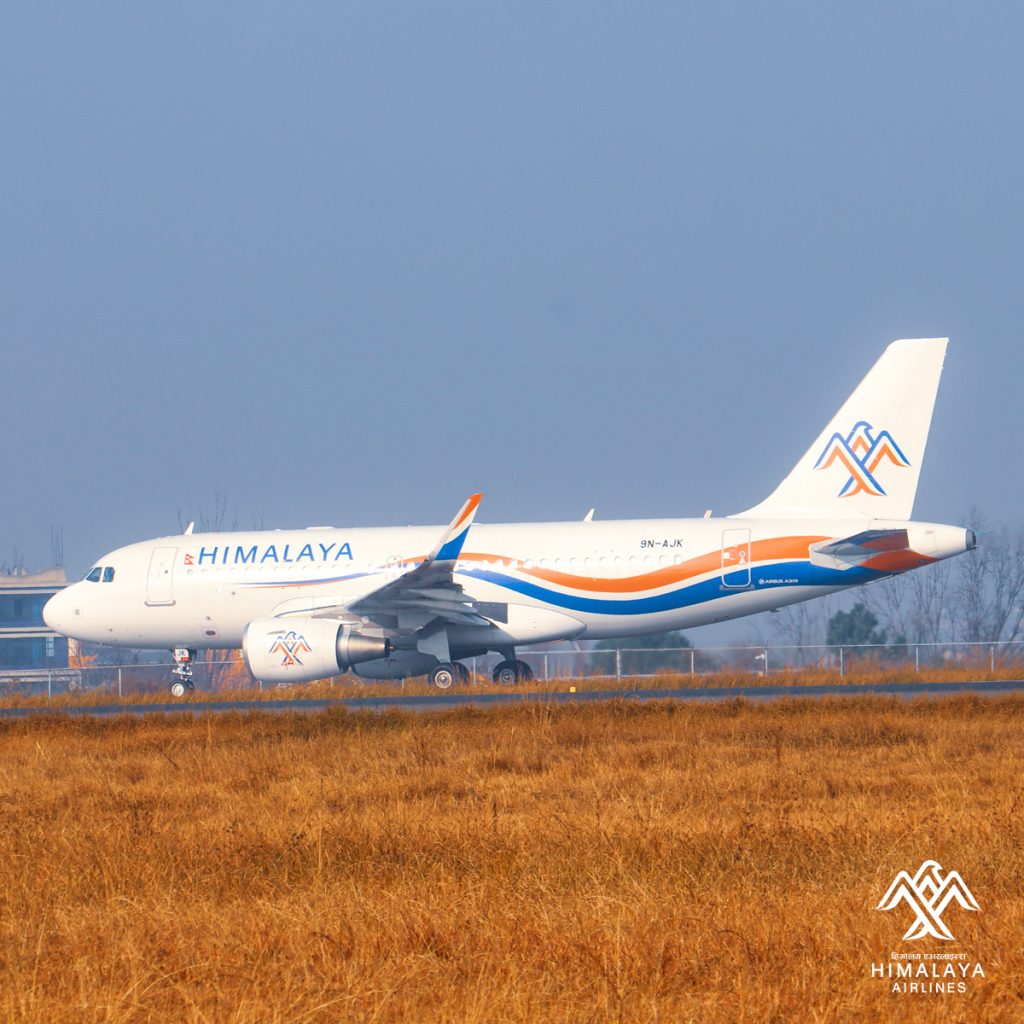
Himalaya Airlines Private Limited (HAPL), one of Nepal’s international private airlines, has suffered a sharp deterioration in its financial performance, posting a net loss of Rs. 1.42 billion in FY26, compared to a net profit of Rs. 209 million in FY25. According to the credit assessment of CARE Ratings Nepal Limited, the airline’s financial performance was adversely affected by disruptions on international routes, weaker passenger demand, and increased aviation turbine fuel (ATF) costs during the year.
The company’s operating income declined by 21.7% year-on-year to Rs. 11.43 billion in FY26, from Rs. 14.61 billion in FY25 and Rs. 14.37 billion in FY24. The decline marks a significant contraction in the airline’s operating scale after it had maintained annual income above Rs. 14 billion for two consecutive fiscal years. CARE Ratings has attributed the deterioration in profitability to the combination of lower revenue and the airline’s high fixed-cost structure, with elevated fuel costs putting additional pressure on margins. The Himalaya Airlines Private Limited (HAPL)’s PBILDT margin, which had improved from 7.18% in FY24 to 10% in FY25, turned negative in FY26, reflecting the severity of the pressure on its core operating performance.
Net Profit of Rs. 209 Million Turns Into Rs. 1.42 Billion Loss
The latest financial performance represents a substantial reversal in Himalaya Airlines Private Limited (HAPL)’s earnings position within a single fiscal year. The company had earned a net profit of Rs. 209 million in FY25, but recorded a net loss of approximately Rs. 1,422 million in FY26, indicating a deterioration of more than Rs. 1.6 billion in its bottom-line performance. CARE Ratings has noted that HAPL has continued to face operating losses over recent years, with the high fixed-cost nature of the airline industry and significant exposure to ATF prices making its profitability highly sensitive to changes in operating conditions.
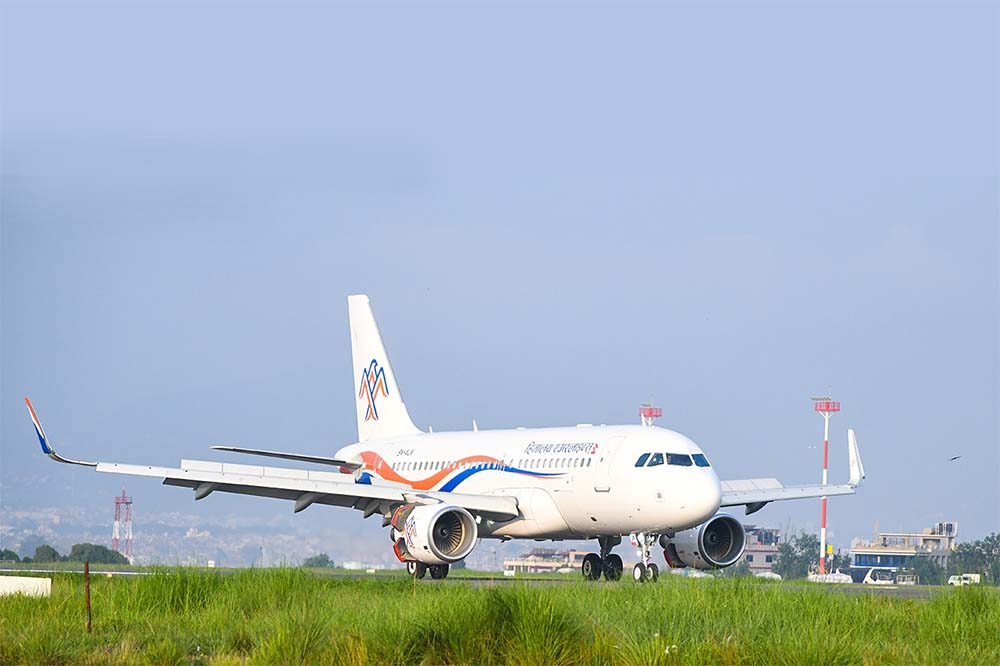
During FY26, volatility in global fuel markets, partly linked to the conflict in the Middle East, increased the airline’s cost burden while operational challenges on certain international routes affected passenger traffic and revenue generation. The simultaneous decline in income and increase in cost pressure significantly weakened the company’s operating profitability. As a result, the airline’s gross cash accruals also turned negative, leaving the company with inadequate internally generated funds to comfortably meet recurring lease, debt, and aircraft maintenance obligations.
Revenue Falls by More Than Rs. 3 Billion
Himalaya Airlines Private Limited (HAPL)’s operating income fell by more than Rs. 3.17 billion in FY26 compared to the previous year. The company generated operating income of Rs. 14.373 billion in FY24, which increased slightly to Rs. 14.610 billion in FY25, before declining to Rs. 11.433 billion in FY26. The deterioration is particularly significant because passenger revenue remains the company’s principal source of income and the airline operates in a business where a large portion of costs remain fixed regardless of passenger volumes.
Therefore, a reduction in passenger traffic and route utilization can have a disproportionately large impact on profitability. CARE Ratings has stated that HAPL’s established market presence and operating scale provide a potential platform for earnings recovery if passenger traffic and operating conditions normalize, but restoring profitability and improving cash-flow generation will remain critical challenges for the company.
High Fuel Cost Intensifies Pressure on Airline
The sharp decline in profitability was also driven by the airline’s substantial exposure to aviation turbine fuel prices. Fuel constitutes one of the largest components of an airline’s operating expenses, meaning any sustained increase in ATF prices can significantly reduce margins when ticket prices and passenger volumes do not increase proportionately. In FY26, global fuel-market volatility, alongside geopolitical developments in the Middle East, added to the company’s cost pressures.
At the same time, weaker demand in certain markets and disruptions on some international routes reduced the airline’s ability to generate sufficient revenue to absorb the higher operating expenses. CARE Ratings has therefore identified fuel-price volatility as one of the major risks facing Himalaya Airlines Private Limited (HAPL), particularly given the company’s already high fixed-cost structure and weak internal cash generation.
Accumulated Losses Push Tangible Net Worth Into Negative Territory
Himalaya Airlines Private Limited (HAPL)’s weak profitability has also significantly affected its balance sheet. The company’s financial risk profile remained weak in FY26 due to accumulated losses, negative tangible net worth, and sizeable long-term lease liabilities relative to its earnings. CARE Ratings noted that persistent losses have eroded the company’s net worth and reduced its financial flexibility. The airline’s long-term obligations remain substantial compared with its earnings capacity, while negative cash accruals have made it more dependent on available liquidity and financial support from stakeholders to meet fixed obligations.
The continued accumulation of losses is particularly concerning for an airline because aircraft leases, maintenance expenditure and other operating commitments have to be serviced even during periods of weak passenger demand. According to a separate report published in October, Himalaya Airlines’ vice-president Vijay Shrestha said the company’s accumulated losses had reached around Rs. 15 billion, highlighting the longer-term financial pressure faced by the carrier.
Interest Coverage Ratio Turns Negative
The company’s debt-servicing indicators also deteriorated sharply during FY26. Himalaya Airlines Private Limited (HAPL)’s interest coverage ratio stood at 1.63 times in FY24 and improved to 2.17 times in FY25, but turned negative in FY26 following the company’s operating losses. The total debt-to-gross cash accruals ratio similarly weakened, moving from 39.72 times in FY24 to 16.61 times in FY25 before turning negative in FY26 as gross cash accruals became negative.
The current ratio also declined from 0.79 times in FY25 to 0.68 times in FY26, indicating continued pressure on short-term liquidity. The deterioration in these indicators means that the company’s capacity to meet financial obligations from internally generated resources has weakened considerably. CARE Ratings has consequently highlighted profitability improvement, stronger internal cash accruals, and better debt-protection metrics as key areas that will determine Himalaya Airlines Private Limited (HAPL)’s financial recovery.
Four-Aircraft Fleet Creates Operational Risk
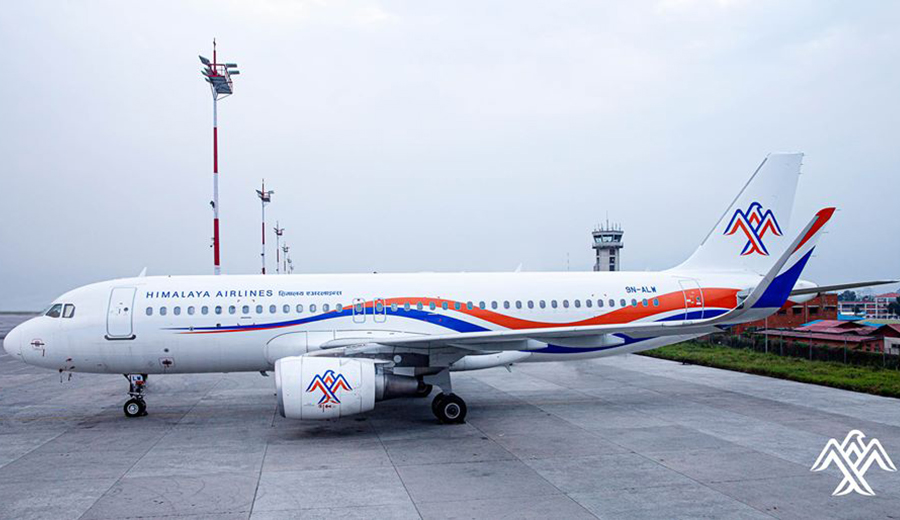
Himalaya Airlines currently operates a fleet of four aircraft, comprising three Airbus A320-214 aircraft with 180 all-economy seats each and one Airbus A319-115 aircraft with 144 all-economy seats. The airline operates international passenger services from its Kathmandu hub to destinations in the Middle East, South Asia and China. While the fleet supports the company’s established international network, its relatively small size also creates operational concentration risk. CARE Ratings has noted that the airline has limited spare capacity to absorb unexpected aircraft grounding, scheduled maintenance or delays.
If even one aircraft becomes unavailable for a prolonged period, the impact on the airline’s flight schedule, passenger capacity and revenue can be significant. Despite this limitation, Himalaya Airlines Private Limited (HAPL) has maintained passenger load factors of around 75% over the last three fiscal years, indicating satisfactory utilization of available capacity and continued demand across its network. However, the challenge remains converting this passenger demand into sustainable profitability amid high operating costs.
Foreign Exchange Risk Adds to Financial Pressure
In addition to fuel-price exposure, Himalaya Airlines Private Limited (HAPL) faces significant foreign exchange risk because a substantial portion of its financial obligations, particularly aircraft lease liabilities, are denominated in US dollars, while part of its revenue is generated in Nepalese rupees. Any depreciation of the Nepalese rupee against the US dollar can therefore increase the local-currency burden of aircraft leases and other foreign-currency obligations.
This can adversely affect earnings, cash flows and debt-servicing capacity, particularly when the airline is already operating with weak margins. CARE Ratings has identified foreign exchange fluctuations as a key rating concern alongside fuel-price volatility and geopolitical disruptions. The airline’s financial performance therefore remains dependent not only on passenger numbers and ticket revenue but also on its ability to manage external cost and currency risks.
Geopolitical Disruptions and Weak Passenger Demand Hit Operations
Himalaya Airlines Private Limited (HAPL) is also exposed to geopolitical developments in its major international markets. Changes in regional security conditions, international conflicts, travel restrictions, and economic uncertainty can affect both passenger demand and flight operations. During FY26, disruptions across certain international routes contributed to the decline in the company’s operating income. The broader airline industry has also continued to face the consequences of disruptions following the COVID-19 pandemic and subsequent operational and geopolitical challenges.
More recently, the company has continued to face route-specific disruptions; its official notices show multiple cancellations and schedule updates for Dammam flights in October and November 2026. At the same time, the airline has expanded and restored connectivity in China, including direct services to Shenzhen, Shanghai and Hangzhou, indicating efforts to strengthen its international network despite the difficult operating environment.
Airline Established Through Nepal-China Joint Venture
Himalaya Airlines was incorporated as Yeti Airlines International Private Limited on November 10, 1997, and was subsequently converted into Himalaya Airlines Private Limited on July 3, 2014, following changes in shareholding and management and the entry of Tibet Civil Aviation Development & Investment Co. Ltd. (TADIC) as a shareholder. The company operates under a Nepal-China joint-venture structure and has developed an established position in Nepal’s international aviation sector.
The airline began scheduled commercial operations in 2016, with Kathmandu-Doha being its first scheduled international service. Since then, it has expanded its network to destinations across the Middle East, South Asia and China. The company’s official records show that it resumed direct Kathmandu-Shanghai services in September 2026 and launched direct Kathmandu-Hangzhou services shortly afterward, while it had also launched direct Kathmandu-Shenzhen services in June 2026.
Experienced Management Team Remains a Key Strength
Despite the weak financial indicators, CARE Ratings has identified Himalaya Airlines Private Limited (HAPL)’s experienced board and management team as one of its key strengths. The company is led by professionals with long-standing experience in Nepal’s aviation and tourism sectors. Director and Vice President Vijay Bahadur Shrestha has more than four decades of experience in the aviation industry and has previously served in senior positions at Yeti Airlines, Tara Air and Yeti Airlines International.

His experience covers airline operations, management, business development and tourism-related activities. The experienced management structure provides Himalaya Airlines Private Limited (HAPL) with operational knowledge and industry expertise that could support the airline’s efforts to navigate its current financial difficulties and restore profitability. CARE Ratings has also considered the company’s established market position and operating scale as positive factors supporting the rating despite its weak financial risk profile.
Long-Term Air Travel Demand Remains Supportive
The long-term demand outlook for Nepal’s international aviation sector remains relatively favorable due to the country’s dependence on air connectivity for tourism, foreign employment, education and international business travel. Nepal’s landlocked geography and limited alternative cross-border transportation options make international air services particularly important for passenger mobility.
Himalaya Airlines Private Limited (HAPL) is positioned to benefit from these structural demand drivers through its network connecting Kathmandu with major destinations in the Middle East, South Asia and China. CARE Ratings has therefore considered tourism activity, labour migration and educational travel as important long-term drivers that could support traffic growth and earnings recovery. However, the rating agency has emphasized that the positive demand outlook must translate into stronger operating margins and cash flows for Himalaya Airlines Private Limited (HAPL)’s financial position to improve.
High Entry Barriers Protect Established Operators
The airline industry has inherently high barriers to entry due to the large capital requirements involved in aircraft acquisition or leasing, stringent aviation safety regulations, specialized manpower requirements and substantial maintenance and operational infrastructure. New airlines also need to secure traffic rights, airport slots, route approvals and distribution networks before they can establish a commercially sustainable operation.
These factors make rapid entry by new competitors difficult and provide some competitive advantage to established airlines such as Himalaya Airlines Private Limited (HAPL). The company’s existing fleet, operating experience, international route network and established market presence therefore represent important strategic assets. However, CARE Ratings has emphasized that these strengths alone cannot offset the impact of weak profitability, negative cash accruals and accumulated losses unless the company is able to improve its financial performance.
CARE Ratings Assigns ‘CARE-NP A4’ to Rs. 3 Billion Facilities
Amid the challenging financial position, CARE Ratings Nepal has assigned a ‘CARE-NP A4’ rating to HAPL’s Rs. 3 billion short-term bank facilities. The facilities comprise Rs. 2.1798 billion in non-fund-based limits and Rs. 820.20 million in proposed facilities. The rating reflects the company’s negative tangible net worth, accumulated losses, sizeable lease obligations relative to cash accruals and weak debt-coverage indicators.
The rating also incorporates the airline’s exposure to revenue concentration due to its limited fleet, foreign exchange movements, geopolitical developments, fuel-price volatility, and seasonal and cyclical fluctuations in international passenger demand. At the same time, the rating derives support from Himalaya Airlines Private Limited (HAPL)’s experienced directors and management team, established market presence, relatively large revenue base despite the FY26 decline, long-term demand prospects for international aviation, and high barriers to entry in the sector. CARE Ratings Nepal’s website lists Himalaya Airlines among its recent ratings dated November 19, 2026.
Profitability Recovery Becomes Critical for HAPL
Going forward, the key challenge for Himalaya Airlines will be to restore profitability while managing its substantial fixed costs and external operating risks. The company will need to improve passenger traffic and route performance, control fuel and other operating expenses, strengthen internal cash generation, and manage its foreign-currency obligations more effectively. A sustained recovery in international passenger demand, normalization of route operations and improved cost efficiency could provide the foundation for financial recovery.
However, continued geopolitical disruptions, high fuel prices, foreign exchange volatility, aircraft maintenance requirements or weak passenger demand could further strain the company’s liquidity and balance sheet. CARE Ratings has therefore identified Himalaya Airlines Private Limited (HAPL)’s ability to profitably scale up operations, manage external shocks and translate improvements in operating performance into stronger leverage and debt-protection indicators as the key factors that will determine its financial outlook.
Financial Performance at a Glance
| Particulars | FY24 | FY25 | FY26 |
|---|---|---|---|
| Operating Income | Rs. 14.373 billion | Rs. 14.610 billion | Rs. 11.433 billion |
| PBILDT Margin | 7.18% | 10.00% | Negative |
| Net Profit/(Loss) | — | Rs. 209 million profit | Rs. 1.422 billion loss |
| Interest Coverage | 1.63x | 2.17x | Negative |
| Current Ratio | 0.69x | 0.79x | 0.68x |
| Total Debt/Gross Cash Accruals | 39.72x | 16.61x | Negative |