This year’s Indra Jatra, also known as Yenya in Newari, has seen a significant development with the arrival of the sacred lingo (Indra’s flagpole) in Kathmandu. The lingo, an essential element for the Kumari Yatra, was transported from Bhaktapur to Kathmandu last night.
The lingo was cut from the Rani Salla tree in Chittapol, a community forest in Suryabinayak Municipality-10 in Bhaktapur. This ceremonial cutting was carried out under the auspices of the Nepal Panchang Determination Committee, led by the Central Manandhar Association member and publicity coordinator, KK Manandhar.
On Bhadra 30 (September 15, 2024), the lingo was carried from Kathmandu’s Basantapur to Bhaktapur, departing at 10:47 AM. The procession reached Chittapol in Bhaktapur by 7:00 PM the same day, where a Brahmin performed the required rituals. The tree was felled at 8:27 PM as per the auspicious time.
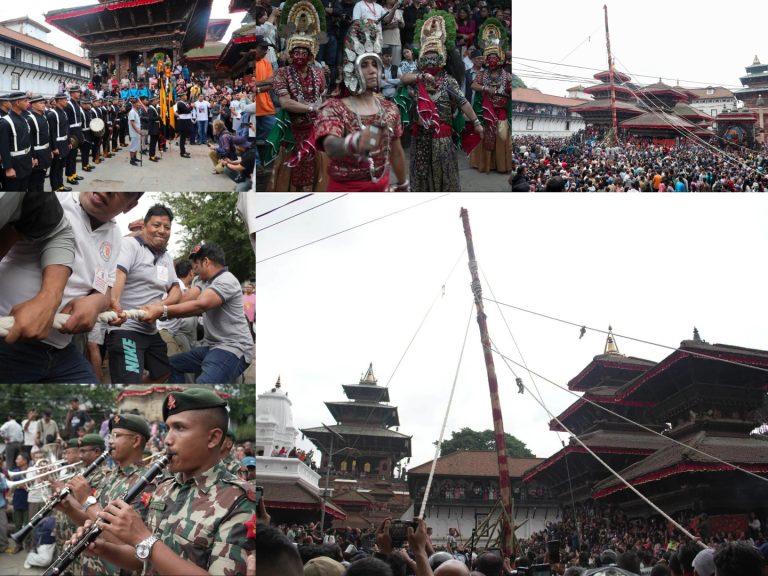
The practice involves selecting a tree based on auspicious signs and cutting it with due reverence. Before the cutting, a salute was offered by a platoon of the Nepal Army’s Shree Sharadul Jungle Battalion, led by the battalion commander.
The Nepal Panchang Determination Development Committee has communicated with the Ministry of Culture, Tourism, and Civil Aviation, as well as the Guthi Institution in Tripureshwar, regarding the various cultural activities related to Indra Jatra. The sacred tree was cut as per these instructions.
Following the tree cutting, the Gurujuk’s platoon fired celebratory gunshots. The Nepal Army’s Gurujuk platoon, stationed at Hanuman Dhoka Durbar Square, has been collaborating on various aspects of transporting, erecting, and dismantling the lingo.
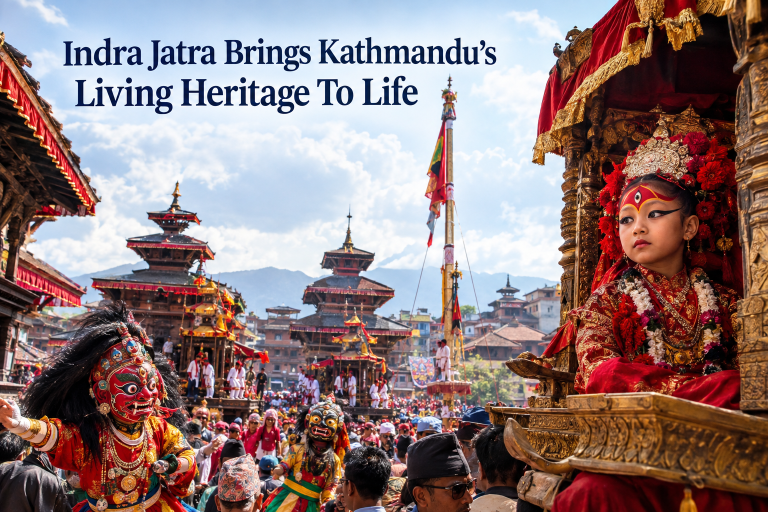
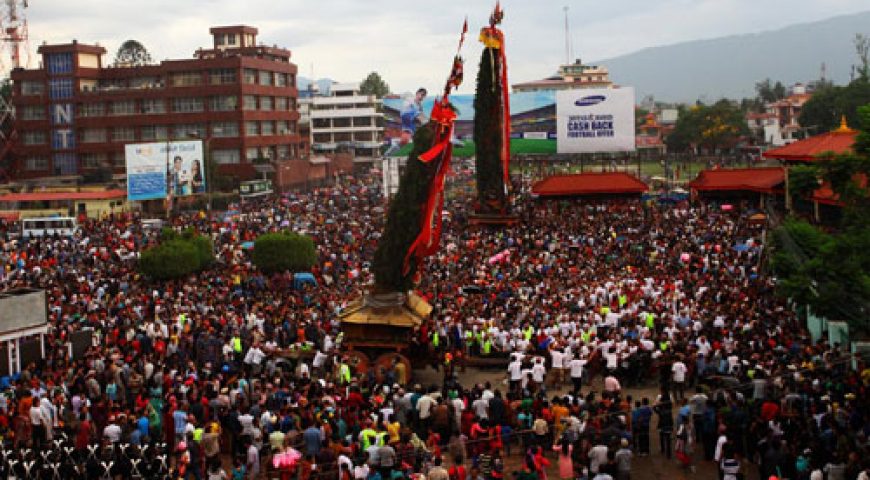
Indra Jatra, a traditional festival celebrating the rain and harvest deity Indra, begins with the lingo’s installation on Yenya (Bhadrashukla Paksha Yenya Dwadashi) and continues for eight days. During this period, the festival includes various dances, the Kumari procession, and chariot processions of Bhairav and Ganesh.
The practices of Indra Jatra and the lingo installation are mentioned in several ancient texts, including the Valmiki Ramayana, Mahabharata, Harivansh Purana, Kalika Purana, Devi Purana, Vishnu Dharmottara Purana, Brihat Samhita, and Bhavishya Purana.This year’s Indra Jatra, also known as Yenya in Newari, has seen a significant development with the arrival of the sacred lingo (Indra’s flagpole) in Kathmandu. The lingo, an essential element for the Kumari Yatra, was transported from Bhaktapur to Kathmandu last night.
The lingo was cut from the Rani Salla tree in Chittapol, a community forest in Suryabinayak Municipality-10 in Bhaktapur. This ceremonial cutting was carried out under the auspices of the Nepal Panchang Determination Committee, led by the Central Manandhar Association member and publicity coordinator, KK Manandhar.
On Bhadra 30 (September 15, 2024), the lingo was carried from Kathmandu’s Basantapur to Bhaktapur, departing at 10:47 AM. The procession reached Chittapol in Bhaktapur by 7:00 PM the same day, where a Brahmin performed the required rituals. The tree was felled at 8:27 PM as per the auspicious time.
The practice involves selecting a tree based on auspicious signs and cutting it with due reverence. Before the cutting, a salute was offered by a platoon of the Nepal Army’s Shree Sharadul Jungle Battalion, led by the battalion commander.
The Nepal Panchang Determination Development Committee has communicated with the Ministry of Culture, Tourism, and Civil Aviation, as well as the Guthi Institution in Tripureshwar, regarding the various cultural activities related to Indra Jatra. The sacred tree was cut as per these instructions.
Following the tree cutting, the Gurujuk’s platoon fired celebratory gunshots. The Nepal Army’s Gurujuk platoon, stationed at Hanuman Dhoka Durbar Square, has been collaborating on various aspects of transporting, erecting, and dismantling the lingo.
Indra Jatra, a traditional festival celebrating the rain and harvest deity Indra, begins with the lingo’s installation on Yenya (Bhadrashukla Paksha Yenya Dwadashi) and continues for eight days. During this period, the festival includes various dances, the Kumari procession, and chariot processions of Bhairav and Ganesh.
The practices of Indra Jatra and the lingo installation are mentioned in several ancient texts, including the Valmiki Ramayana, Mahabharata, Harivansh Purana, Kalika Purana, Devi Purana, Vishnu Dharmottara Purana, Brihat Samhita, and Bhavishya Purana.