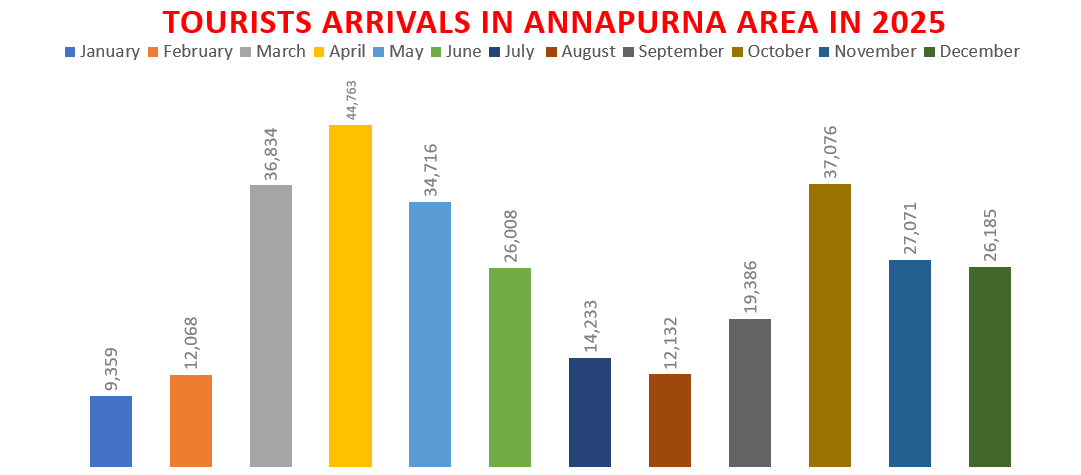
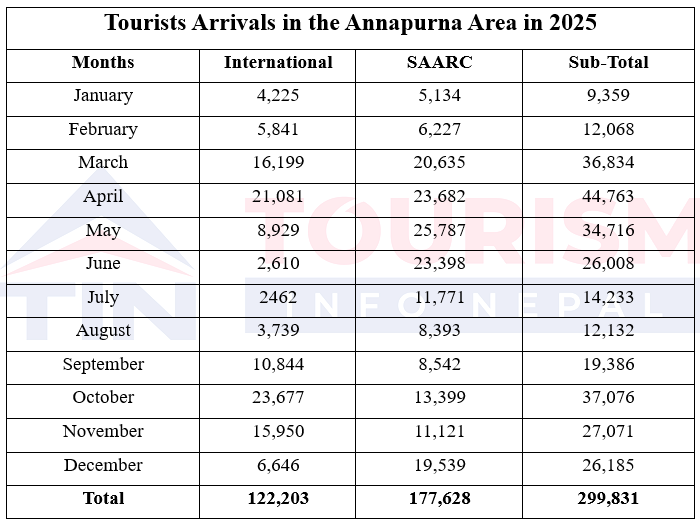
Nepal’s iconic Annapurna region recorded a major tourism milestone in 2025, welcoming a total of 299,831 foreign tourists, marking a strong post-pandemic recovery and reaffirming its position as the country’s most visited trekking destination. According to Annapurna Conservation Area Project (ACAP) Chief Rabin Kadariya, the visitor number represents a significant rise compared to 244,045 tourists in 2024 and 181,000 tourists in 2019, the last full pre-pandemic year.
Of the total visitors in 2025, 177,628 tourists came from South Asian countries, while 122,203 visitors arrived from other international markets, reflecting Annapurna’s growing appeal across both regional and long-haul travel segments. Tourism officials attribute the surge to improved trekking infrastructure, growing international promotion, and increasing preference for open, nature-based travel experiences.

Annapurna Circuit Remains Nepal’s Trekking Powerhouse
The Annapurna trekking circuit continues to be a magnet for adventure seekers and cultural travelers, offering a diverse range of destinations within a single region. Popular trekking and pilgrimage sites along the circuit include Annapurna Base Camp (ABC), Mardi Himal, Ghandruk, Tilicho Lake, Thorong La Pass, Upper Mustang, Muktinath, and Ghodepani of Myagdi, all of which consistently record high footfall from both domestic and international tourists.
These destinations are admired for their dramatic Himalayan landscapes, ethnic Gurung and Thakali culture, sacred pilgrimage sites, alpine lakes, and well-established trekking infrastructure, making the Annapurna region suitable for both seasoned trekkers and first-time hikers.
Driving Nepal’s Mountain Tourism Economy
Tourism entrepreneurs and conservation officials believe the Annapurna region’s strong performance in 2025 has provided a significant boost to Nepal’s tourism economy. The rising number of trekkers has directly benefited local hotels, teahouses, guides, porters, transport operators, and small businesses across Kaski, Manang, Mustang, Myagdi, and Lamjung districts.
ACAP Chief Kadariya stated that sustained visitor growth has also strengthened conservation financing, enabling improved trail maintenance, waste management programs, biodiversity protection, and community-based tourism development.

A Bright Outlook for 2026 and Beyond
With international travel steadily normalizing and Nepal’s mountain tourism regaining momentum, tourism stakeholders are optimistic that the Annapurna region will continue its upward growth in the coming years. Ongoing digital permit systems, safety monitoring improvements, and promotion of lesser-known trekking routes are expected to further diversify tourist movement and ease pressure on heavily trafficked trails.
As Nepal positions itself as a premier Himalayan adventure destination, the Annapurna region remains at the heart of the country’s tourism revival, setting new benchmarks in visitor numbers while continuing to blend conservation with sustainable tourism development.