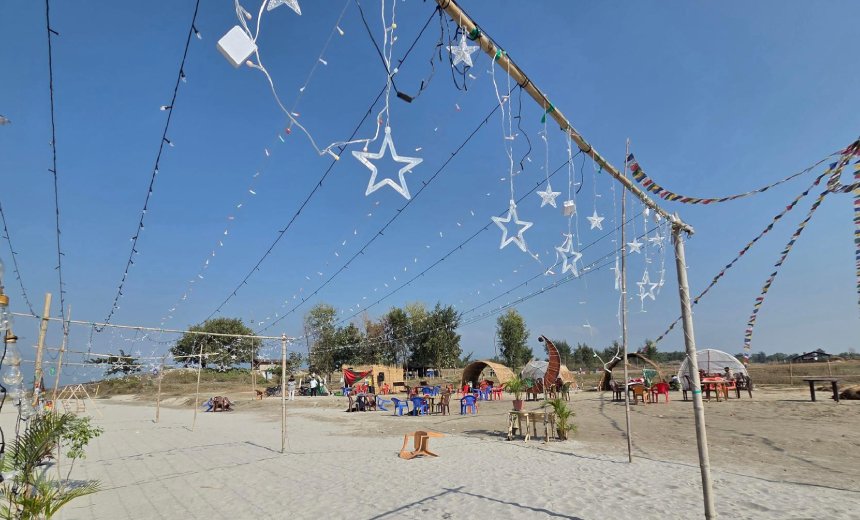
Barahakshetra Municipality–6 in Sunsari district has witnessed a remarkable rise in tourist activity at the picturesque Saptakoshi riverside area known as Borabadh. Once a quiet and sparsely visited spot, Borabadh has rapidly evolved into a popular destination, drawing visitors with its stunning sunset views, peaceful riverbank ambiance, and expanding range of hospitality services including campfires, resorts, coffee shops, and eateries.
Growing Tourist Attraction Along Saptakoshi River
According to local entrepreneur Bikul Shrestha, the area that remained relatively deserted until a few years ago is now bustling with visitors every single day. Shrestha, who has been operating a campfire service at Borabadh since Mangsir 1 with a team of ten workers, shared that the surge in tourist flow has significantly boosted local business prospects.

He said that local cuisine, including village-style chicken dishes, sekuwa, sukuti, and fresh fish from the Koshi River, has become the top choice for many visitors. “The number of tourists has been growing continuously, and the business is doing very well,” he added. Shrestha has also arranged accommodation facilities for visitors who wish to stay overnight, offering tents equipped with bedding for Rs. 1,000 per person.
From Abroad to Entrepreneurship in Tourism
Shrestha, who spent four years abroad, previously operated a dairy, safari service, and garage business upon returning to Nepal. However, he eventually shifted his focus entirely to tourism promotion, establishing the campfire service to tap into the area’s growing tourism potential. “As more tourists started coming here, I realized tourism had great prospects. So, I dedicated myself fully to this sector,” he shared.
The Making of ‘Borabadh’
‘Borabadh’ derives its name from the embankment made of cement-filled sacks (known as bora) that was constructed to prevent annual erosion caused by the Saptakoshi River. Locals say the structure gave the place its unique identity. What was once a barren riverside with just a few trees and minimal foot traffic has now transformed into a vibrant destination with more than half a dozen businesses including resorts, campfires, snack shops, and coffee stalls.
Sunset Views Draw Massive Crowds
Local resident Bhishan Rai said the area becomes especially lively during sunset when crowds gather to witness the spectacular view of the setting sun illuminating the Koshi River. “Daily footfall reaches around 2,000 to 2,500 tourists, while on Saturdays it can exceed 5,000,” he shared. The growing popularity of the sunset view has turned Borabadh into an alternative to popular sunrise destinations like Ilam’s Shree Antu.
A Favorite Destination for Nearby Cities
Tourists from Itahari, Dharan, Inaruwa, and various parts of Morang, Jhapa, and Biratnagar frequently visit the area. Sarita Shrestha from Itahari, who was visiting Borabadh with her friends, said the spot has now become the major attraction in Barahakshetra. “Earlier, we used to visit Chatarapul and the temple areas. But now Borabadh has become the main highlight. The evenings here are wonderful, the sunset reflecting on the Koshi River is mesmerizing. We come here two to three times a week just to enjoy the atmosphere and take photos,” she said.

Emerging Tourism Hub with Economic Impact
With its natural beauty, captivating sunset views, open riverside landscape, campfire activities, and traditional cuisine, Borabadh is rapidly gaining recognition as a new tourism destination in eastern Nepal. Locals say the rising number of visitors has created new income opportunities, boosted small businesses, and generated employment in the area.
However, they emphasize the need for further infrastructure development, such as improved pathways, lighting, sanitation, parking, and safety measures, to enhance the visitor experience and support sustainable tourism growth. As Borabadh continues to attract increasing numbers of tourists, the community hopes that timely investment will help transform the area into a well-developed and long-term tourism landmark in the Koshi region.