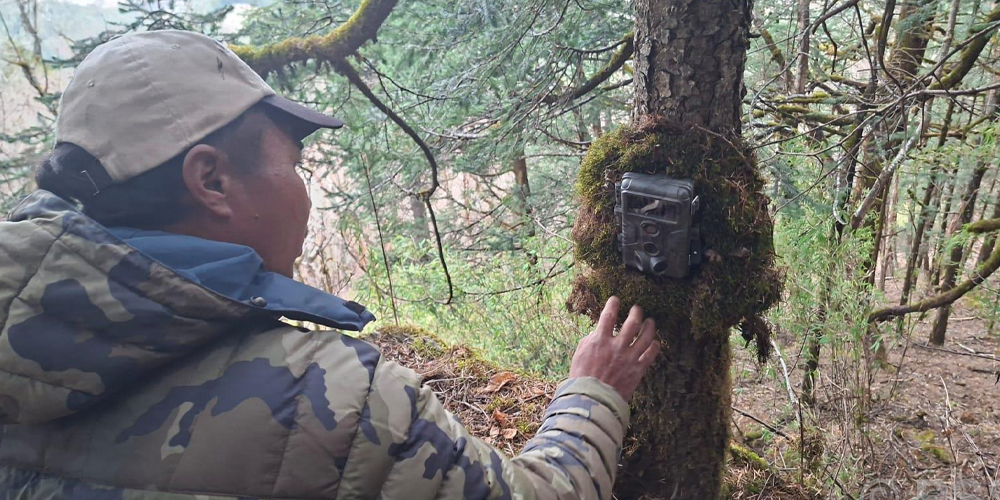
Camera trapping devices have been installed at various locations of Jaljala and Dhorpatan Hunting Reserve under Dhaulagiri Rural Municipality to study and monitor the endangered red panda population, conservation officials said.
The initiative has been implemented by the Biodiversity Conservation Society Nepal with support from a donor agency. The camera have been placed in Jaljala, Muna, Mareni, and Dhorpatan areas of wards 2 and 3 of Dhaulagiri Rural Municipality, focusing on locations frequently visited by the species.

Advanced Monitoring to Study Behavior and Habitat
According to society chairman Paban Rai, camera traps have been installed in around a dozen strategic points where red panda movement has been recorded or where their droppings have been previously found.
He said the automated camera systems are designed to capture images and videos of wildlife movement, helping researchers understand the behaviour, habitat use, and population status of the endangered species.
“The camera help us identify movement patterns and estimate population trends of the red panda,” Rai said, adding that further studies, including parasite analysis, are also underway to assess the health condition of the species.
Scientific Study of Habitat and Health Conditions
A technical team has also been deployed to collect and examine red panda scat samples. The analysis will provide information on diet, health status, and possible threats affecting the species, which will guide future conservation efforts in the region.
Officials say such scientific monitoring is crucial for designing long-term protection strategies for the species, which remains vulnerable due to habitat loss and human activities. The red panda is typically found in Himalayan forests at altitudes between 2,200 and 4,500 metres, where it survives mainly on bamboo shoots and spends much of its time in trees.
Population Status and Legal Protection
According to previous field records in the Jaljala area, an estimated 6 to 25 red pandas have been observed in localized zones. Conservation officers say the latest national estimates suggest Nepal may have between 500 and 1,000 red pandas in the wild.

The species is legally protected under the National Parks and Wildlife Conservation Act, 1973, which classifies the red panda as a protected animal. Offenders involved in poaching can face imprisonment of 1 to 10 years and fines ranging from Rs 100,000 to Rs 500,000, or both.
Regional Distribution and Conservation Importance
The red panda (Ailurus fulgens) is also found in China, India, Bhutan, and Myanmar, but Nepal’s population is considered ecologically significant due to its Himalayan habitat. Conservationists emphasize that continued monitoring and habitat protection in areas like Dhorpatan are essential to ensure the survival of this elusive and endangered mammal in the wild.