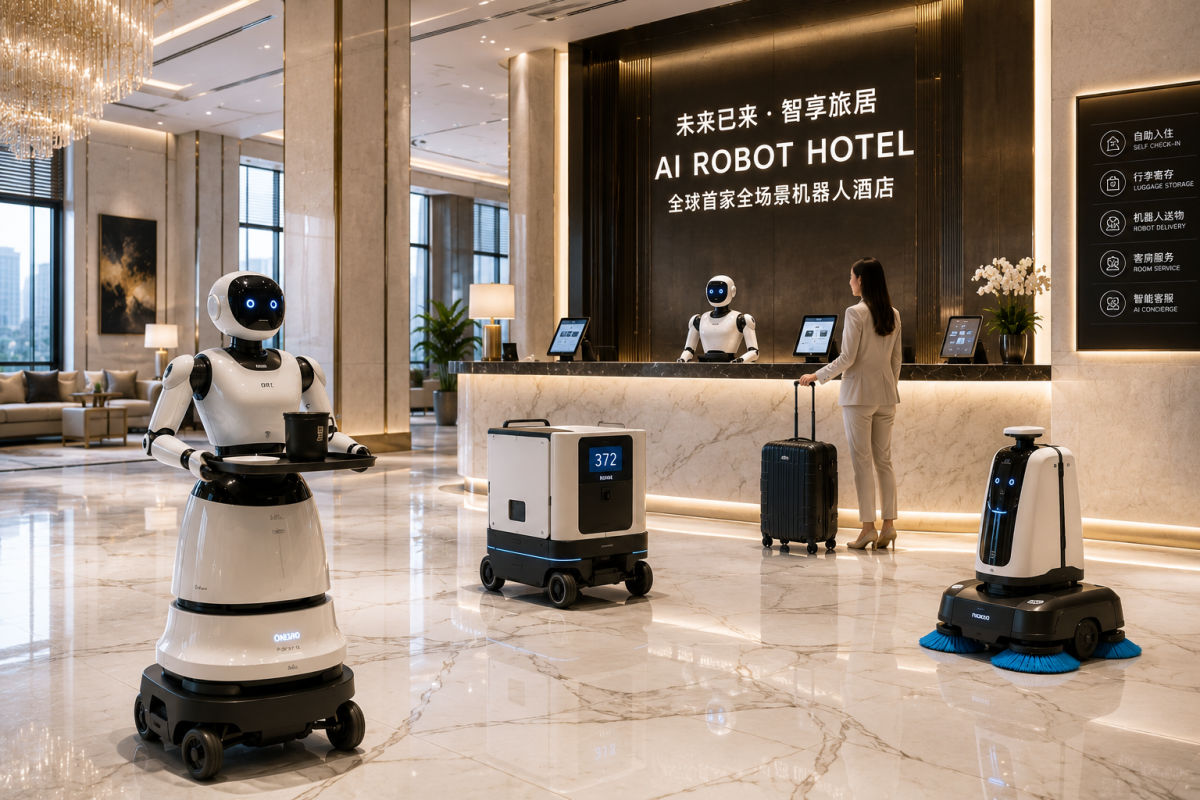
China is set to introduce what developers describe as the world’s first fully robot-operated hotel, marking a major milestone in the use of artificial intelligence (AI) and robotics within the global hospitality industry. The pioneering project, announced by Pudu Robotics in partnership with Shenzhen Culture & Tourism Industry Development Co. Ltd., will be constructed on the western artificial island of the Shenzhen–Zhongshan Link, one of the flagship infrastructure developments in the Guangdong-Hong Kong-Macao Greater Bay Area. Trial operations are expected to begin by the end of 2026, while the hotel is scheduled to open to the public in phases from early 2027.

A Fully Automated Hospitality Experience
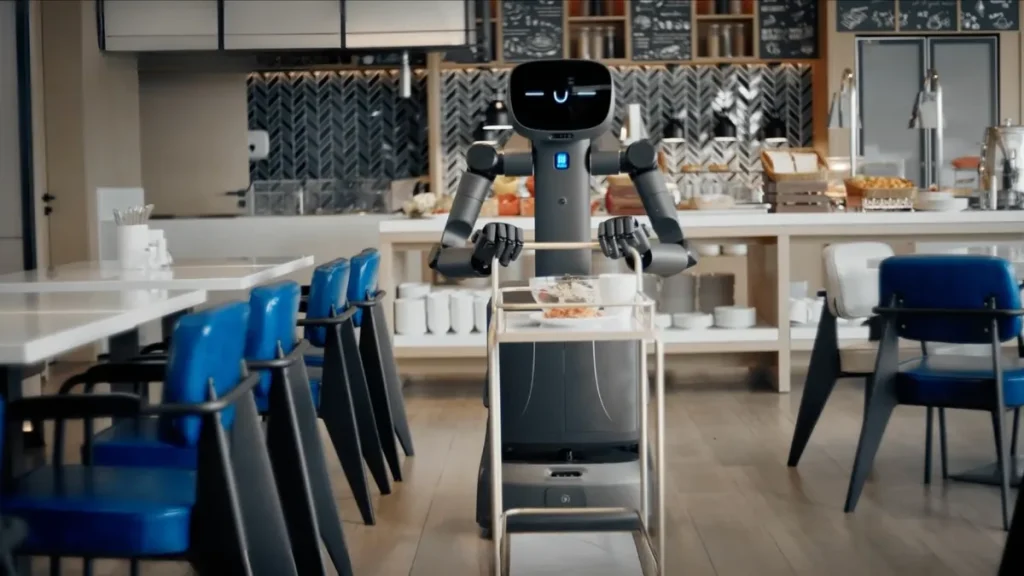
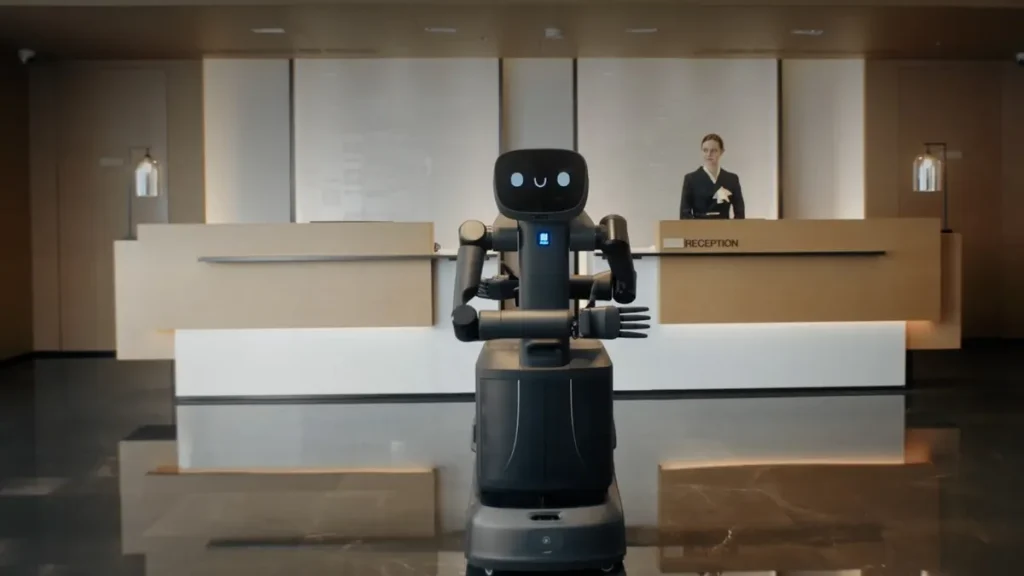
Unlike conventional smart hotels that automate only selected services, the new property is being designed as a fully integrated robotic hospitality ecosystem. Robots powered by embodied AI will perform nearly every major hotel function, including guest reception, self-check-in assistance, luggage transportation, room service deliveries, housekeeping, food and beverage services, security patrols, and customer support.
All robotic systems will operate through a centralized AI platform, enabling them to coordinate tasks in real time and deliver a seamless hospitality experience throughout the guest journey. Developers say the project represents a significant advancement in applying AI beyond isolated hotel services to create a completely automated operating model.
Boosting Efficiency and Guest Experience
According to project partners, the initiative aims to demonstrate how advanced robotics can improve operational efficiency while enhancing service quality and customer convenience. The AI-powered systems are expected to streamline hotel operations, reduce response times, and provide consistent service standards around the clock.
Developers believe the project will also serve as a testing ground for future innovations in hospitality automation as AI technologies continue to evolve.
Flagship Attraction for Smart Tourism
The hotel will become a flagship attraction on the western artificial island of the Shenzhen–Zhongshan Link, an area that is being developed into a technology-driven tourism destination. The broader development will combine hospitality, leisure, innovation, and smart tourism experiences, supporting Shenzhen’s ambition to become a global center for artificial intelligence, robotics, and high-tech tourism. The project will be introduced in multiple phases, allowing developers to gradually expand robotic capabilities and incorporate new AI technologies as they become available.
Reflecting a Global Hospitality Trend
The announcement comes as hotel operators around the world increasingly explore automation to improve operational efficiency, address labor shortages, and enhance guest experiences. While many hotels already use service robots for tasks such as room deliveries, cleaning, and concierge assistance, fully integrated robotic hotel operations remain extremely rare. Industry experts view the Shenzhen project as one of the hospitality sector’s most ambitious efforts to create a hotel where AI and robotics manage virtually every aspect of daily operations.

A Glimpse into the Future of Hospitality
If completed according to schedule, the project could offer one of the earliest examples of how artificial intelligence and robotics may transform hotel management and tourism development in the years ahead. Beyond improving operational efficiency, the initiative is expected to provide valuable insights into the role of AI-driven automation in shaping future guest experiences, destination management, and the evolution of the global hospitality industry. As technology continues to redefine travel and tourism, the Shenzhen robo-operated hotel may become a benchmark for next-generation smart hospitality and a model for future AI-powered tourism developments worldwide.