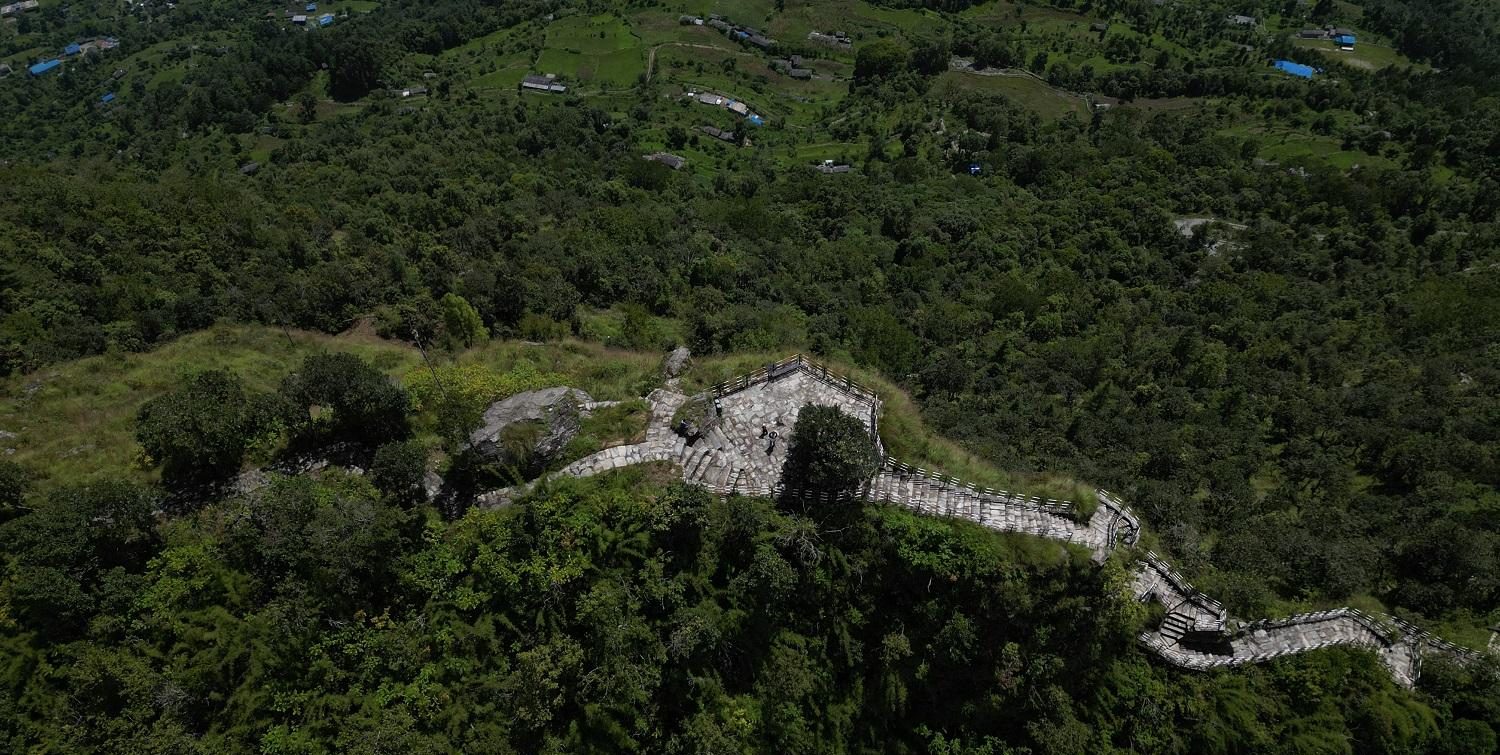
Tourism infrastructure has been developed at the historic Chinakot Palace area in Mangala Rural Municipality–3 of Myagdi, improving access to the hilltop heritage site and creating greater opportunities for tourism development in the region. The infrastructure was developed through an investment of more than Rs. 5 million from the Gandaki Province Government, Mangala Rural Municipality, Chinakot Aama Samuha and Deurali Community Forest Users Group.
The investment has focused on improving access, visitor facilities, and basic infrastructure around the historically and naturally significant destination. According to Prakash Pun, secretary of the Chinakot Conservation and Management Committee, the provincial government invested Rs. 4 million, Mangala Rural Municipality contributed Rs. 800,000, and the Aama Samuha provided Rs. 200,000 toward tourism infrastructure between fiscal years 2076/77 and 2082/83 BS.

Improved Access and Visitor Facilities
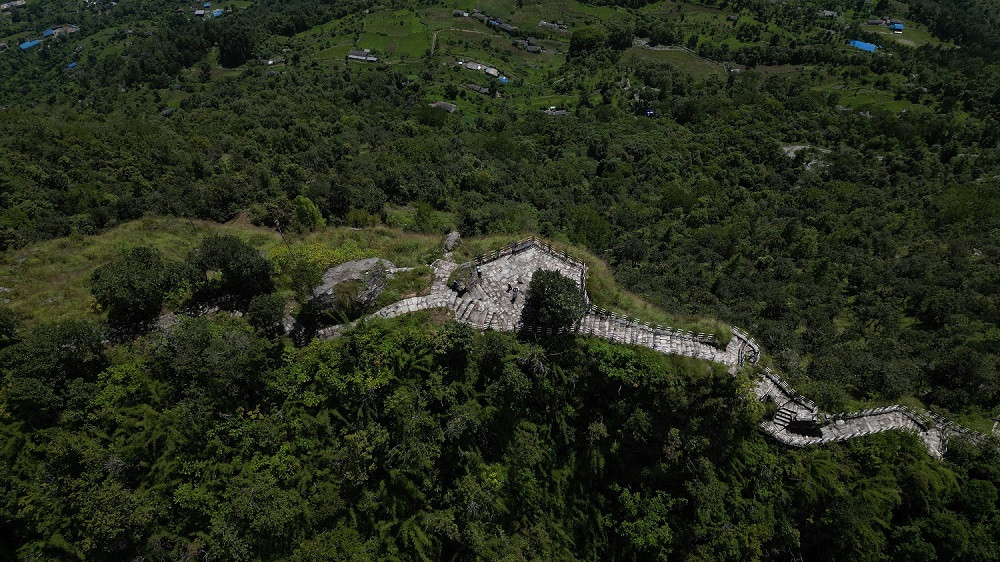
More than one kilometre of paved trails and roads and around two kilometres of unpaved trails and roads have been constructed to make Chinakot easier to reach. A viewpoint and shelter have also been built for visitors. Electricity has been extended from Baranja village to Chinakot with support from the Deurali Community Forest. Drinking water facilities have also been arranged at the destination.
Local residents contributed 10 percent of the total allocated project budget through labour, supporting the implementation of the infrastructure projects. The development has already begun to change the tourism environment at Chinakot. Tek Bahadur Chhantyal, chairperson of the Deurali Community Forest Users Group, said the site, which was largely deserted before 2075 BS, has started attracting domestic visitors after safer and more accessible trails were constructed.
He said that before federalism, there was only a small shelter at the site, while improved infrastructure provided through the provincial and local governments has made it possible for visitors to reach the hilltop more conveniently. Chinakot, however, still requires additional protection and conservation measures. Local stakeholders have highlighted the need for fencing around the site and proper preservation of historically significant objects found in the area.
Himalayan Views and Historical Heritage
Located at an altitude of approximately 2,200 metres above sea level, Chinakot offers panoramic views of sunrise as well as the Annapurna, Dhaulagiri, Gurja and Machhapuchhre mountain ranges. Visitors can also enjoy views of rural settlements in western Myagdi, surrounding mountain landscapes, and the winding Myagdi River from the hilltop. Chinakot is also considered significant for its historical heritage. According to local community leader Ran Bahadur Roka, the site was once home to the palace of the Baranji king during the period of the small hill principalities.
Remains of palace walls and historical objects, including a traditional grinding stone, can still be found at Chinakot. Visitors can also see stones locally associated with the queen’s hair-combing activities and stones known as Behaula and Behuli. At the palace site in Tharpugaun, located at the foot of Chinakot, traditional weapons such as khukuris, swords and shields have also been preserved.
The destination has begun attracting visitors for camping, picnics and short recreational trips, particularly outside the monsoon season. As the site is located away from settlements and offers a quiet environment, arrangements have also been made to provide utensils for visitors coming for picnics. A viewpoint has additionally been developed at nearby Gharsunne Danda, where a circular rock formation on the hilltop has been fenced and connected with a walking trail.
Potential for Local Tourism and Livelihoods
Chinakot can be reached from Beni Bazaar, the headquarters of Myagdi, by travelling through Tatopani and Baranja. The journey takes approximately one hour by vehicle, while the walk from Baranja to Chinakot takes around two hours. As there are currently no hotels or restaurants at the destination, visitors need to carry and manage their own food and other supplies. The growing interest in camping and day visits, however, provides an opportunity for local communities to develop tourism-related services in the future.

The newly developed infrastructure was inaugurated on Wednesday by Resham Bahadur Jugjali (Subin), Gandaki Province Assembly member elected from Myagdi Constituency 1(B). He said the provincial government was also investing in tourism infrastructure and attractions in Baranja, including Jhankripani and Gamphadhuri. Jugjali urged local residents to make effective use of the new infrastructure to attract visitors, generate income, create employment and move toward greater economic self-reliance.
Former Constituent Assembly member Gambadur Shris, who is also a resident of Baranja, Mangala Rural Municipality Vice Chairperson Prem Kumari Chhetri, and Mangala–4 Ward Chairperson Lal Bahadur Roka expressed confidence that protecting, promoting and developing the area’s historical, cultural and natural heritage would contribute to local prosperity. With improved access, mountain views, historical remains and growing visitor facilities, Chinakot is emerging as a promising heritage and nature-based tourism destination in Myagdi, offering opportunities for community-based tourism and local economic development.