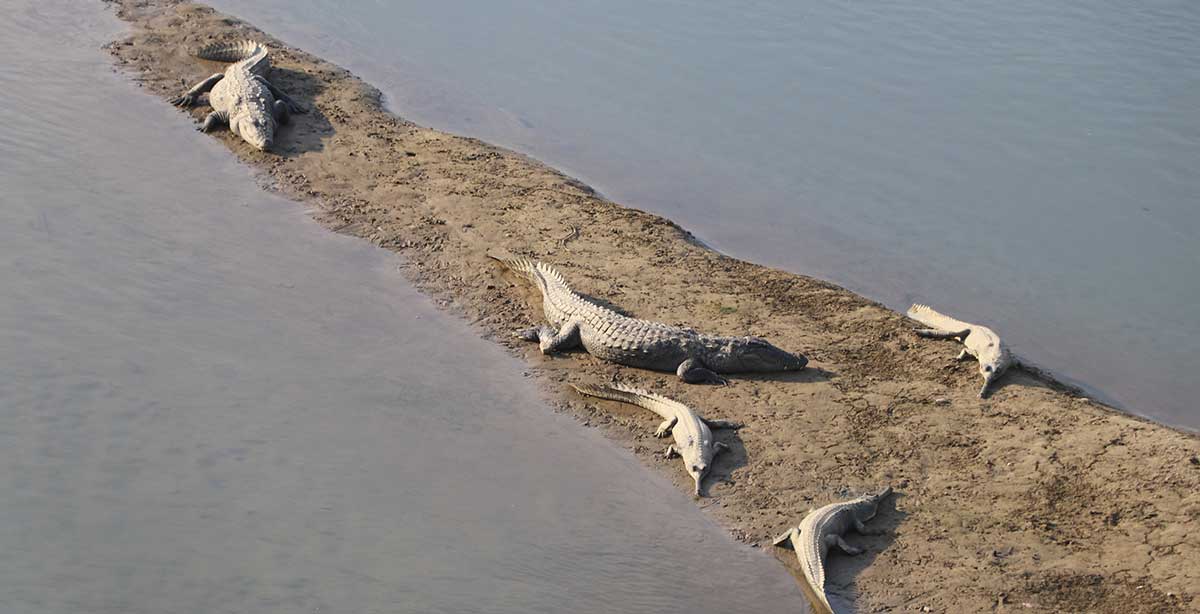
Chitwan National Park has released 133 gharials (Gavialis gangeticus) into the Rapti River as part of its continued efforts to conserve the critically endangered reptile species. Among them, two are male, while the remaining are females. These gharials were reared at the Gharial Breeding Center located within the park and were released into the river at different times during the last fiscal year.
Over 2,000 Gharials Released Since Inception
According to Abinas Thapa Magar, the Information Officer at Chitwan National Park, a total of 2,090 gharials have been released into various rivers of Nepal from the breeding center to date. The Rapti River has received the highest number of these releases—1,335 in total. Other rivers that have benefited from this conservation initiative include the Narayani River with 419 gharials, the Saptakoshi with 115, the Babai with 110, the Karnali with 41, the Kaligandaki with 35, the Chaudhar River in Shuklaphanta National Park with 25, and the Rapti River in Banke district with 10 gharials.
Comparison with Previous Fiscal Years
In the previous fiscal year alone, 105 gharials were released, including 25 into the Chaudhar River and 10 into the Banke section of the Rapti River. The remainder were released into the Rapti River near Chitwan. Most of the gharials released during that period were hatchlings from the year 2020.
Despite the regular release of gharials into the rivers, population growth in the wild remains limited. A survey conducted in December of the last fiscal year found only 352 gharials in the Rapti and Narayani Rivers combined. This stagnation in wild population numbers has raised concerns among conservationists about the effectiveness of current efforts and the threats still facing the species in their natural habitat.
Current Status at the Breeding Center
At present, the Gharial Breeding Center houses 782 gharials. Among them, 185 are hatchlings from the current year, while 153 are from the previous year. The remaining individuals are from earlier years. The center is home to one mature male gharial; the sex of the others has not yet been determined, as identifying the gender of young gharials is a challenging task.
A Species on the Brink
The gharial is one of the world’s most critically endangered reptilian species. Once widely found across river systems in countries such as Pakistan, Bangladesh, Bhutan, and Myanmar, it is now restricted to Nepal and India. In the 1940s, the global gharial population was estimated at around 10,000 individuals. By the 1970s, only about 2% of that number remained, prompting urgent conservation interventions.
The alarming decline in numbers was primarily due to habitat destruction, pollution, fishing, and human encroachment into river systems. Recognizing the need for immediate action, the Chitwan National Park established the Gharial Breeding Center in Kasara in 1975. At the time, it was estimated that fewer than 100 gharials were left in Nepal.
Challenges to Gharial Conservation
Despite decades of conservation work, including the captive rearing and release program, the gharial population has not shown significant growth in the wild. Officer Thapa Magar highlighted various challenges, including the increasing human activity along riverbanks, extraction of riverine resources like sand and gravel, pollution, and overfishing, which continue to threaten the gharials’ natural habitats.
Additionally, natural events like floods pose a severe threat, often sweeping gharials downstream into India or away from safe habitats. Even though efforts are made annually to reintroduce gharials into the rivers, the survival and integration of these reptiles into wild populations remain uncertain due to these persistent threats.
Looking Forward
Conservationists emphasize that the release of gharials, while essential, must be complemented by stricter habitat protection measures and community engagement. Protecting river ecosystems, regulating fishing, and educating locals about the ecological importance of gharials are crucial steps in ensuring the species’ survival.
Chitwan National Park continues to play a leading role in gharial conservation, but experts suggest that more collaborative efforts at national and transboundary levels are needed. Without enhanced protective measures and stronger policies to safeguard river ecosystems, the gharial’s future in the wild remains precarious.
While the release of 133 gharials into the Rapti River reflects a commendable conservation commitment, the challenges ahead require greater ecological sensitivity, policy intervention, and community participation to ensure that the gharial does not become a creature of the past.