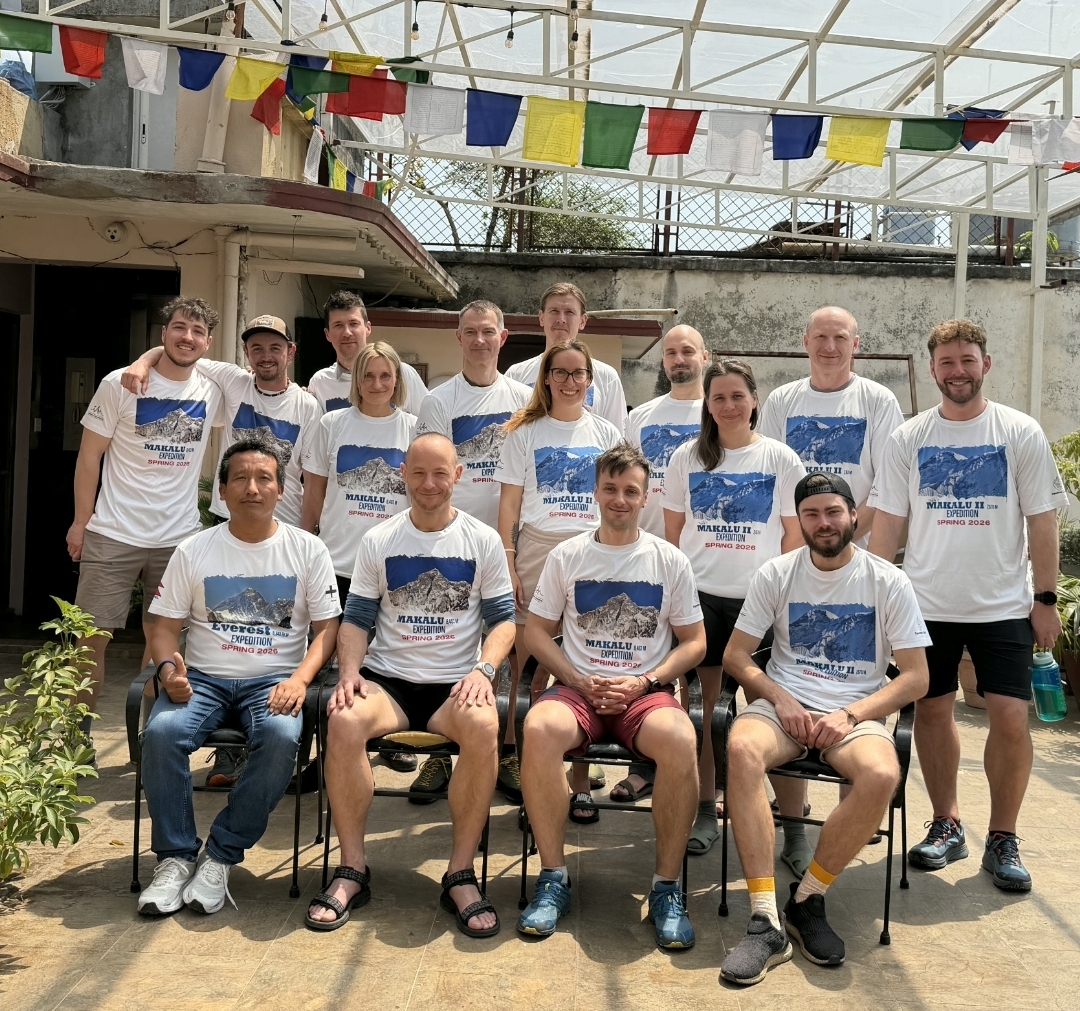
A Czech-dominated international climbing team has launched an ambitious dual expedition targeting two peaks in the remote Makalu Massif during the Spring 2026 season. The expeditions are being organized by I.A.M. Treks and Expedition, focusing on both Makalu I (8,463m) and the lesser-climbed Makalu II, also known as Kangchung Tse (7,678m).
Both teams departed from Kathmandu on April 14 and are currently approaching their objectives via the challenging Tumlingtar–Chichila–Num–Yak Kharkha–Base Camp route in eastern Nepal, known for its remote terrain and demanding logistics.

Makalu I Team Led by Experienced Czech Climber
The Makalu I expedition is led by Czech climber Martin Ksandr and consists of five members, including Marketa Marvanova and Pavel Paloncy from the Czech Republic, Dmitrii Kliukin from Russia, and Pavel Burda from the Czech Republic.
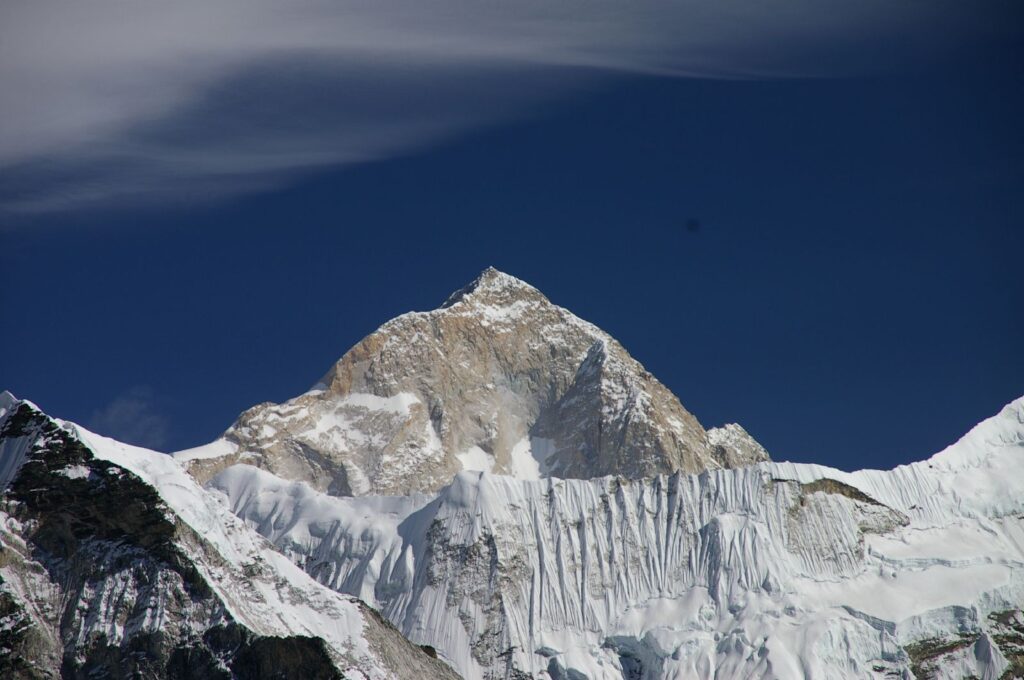
The team holds a 75-day permit for the ascent of Makalu, excluding the Everest corridor. Makalu, standing as the world’s fifth-highest peak, is known for its steep faces, knife-edged ridges, and significantly lower climbing traffic compared to nearby 8,000-metre peaks.
Makalu II Expedition Targets Rarely Climbed Kangchung Tse
Running parallel to the main expedition is the Makalu II team, which is attempting the less-frequented Kangchung Tse summit. This group is led by 23-year-old Lukas Madr, making him one of the youngest expedition leaders active in Nepal’s high-altitude climbing season.
His six-member team includes Jana Vankova from Slovakia and Czech climbers David Roubinek, Josef Vojtech, Marek Blahuta, Petr Kadanka, and Martin Ksandr, the same leader also heading the Makalu I expedition, indicating coordinated logistical planning between the two climbs. The Makalu II permit is valid for 60 days for Spring 2026.
Strategic Interest in Makalu Region Growing
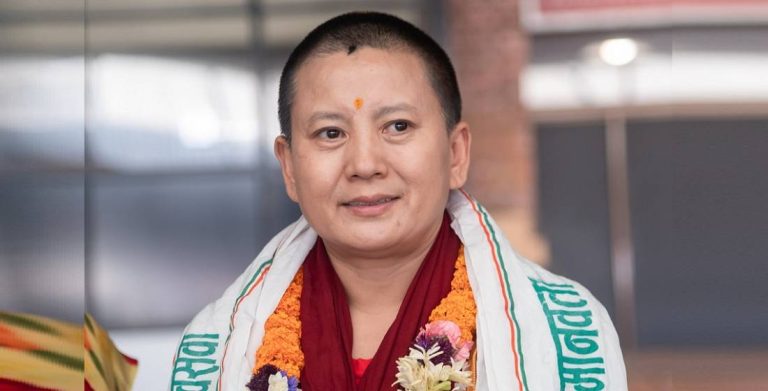
According to Pemba Jangbu Sherpa, Managing Director of I.A.M. Treks and Expedition, the simultaneous expeditions reflect increasing global interest in the Makalu region as a serious high-altitude mountaineering destination.
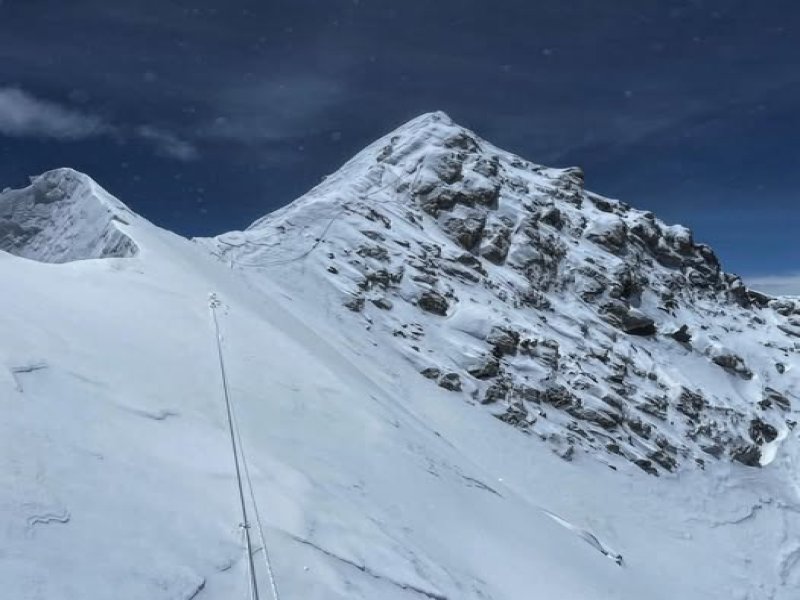
“Makalu II, Kangchung Tse, is a fascinating peak. It sits in the shadow of Makalu I, but it has its own technical character and demands strong mountaineering skills in the 7,500–7,999 metre range,” he said. He added that organizing both expeditions simultaneously demonstrates the growing confidence of international climbers in exploring less-commercialized Himalayan routes.
Makalu: A Less-Crowded High-Altitude Challenge
Unlike more frequently climbed peaks such as Mount Everest, Makalu receives comparatively fewer climbers each season due to its technical difficulty, remote access, and challenging weather conditions. Its steep pyramid structure and exposed ridges make it one of the most technically demanding 8,000-metre peaks in Nepal, attracting only highly experienced mountaineers.
Kangchung Tse Gains Attention as Alternative Objective
Makalu II (Kangchung Tse), although considered a subsidiary summit of the Makalu massif, is increasingly being recognized as a standalone climbing objective. With far fewer expeditions attempting its ascent, it offers climbers a more isolated and exploratory experience. Its rarity and technical challenges have made it appealing to expedition teams seeking alternatives to crowded high-altitude routes.

Remote Base Camp Operations in Sankhuwasabha
Both expeditions are being coordinated from a shared base camp in the remote Sankhuwasabha District, where logistical operations, acclimatization planning, and route preparation are underway. The dual-expedition model is expected to optimize resources while maintaining separate summit strategies for both teams.
Ambitious Season Ahead for Makalu Region
With two coordinated international teams attempting both Makalu I and Makalu II simultaneously, the Spring 2026 season is expected to bring renewed attention to one of Nepal’s most challenging and least crowded Himalayan regions. If successful, the expeditions could further establish the Makalu massif as a premier destination for serious high-altitude mountaineering beyond the traditional 8,000-metre circuits.