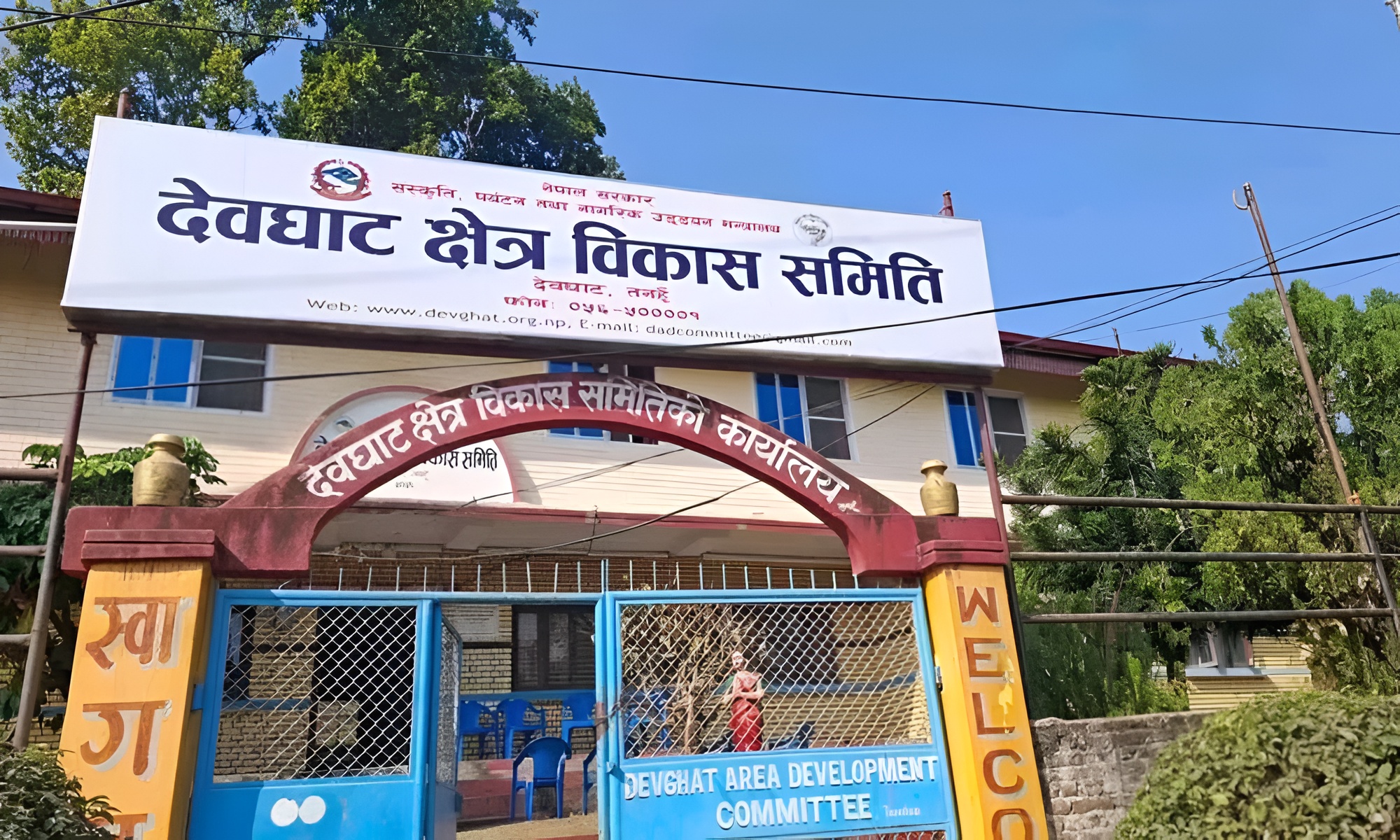
Devghat, one of Nepal’s most revered religious destinations, is set to be officially declared a plastic-prohibited zone starting Poush 11 (December 26). The decision marks a major environmental milestone aimed at preserving the sanctity, cleanliness, and ecological balance of the sacred pilgrimage area, which attracts thousands of devotees throughout the year.
The declaration will be carried out under the coordination of the Devghat Area Development Committee (DADC), in collaboration with three local governments, Bharatpur Metropolitan City, Gaidakot Municipality, and Devghat Rural Municipality, along with partner organizations including Sahamati and Hami Lagayat. The formal announcement is scheduled to be made through a special programme on Poush 11.

Joint Efforts for a Plastic-Free Devghat
According to the Devghat Area Development Committee, the plastic prohibition campaign will be implemented across 5,434 hectares of the this area. Following the official declaration, a sustained plastic-free campaign will be launched to gradually eliminate the use, disposal, and circulation of plastic products within the sacred premises.
DADC Chairperson Dr. Ishwori Raj Laudari stated that the initiative is a response to growing concerns over plastic pollution in the holy site. He emphasized that it’s religious and environmental significance requires collective responsibility to maintain cleanliness and ecological harmony. “Since rivers are central to every civilization, protecting river systems and surrounding environments is a shared duty,” he noted.
Waste Management Infrastructure Strengthened
To support the plastic-free campaign, the committee has already installed 37 waste disposal bins across the Devghat area. The bins are designed for waste segregation, allowing separate disposal of plastic materials, water bottles, and leaf plates used for religious offerings. This step aims to promote responsible waste disposal behavior among pilgrims, tourists, and local vendors.
The infrastructure development has been undertaken under the leadership of the Devghat Area Development Committee with the cooperation of Bharatpur Metropolitan City, Gaidakot Municipality, and Devghat Rural Municipality.
Awareness and Community Participation
Sahamati Chairperson Om Nath Subedi stressed the importance of community participation in ensuring the success of the plastic-free initiative. He acknowledged that waste management challenges exist, particularly in cremation areas, but urged all stakeholders to actively contribute to improving waste handling practices.

Subedi added that awareness campaigns, bag-control initiatives, and behavioral change programmes are currently being carried out to encourage pilgrims and local businesses to reduce plastic usage and adopt environmentally friendly alternatives.
Call for Collective Responsibility
Devghat Area Development Committee Executive Director Sadan Baral reiterated that sustained cooperation among local governments, organizations, and the public is essential to make the plastic-free declaration effective and long-lasting. He emphasized that protecting Devghat from plastic pollution is not only an environmental obligation but also a moral responsibility to preserve the spiritual purity of one of Nepal’s most sacred pilgrimage destinations. With the upcoming declaration, Devghat is poised to become a model religious site promoting eco-friendly practices, setting an example for other pilgrimage centers across the country.