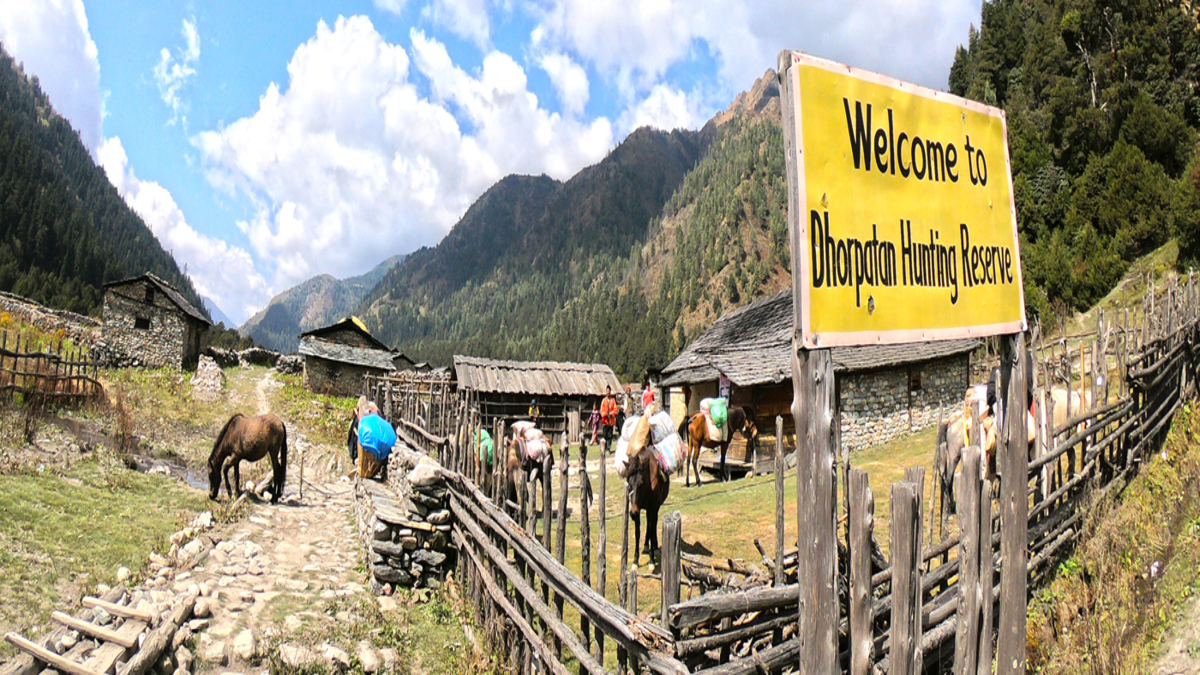
Dhorpatan Hunting Reserve is Nepal’s only legal hunting reserve and one of the very few regulated trophy hunting destinations in Asia. Located in the western Himalayan region, it covers approximately 1,325 square kilometers across the districts of Baglung, Myagdi, and Rukum West, within the Dhaulagiri Himalayan range. The reserve’s altitude ranges from roughly 2,850 meters to over 7,000 meters, making it one of the highest-altitude hunting reserves in the world.
Established to balance wildlife conservation with sustainable, tightly controlled hunting, Dhorpatan is divided into several designated hunting blocks where hunting is permitted only under strict government regulation. Beyond hunting, the reserve is also a growing destination for trekking, wildlife photography, birdwatching, and nature tourism, thanks to its dramatic Himalayan scenery and rich biodiversity.
History of Dhorpatan Hunting Reserve
Long before Dhorpatan became a formally protected reserve, the region already carried deep historical significance. The Dhorpatan valley sits along a relatively gentle, east-west route across an 18-kilometer watershed pass at around 3,400 meters, connecting western Nepal’s Karnali river basin with the Gandaki river basin further east. In the late Middle Ages, this route served as a migration corridor for the Khas people moving eastward, and this movement of peoples played a part in the broader historical process that eventually gave rise to the Kingdom of Nepal, formed from loose confederations across the Karnali and Gandaki regions and beyond.
In more recent history, long before any formal conservation law existed, the high pastures and valleys of Dhorpatan served as a private hunting ground for Nepal’s royal family and the Rana aristocracy, who prized the area for its abundant blue sheep and Himalayan tahr populations and its dramatic, remote high-altitude terrain. Access during this era was extremely limited, largely restricted to royalty and elite hunting parties, some of whom reached the area by helicopter. As Nepal’s wildlife came under growing pressure from uncontrolled poaching and habitat disturbance through the mid-20th century, it became increasingly clear that this informal system of elite, unregulated hunting could not continue without risking serious harm to the region’s animal populations.
To address this, the Government of Nepal moved to formalize protection for the area. The reserve was officially established in 1983 (2039 BS, in the month of Chaitra) and was formally gazetted a few years later in 1987 (2044 BS, Baisakh 14), bringing it under the legal framework of the National Parks and Wildlife Conservation Act. Unlike Nepal’s national parks, which prohibit hunting entirely, Dhorpatan was deliberately designed as a hybrid model: a protected area that would still preserve a representative high-altitude ecosystem of western Nepal, while allowing a small, scientifically regulated quota of sport hunting to continue under strict government oversight.
This made Dhorpatan a genuine milestone in Nepalese conservation policy, demonstrating for the first time that carefully managed trophy hunting could generate meaningful revenue for conservation rather than undermine it. Since its founding, the reserve has continued to evolve administratively, including recent proposals for a formal buffer zone of over 500 square kilometers around its boundary, intended to strengthen local community participation in conservation and better balance biodiversity protection with the livelihoods of nearby villages.
Location, Geography, and Climate
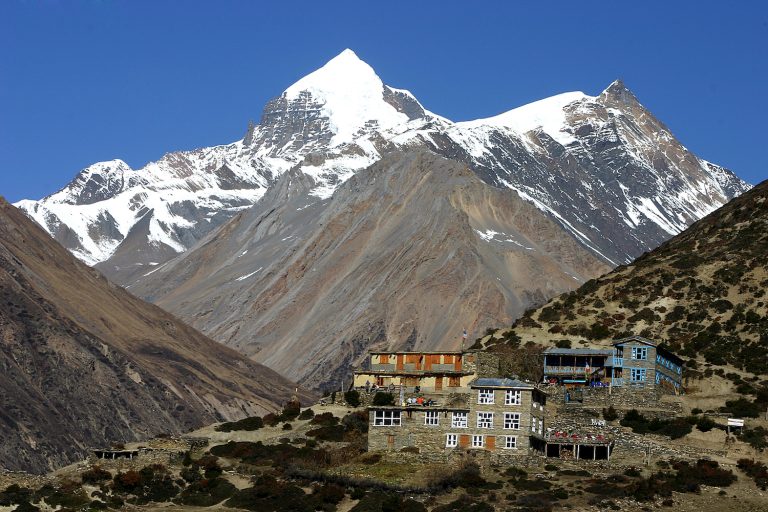
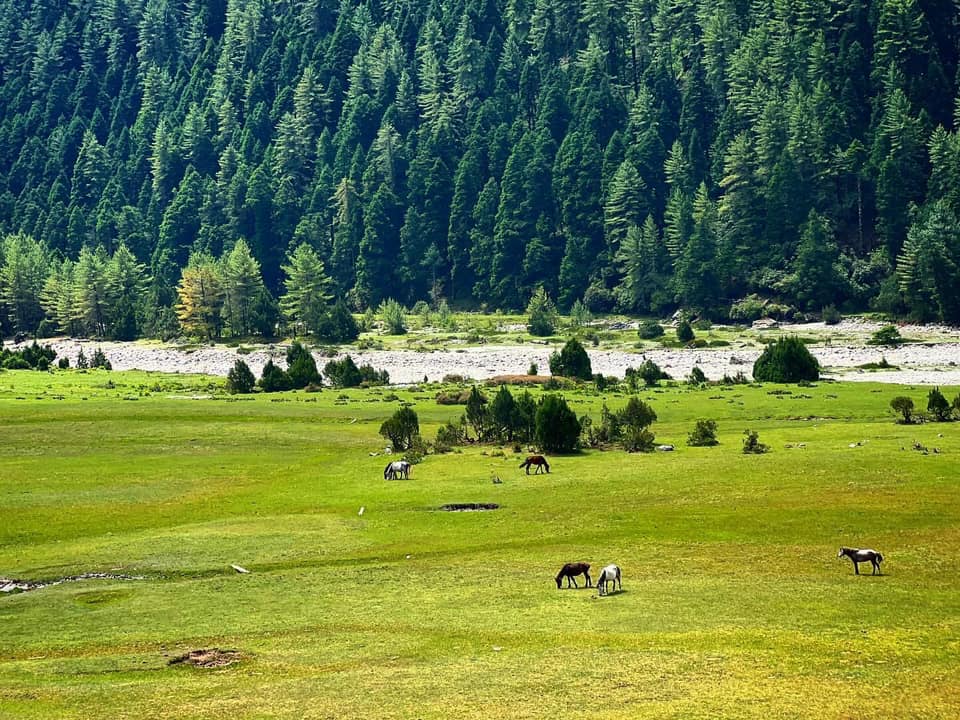
The Dhorpatan Hunting Reserve sits within the Dhaulagiri Himalayan region of western Nepal, spanning Baglung, Myagdi, and Rukum West districts, and is surrounded by major peaks including Dhaulagiri, Gurja Himal, Churen Himal, and Putha Himal. Its terrain is a mix of dense forest, alpine meadows, grasslands, rivers, cliffs, and snow-covered high ground, providing ideal habitat for a wide range of rare wildlife.
The Dhorpatan Hunting Reserve experiences four distinct seasons. Spring, running from March to May, brings pleasant weather, blooming rhododendrons, and increased wildlife activity. Summer, from June to August, coincides with the monsoon and brings heavy rainfall that makes travel and access considerably more difficult. Autumn, from September to November, offers clear skies, dry trails, and excellent visibility, making it the prime season for both hunting and trekking. Winter, from December to February, is cold, with heavy snowfall at higher elevations, although the lower areas of the reserve generally remain accessible.
Flora and Wildlife
Dhorpatan supports a rich range of vegetation, including pine, fir, oak, spruce, juniper, and rhododendron forests, alongside bamboo stands, alpine grasslands, and numerous medicinal herbs. These varied habitats sustain a remarkable diversity of wildlife. Mammals found in the reserve include the Himalayan Blue Sheep, known locally as Bharal or Naur, the Himalayan Tahr (Jharal), Wild Boar, Musk Deer, Ghoral, Serow, Snow Leopard, Red Panda, Himalayan Black Bear, Leopard, Wolf, Gray Langur, Rhesus Macaque, and Himalayan Marmot.
The reserve is also home to more than 130 bird species, including the Danphe or Himalayan Monal, Nepal’s national bird, along with the Cheer Pheasant, Koklass Pheasant, Kalij Pheasant, and several species of partridge and migratory birds. Many of these animals are fully protected under Nepalese wildlife law and contribute significantly to the reserve’s ecological importance.
Animals Permitted for Hunting
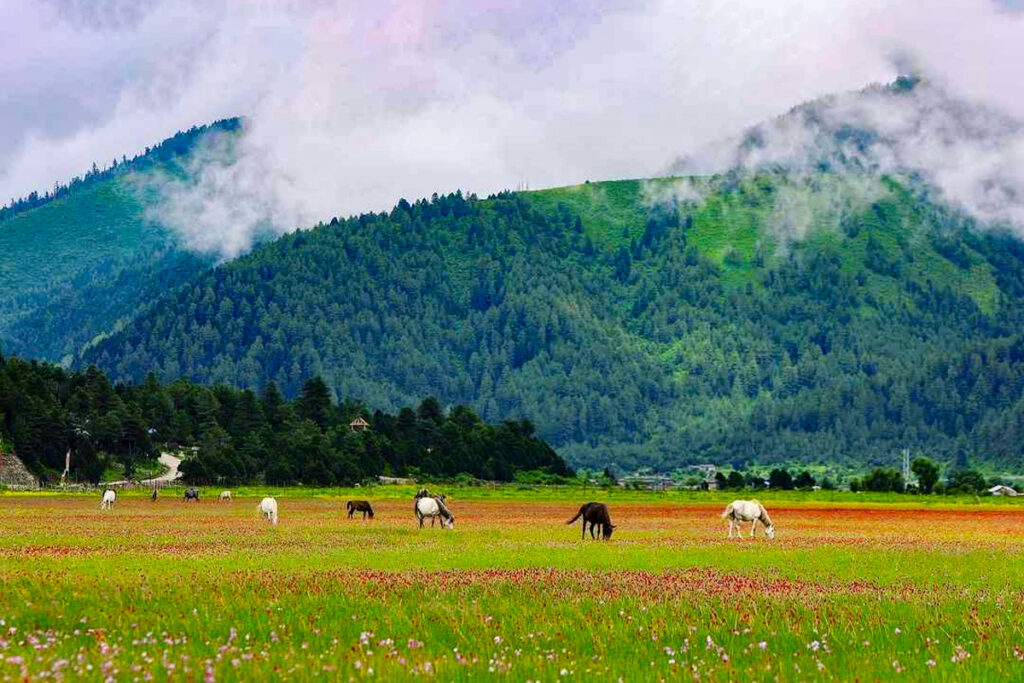
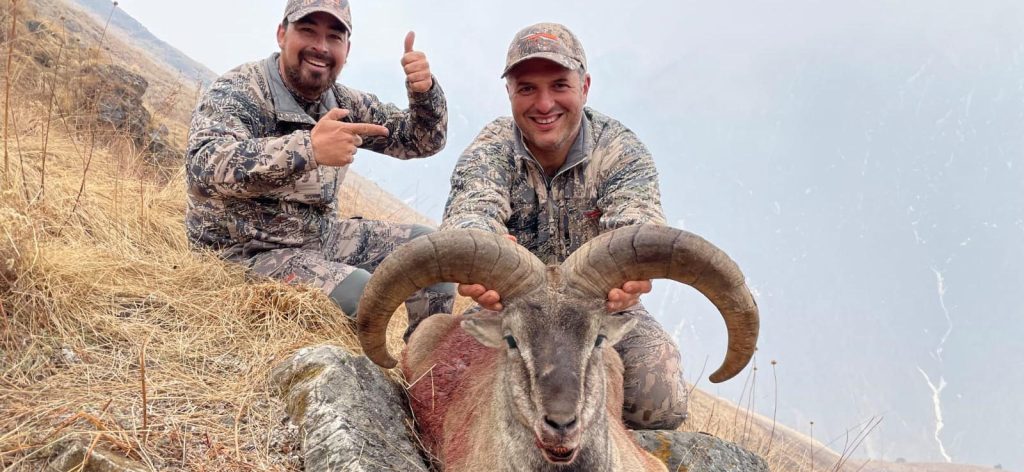
Despite this biodiversity, legal trophy hunting in Dhorpatan is limited to a small number of species each year. The two principal hunting species are the Himalayan Blue Sheep, the reserve’s flagship trophy animal found on the high, rocky slopes above the tree line, and the Himalayan Tahr, a wild mountain goat valued for its thick mane and impressive horns.
Wild Boar is occasionally permitted in the lower temperate zones, and Barking Deer may be included in some years depending on the results of wildlife population surveys. Hunting of protected species, including the Snow Leopard, Red Panda, Musk Deer, Himalayan Black Bear, Leopard, and Wolf, is strictly prohibited under all circumstances. This selective system is designed to keep wildlife populations healthy while still allowing sustainable, revenue-generating hunting to continue.
Hunting Seasons and Quotas
Hunting is permitted only during two official seasons each year. The spring hunting season generally runs from February to May, while the autumn hunting season takes place from October to December. Autumn is generally considered the primary hunting season, since post-monsoon weather clears the trails and blue sheep congregate more visibly during their rutting period, making them easier to locate.
Ahead of every season, wildlife experts conduct scientific population surveys to determine sustainable quotas. A 2007 survey, for example, estimated the reserve’s blue sheep population at around 852 individuals, and such surveys continue to inform how many animals can be safely hunted each year. Based on these findings, the Department of National Parks and Wildlife Conservation allocates a limited number of permits for each species, distributed across roughly six to seven designated hunting blocks to rotate hunting pressure and allow ongoing monitoring.
In recent seasons, quotas have typically ranged around ten to fourteen Himalayan Blue Sheep, ten to fourteen Himalayan Tahr, and up to about twelve or thirteen Wild Boar per season, though the exact numbers vary from year to year based on the latest surveys. Any unused permits expire at the end of the season, keeping the entire system tightly controlled and sustainable.
Hunting Procedures
Hunting in Dhorpatan follows a strict legal process supervised by the Department of National Parks and Wildlife Conservation. The process begins with an international online auction, typically held twice a year, through which the right to hunt a specific species within a specific block is allocated. Because individual hunters generally cannot apply directly, expeditions are booked through licensed hunting outfitters approved by the Nepalese government, who handle permit applications, quota allocation, transportation, accommodation, guides, and firearms documentation on the hunter’s behalf.
Each hunter is then assigned a specific hunting block and may hunt only the species and quantity listed on their permit. Throughout the expedition, hunters are accompanied by licensed professional guides, reserve officials, and local support staff to ensure full compliance with regulations. After a successful hunt, wildlife officials inspect and formally register the trophy before it can be legally transported or exported, in accordance with Nepalese law and applicable international wildlife trade regulations. In terms of cost, permit fees alone typically range from around fifteen to twenty-five thousand US dollars for blue sheep, with tahr permits running somewhat lower, and a full expedition including guides, camps, and logistics costs significantly more on top of the permit fee itself.
How to Reach Dhorpatan
International visitors typically arrive at Tribhuvan International Airport in Kathmandu, then travel by domestic flight or road to Pokhara. From Pokhara, the journey continues by road to Baglung and on to Burtibang, the main gateway town to the reserve. From Burtibang, visitors proceed by four-wheel-drive jeep or on foot to the designated hunting blocks, depending on road conditions and the specific block assigned to them.
Nepali visitors generally follow the same overland route from Kathmandu or Pokhara, and a public bus service also connects Kathmandu to Burtibang via Baglung Bazaar, as well as via an alternative route through Tansen and Tamghas in Gulmi. Many international hunters instead charter helicopters directly from Kathmandu or Pokhara to save days of overland travel through remote terrain. Most hunters travel through licensed hunting companies, which arrange airport transfers, permits, accommodation, guides, porters, camping equipment, and all other logistics for the trip.
Facilities, Tourism, and Local Communities
Despite its remoteness, basic hotels, lodges, guesthouses, restaurants, campsites, and communication facilities are available in Burtibang and nearby villages. Licensed hunting agencies also provide fully equipped camping facilities, experienced guides, cooks, porters, horses or mules, emergency communication equipment, and transport for the duration of each expedition. Beyond hunting, Dhorpatan attracts trekkers, birdwatchers, photographers, and nature lovers drawn to its scenery and biodiversity.
The reserve area is home to Magar, Gurung, Chhantyal, and Thakali communities, along with settlements of Tibetan refugees, whose traditional culture, hospitality, festivals, and mountain lifestyle add further richness to the visitor experience. Residents also benefit economically through employment as guides, lodge owners, drivers, cooks, and conservation staff, linking the reserve’s hunting-driven revenue directly to community livelihoods.
Homestay, Accommodation, and Food
Because Dhorpatan remains one of Nepal’s most remote and least developed regions, visitors should not expect the kind of large hotels or luxury resorts found along more commercial trekking routes such as Everest or Annapurna. Instead, accommodation here centers on authentic, community-based hospitality, and it generally falls into three categories: homestays, teahouses and lodges, and camping.
Homestays run by local families have become an increasingly popular option, offering visitors a chance to live alongside their hosts, share home-cooked meals, and learn about traditional farming, livestock herding, and handicrafts. One notable example is the Pakhathar Community Homestay, operating since April 2019 across five houses in Dhorpatan near the reserve headquarters, which can accommodate up to fifty guests at a time and often entertains visitors in the evening with traditional Jhyaure dance performances. Similar community and farmstay initiatives operate around Baglung, some combining organic farming, bird watching, and volunteer opportunities in local schools or community forests alongside overnight stays.
In the larger settlements such as Burtibang and parts of Dhorpatan itself, simple teahouses and lodges provide basic rooms, usually with shared bathrooms and, depending on the village, limited electricity and hot water. Prices for these lodges typically range from around ten to twenty US dollars per night, while a small number of higher-end guesthouses in gateway towns like Baglung can cost between twenty and fifty dollars per night, offering amenities such as hot water, electricity, and an attached restaurant.
For hunters, trekkers, and researchers heading deeper into the reserve’s remote hunting blocks and alpine meadows, camping remains the most flexible option, with basic camping fees running around five to ten dollars per night, not including equipment. Licensed hunting outfitters and trekking agencies typically arrange full camping setups, complete with tents, cooking staff, and porters, for hunters and larger groups traveling beyond the reach of villages.
Food throughout the region reflects simple, hearty mountain cuisine rather than international variety. Local teahouses and homestays serve traditional Nepali meals such as dal bhat (lentils, rice, and vegetables), along with tea, coffee, and fresh milk, often prepared using locally grown, organic ingredients. Meal costs are generally modest, averaging around eight to fifteen dollars per meal, or roughly twenty to thirty dollars per day when bundled with accommodation.
Because the reserve has no ATMs, hospitals, or major supply stores, visitors are strongly advised to carry sufficient cash and any specific food or medical supplies they may need in advance. Overall, while facilities remain basic compared to Nepal’s more popular trekking regions, the growing network of homestays and community lodges not only supports genuine cultural immersion for visitors but also channels tourism income directly into local households, reinforcing the same community-based conservation model that underpins the reserve as a whole.
Conservation Importance
Dhorpatan Hunting Reserve stands as a notable example of how regulated, high-value hunting and sustainable tourism can support conservation rather than undermine it. Revenue from hunting permits funds habitat protection, anti-poaching patrols, wildlife research, and community development projects in one of Nepal’s most remote regions. Strict quotas, seasonal restrictions, and scientific population monitoring ensure that species such as the Himalayan Blue Sheep and Himalayan Tahr remain healthy and stable, even as limited hunting continues year after year.
As Nepal’s only legal hunting reserve, Dhorpatan has earned international recognition for demonstrating that conservation and controlled, high-value resource use can work together, much like Bhutan’s high-value, low-volume tourism philosophy discussed elsewhere in this context. With its dramatic Himalayan scenery, rich biodiversity, unique dual-purpose management model rooted in a long history of royal hunting turned regulated conservation, and its expanding eco-tourism potential, Dhorpatan Hunting Reserve remains one of Nepal’s most distinctive protected areas and a significant draw for hunters, trekkers, researchers, and nature enthusiasts from around the world.
Dhorpatan Hunting Reserve stands as a notable example of how regulated, high-value hunting and sustainable tourism can support conservation rather than undermine it. Revenue from hunting permits funds habitat protection, anti-poaching patrols, wildlife research, and community development projects in one of Nepal’s most remote regions. Strict quotas, seasonal restrictions, and scientific population monitoring ensure that species such as the Himalayan Blue Sheep and Himalayan Tahr remain healthy and stable, even as limited hunting continues year after year.
As Nepal’s only legal hunting reserve, Dhorpatan has earned international recognition for demonstrating that conservation and controlled, high-value resource use can work together, much like Bhutan’s high-value, low-volume tourism philosophy. With its dramatic Himalayan scenery, rich biodiversity, unique dual-purpose management model rooted in a long history of royal hunting turned regulated conservation, and its expanding eco-tourism potential, Dhorpatan Hunting Reserve remains one of Nepal’s most distinctive protected areas and a significant draw for hunters, trekkers, researchers, and nature enthusiasts from around the world.