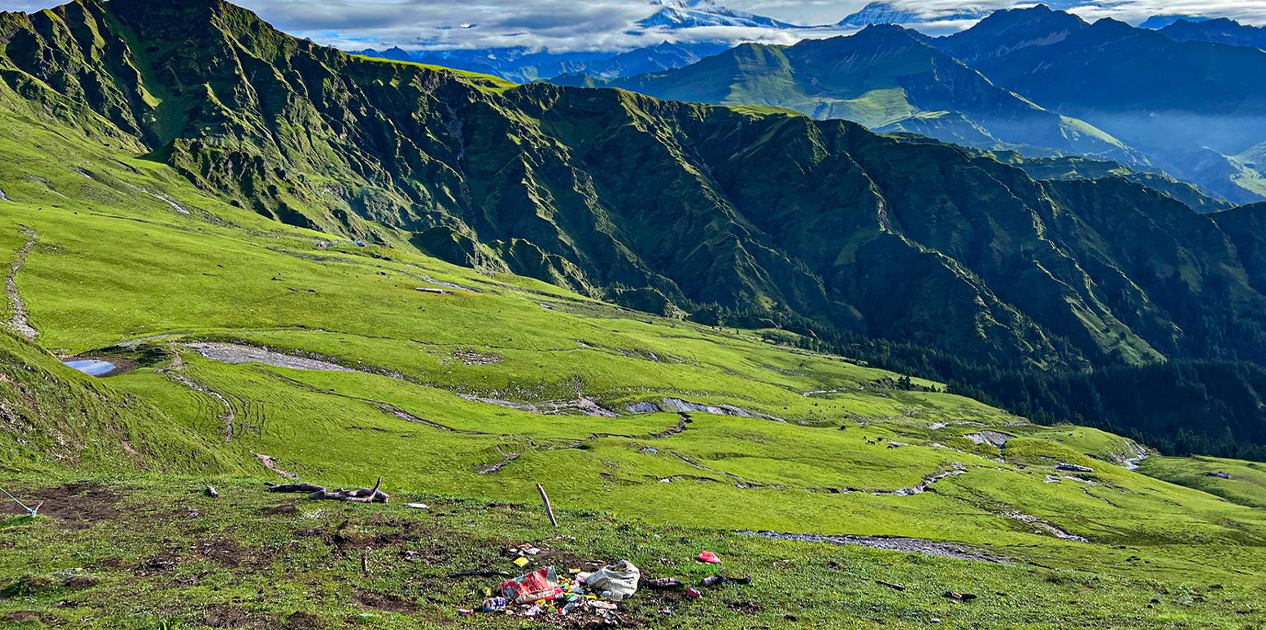
The increasing popularity of Bukipatan in Dhorpatan, home to Nepal’s only hunting reserve, is creating a growing environmental challenge as rising tourist numbers leave behind increasing quantities of non-biodegradable waste. Once primarily used by herders, Bukipatan has recently begun attracting hundreds of visitors daily. However, the increase in tourism has also resulted in the widespread disposal of plastic bottles, instant noodle and biscuit wrappers, beer bottles, energy drink cans, and other waste across the high-altitude pastureland.
Plastic Waste Threatens Bukipatan’s Natural Beauty
According to Tirtha Bahadur Gharti Magar of Dhorpatan Municipality–9, the amount of waste has increased significantly as the number of visitors to the area has grown. Plastic and glass bottles scattered across the pasture have begun damaging the area’s natural beauty and threatening its reputation as one of Baglung’s most spectacular landscapes. Locals are also concerned that some visitors pick wildflowers, including flowers that are still in bud, increasing the risk of damage to the area’s natural vegetation.

Waste Problem Spreads Along Popular Trekking Routes
The waste problem is not limited to Bukipatan itself. Plastic wrappers, glass bottles, energy drink cans, and water bottles are reportedly found along the trekking route from Pakathar in Dhorpatan Valley toward the higher elevations, including trails, hillsides, streams, and areas leading to Bukipatan.
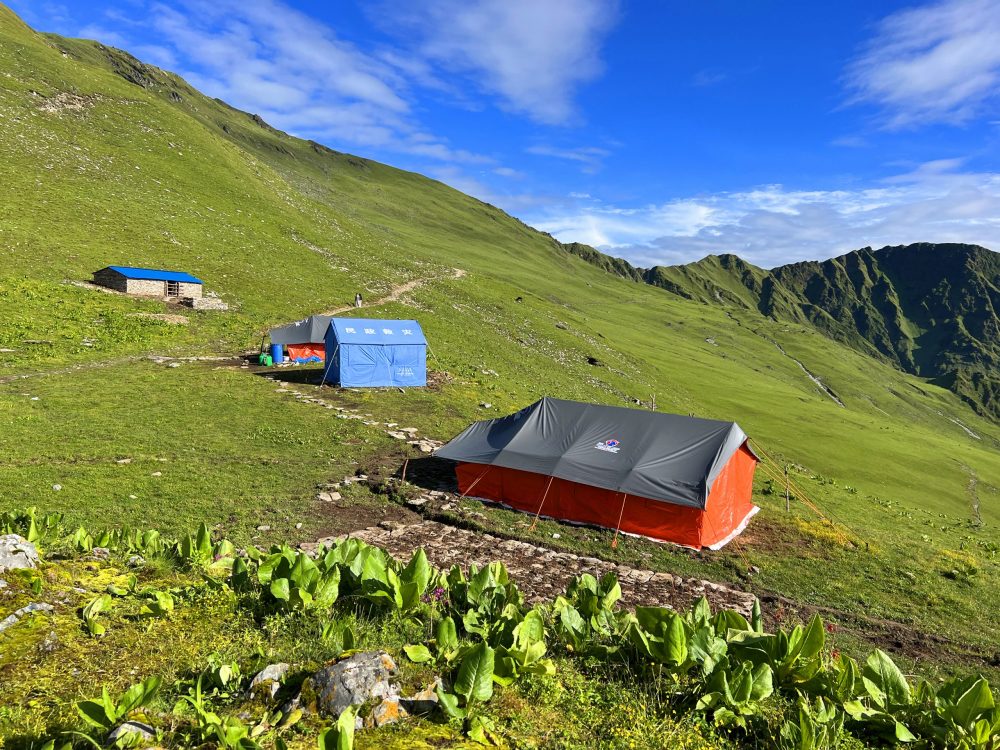
Local residents have urged the Dhorpatan Hunting Reserve and other concerned authorities to take immediate measures to manage waste in the area. Bukipatan lies at an altitude of more than 4,200 metres above sea level, making waste collection and transportation particularly challenging. However, residents say that no concerned authority has yet shown sufficient interest in maintaining cleanliness in the area.
Plastic Waste Poses Risk to Livestock
The growing waste problem is also creating risks for livestock that graze in the region. Local farmer Tirtha Bahadur Adhai of Dhorpatan Municipality–6 said livestock sometimes consume plastic waste mixed with grass, causing illness and, in some cases, death. Pastoralists from Baglung, Rolpa, Rukum, Dolpa, and Myagdi take sheep, goats, cattle, and buffaloes to the high-altitude pastures for grazing. As a result, the spread of plastic waste poses a direct threat not only to the natural environment but also to the livestock that depend on the pasturelands.
Dozens of Livestock Reportedly Fell Sick
Local resident Kul Bahadur BK said that last year approximately 60 sheep, goats, cattle, and buffaloes became ill after consuming plastic waste scattered across Bukipatan. The incident has raised concerns about the long-term consequences of unmanaged tourism waste in the region.
Residents say that although herders have created pits in some areas for waste disposal, many visitors continue to throw their waste carelessly across the landscape. The areas of Garpachheda, Dahakharka, Fursedeurali, Tikadhara, and Phagune are reportedly among the locations where waste has accumulated most visibly.
Tourism Growth Must Be Matched by Environmental Responsibility
Bukipatan is regarded as one of Baglung’s most valuable natural assets, with its vast alpine pastures, mountain landscapes, wildflowers, and unique high-altitude environment attracting growing numbers of visitors. However, residents warn that unmanaged tourism could gradually damage the very environment that attracts tourists to the region.

They have called for stronger waste management systems, regular clean-up campaigns, visitor awareness programmes, and stricter enforcement of responsible tourism practices. Authorities and tourism stakeholders have also been urged to encourage visitors to follow the principle of “Leave No Trace” by carrying back plastic and other non-biodegradable waste.
Protecting a Fragile High-Altitude Ecosystem
The growing popularity of Bukipatan highlights both the tourism potential and environmental vulnerability of high-altitude destinations. As more visitors arrive, effective waste management will be essential to protect the area’s fragile ecosystem, preserve its scenic beauty, and safeguard the livestock and communities that depend on the pastures. Without timely action, residents fear that the increasing volume of plastic and glass waste could seriously undermine Bukipatan’s reputation as a pristine natural destination and a valuable tourism asset of Baglung.