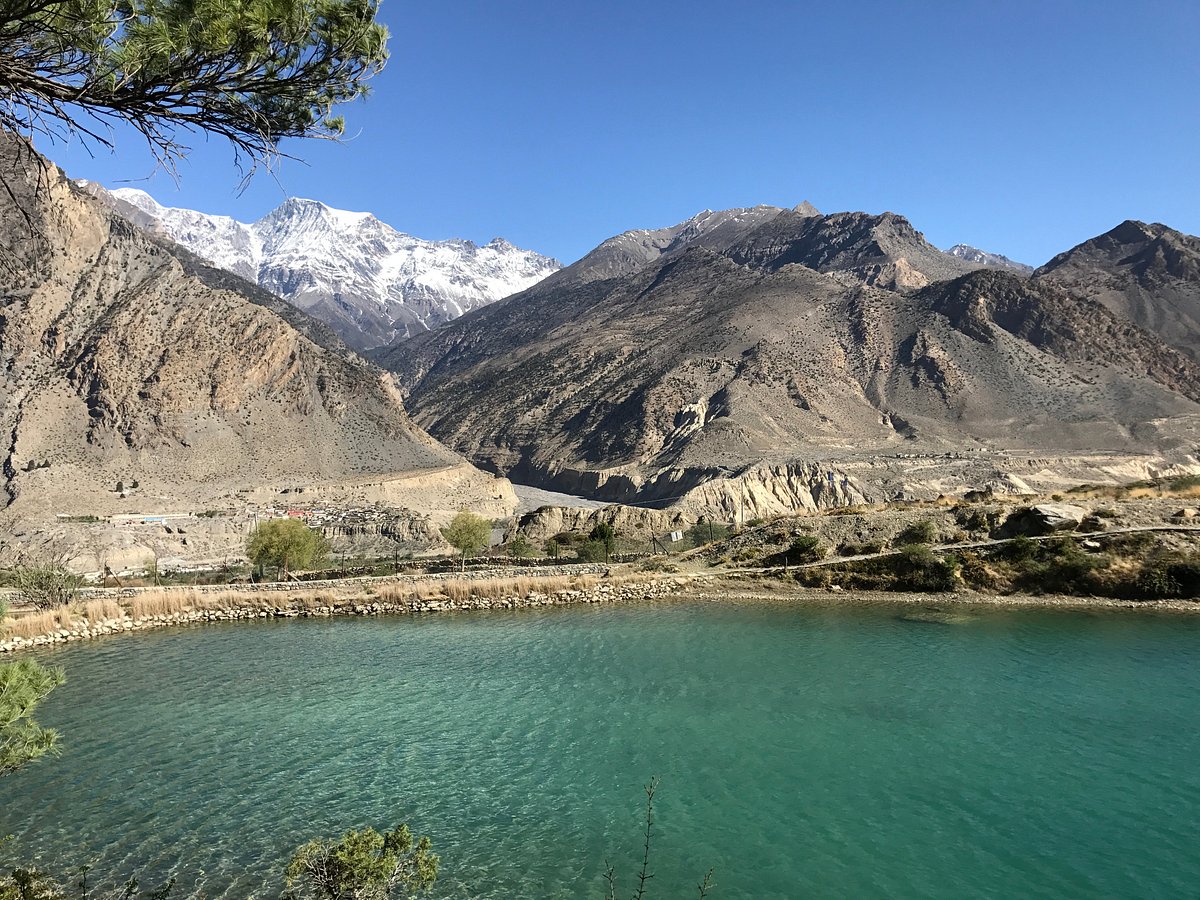
Nestled at an altitude of 2,830 meters above sea level, Dumba Lake (also known as Dhumba Taal) in Gharpajhong-5, Samle, Mustang, has rapidly grown into a serene haven for both domestic and international tourists. Situated at the foot of the majestic Nilgiri Himal, this breathtaking lake has been capturing the attention of travelers seeking peace, spirituality, and natural beauty.
Dumba Lake
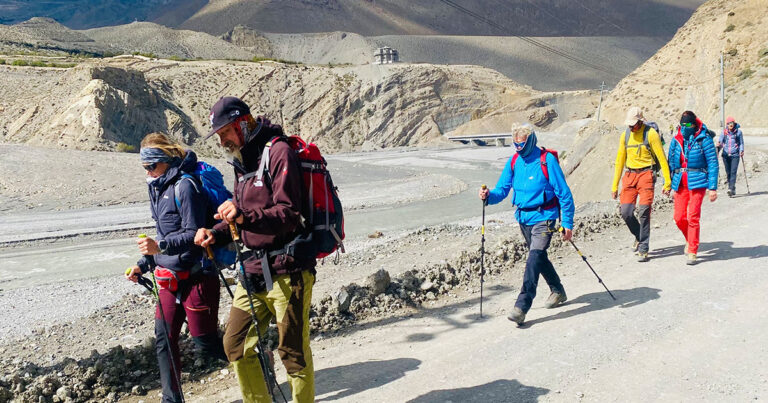
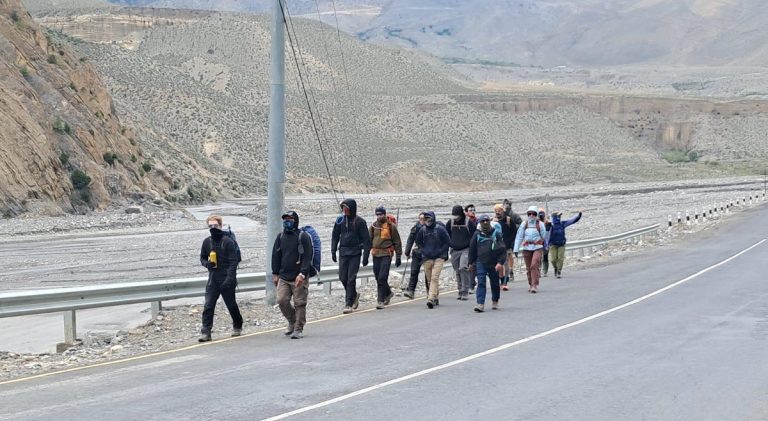
With the recent road access connecting Dumba Lake to the Jomsom-Korala National Highway just 3 kilometers away the number of visitors has seen a noticeable rise. Tourists heading towards Muktinath or returning from the Upper Mustang region often make a stop to soak in the scenic vistas offered by the lake.
To further enhance accessibility, the Gandaki Province Government has upgraded the Gharpajhong Ring Road, allowing smoother travel to the area. This has played a key role in making the lake more reachable and visitor-friendly.
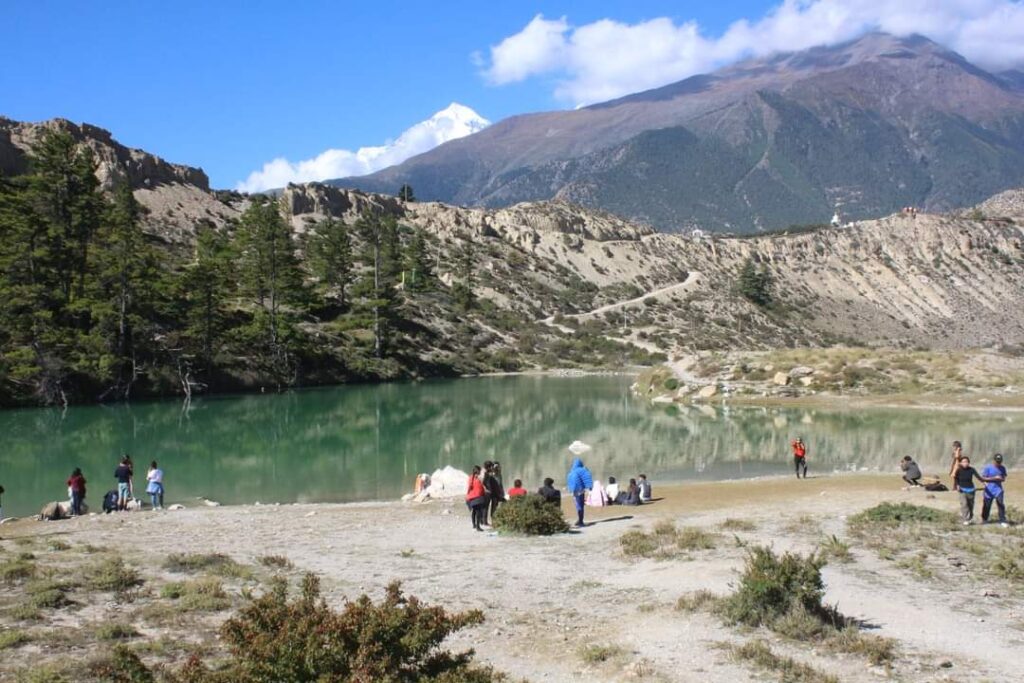
Local entrepreneur Sunny Thakali, who operates a restaurant near the lake, mentioned that during peak tourist seasons such as Dashain, Tihar, and major lunar days, Dumba Lake attracts anywhere from 200 to 500 visitors daily. “Even during off-seasons, we welcome around 40 to 50 tourists per day. As the road and facilities improve, so does the number of visitors,” she explained.
Recently, Dumba Lake has also earned the nickname “Pan Butte Taal” due to its heart-like shape when viewed from higher ground. The emerald-blue lake stretches across 130 meters and rests at the base of a forest-covered slope. Locals believe the lake is formed by water flowing from the melting glaciers beneath Nilgiri Himal.
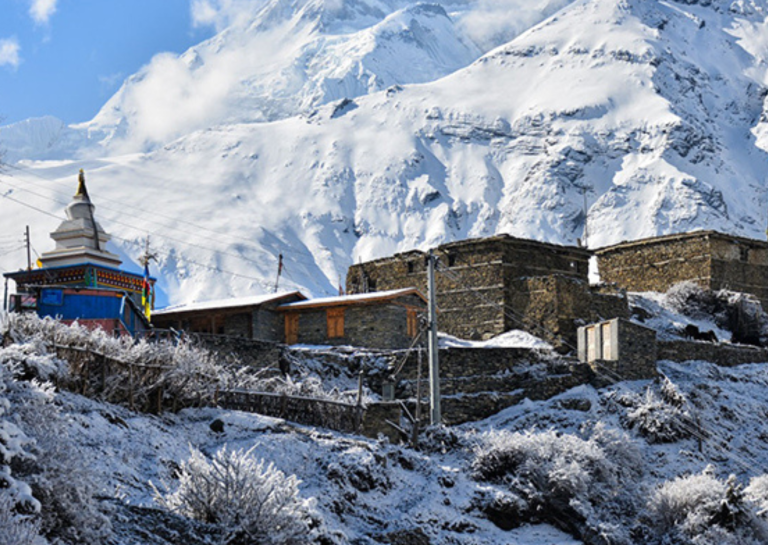
The scenic charm of Dumba Lake goes beyond the water itself. From the lakeshore, visitors can enjoy awe-inspiring views of Nilgiri and Dhaulagiri peaks along with the surrounding ridgelines. The nearby villages of Jomsom, Marpha, Syang, Thini, and Samle, as well as the Kaligandaki Corridor and the historic Kuchup Terenga Monastery, contribute to the lake’s growing allure. The terraced apple orchards and farmlands visible from the lake also add a layer of cultural richness.
Soni Awaal, a visitor from Kathmandu, shared her unique experience: “Unlike the noisy lakes in the valleys, Dumba Lake offers a peaceful escape. The serene surroundings make you feel like you’ve entered another world.”
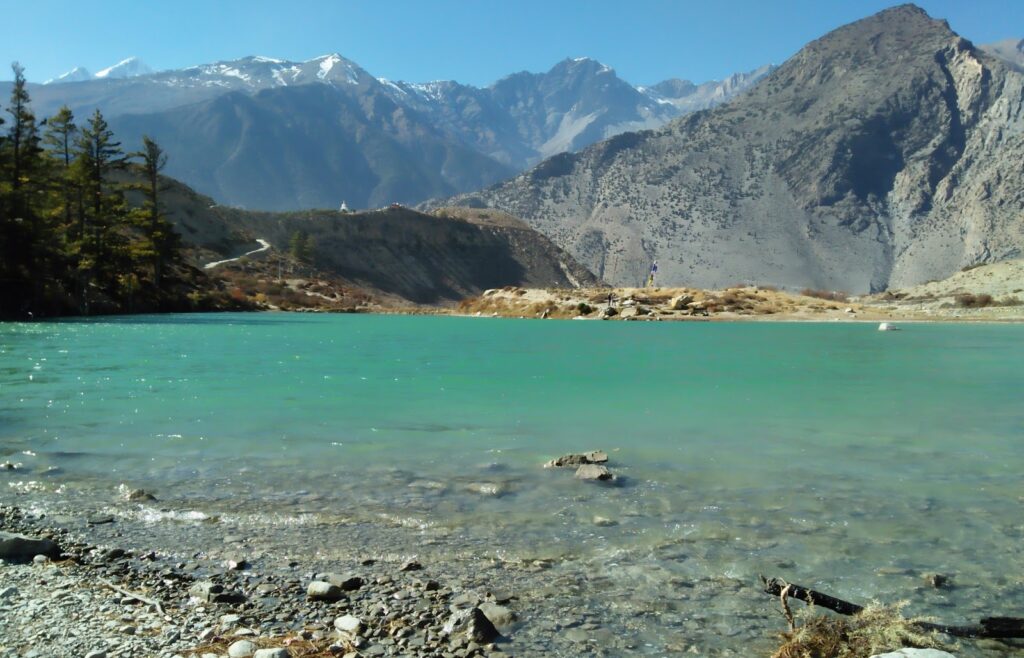
The lake holds not just natural but also spiritual significance. Close to Dumba Lake lies the Kuchup Terenga Monastery, deeply connected to local Buddhist heritage. According to local legend, in ancient times, a Lama named Urgen Palsang from Thini village traveled to Tibet to study Buddhism.
Upon completing his training, his guru gifted him five sacred jewels of Guru Padmasambhava (Guru Rinpoche), with instructions to enshrine them in a location where an elephant trunk-shaped hill, twin snowy mountains, a river to the south, and a lake to the north could be seen. Dumba Lake fulfilled all these conditions, and the jewels were enshrined near the lake, giving rise to the monastery and its spiritual legacy.
The monastery, along with the lake, is associated with the Nyingma tradition one of the oldest branches of Tibetan Buddhism. During annual religious ceremonies at Kuchup Terenga, water from Dumba Lake is used for rituals. The lake, therefore, serves both spiritual and ecological functions.
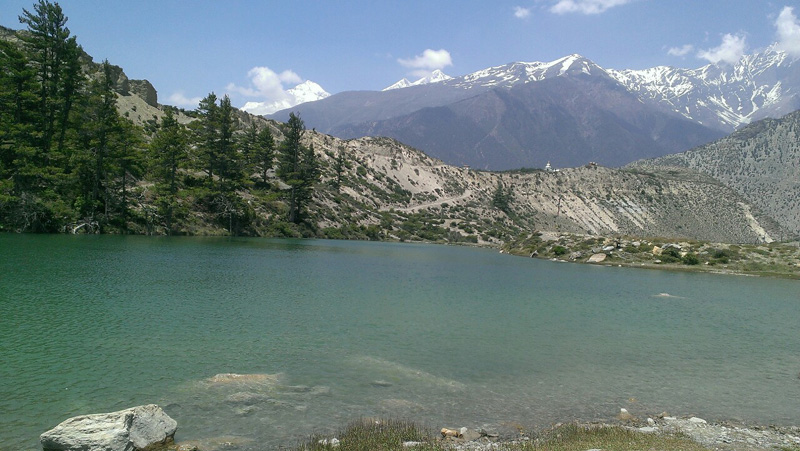
Dumba Lake and the monastery are managed under the ownership of the Kuchup Terenga Management Committee. Its preservation falls under the ACAP (Annapurna Conservation Area Project), with local conservation teams from Jomsom, Thini, and Samle actively involved. During special rituals honoring Guru Padmasambhava, it is a tradition to release fish fry into the lake as an offering.
A large white boulder located on the northern side of the lake is said to be the shrine of the serpent deity (Nagdevata), making the site spiritually charged. Fishing in the lake is strictly prohibited, and rare aquatic birds such as endangered waterfowl are often seen feeding along its banks.
In recent years, focused efforts by provincial and local governments, ACAP, conservation committees, and the monastery management have brought significant improvements to the lake’s infrastructure. New developments include stairways with safety railings, resting pavilions, hot room facilities, and informative signage around the lake area. These additions aim to enrich the experience for tourists while ensuring ecological balance and cultural respect.
As Dumba Lake continues to gain popularity, it holds the potential to become one of Nepal’s top eco-cultural tourism destinations, blending nature, history, and spirituality in a setting of rare tranquility.