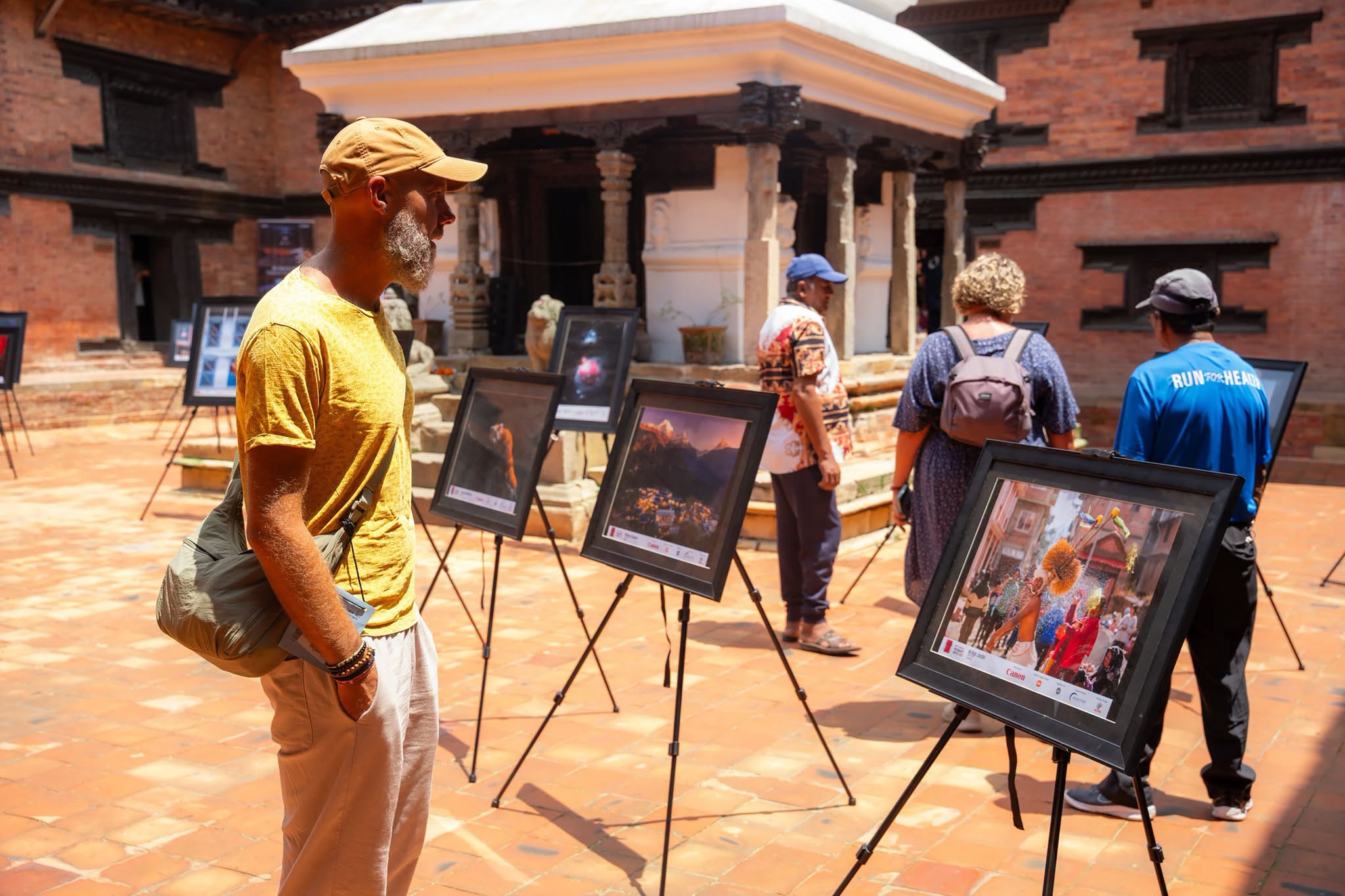
A photography exhibition at Patan Museum in Lalitpur has become another cultural attraction for visitors exploring Nepal, with foreign tourists among those taking time to view photographs displayed at the historic museum.
A photograph released by the Rastriya Samachar Samiti (RSS) shows international visitors observing the exhibition, highlighting how Nepal’s museums and heritage spaces are increasingly serving not only as repositories of history and art but also as venues for contemporary cultural experiences. The exhibition provides visitors with an opportunity to engage with Nepal through visual storytelling while experiencing the historic surroundings of Patan.
Photography meets cultural tourism
The exhibition has brought together photography and heritage tourism in a setting that is already one of Lalitpur’s important cultural destinations. For international visitors, an exhibition inside Patan Museum offers more than a conventional sightseeing experience: it places contemporary photographic work within the architectural and artistic environment of the Kathmandu Valley. The combination allows tourists to encounter Nepal through two different forms of visual heritage the centuries old cultural environment preserved around Patan Museum and the modern photographic interpretation of places, people and experiences.

The presence of foreign tourists at the exhibition also illustrates the potential for cultural events to add depth to the visitor experience in Nepal. Tourists who come to Lalitpur primarily to explore its temples, courtyards, traditional architecture and museum collections can also encounter temporary artistic programs during their visit. Such activities can encourage visitors to spend more time in heritage areas and discover aspects of Nepalese culture that may not be captured through conventional sightseeing alone.
Exhibition runs from August 19 to 21
The current exhibition is part of the Nepalese in Photography (NIP) Annual Photography Competition 2026, with the organization announcing that the photography exhibition would be held at Patan Museum from August 19 to 21, 2026. According to NIP’s announcement, the winning and selected photographs from the competition are being presented as part of the exhibition.
The timing is particularly significant because August 19 is World Photography Day, giving the exhibition a broader connection with the international celebration of photography and visual storytelling. NIP has described its 2026 competition around the theme “Exposure to Nepal,” linking the photographic platform directly with the country’s landscapes, people, culture and everyday experiences.
Patan Museum provides a distinctive setting
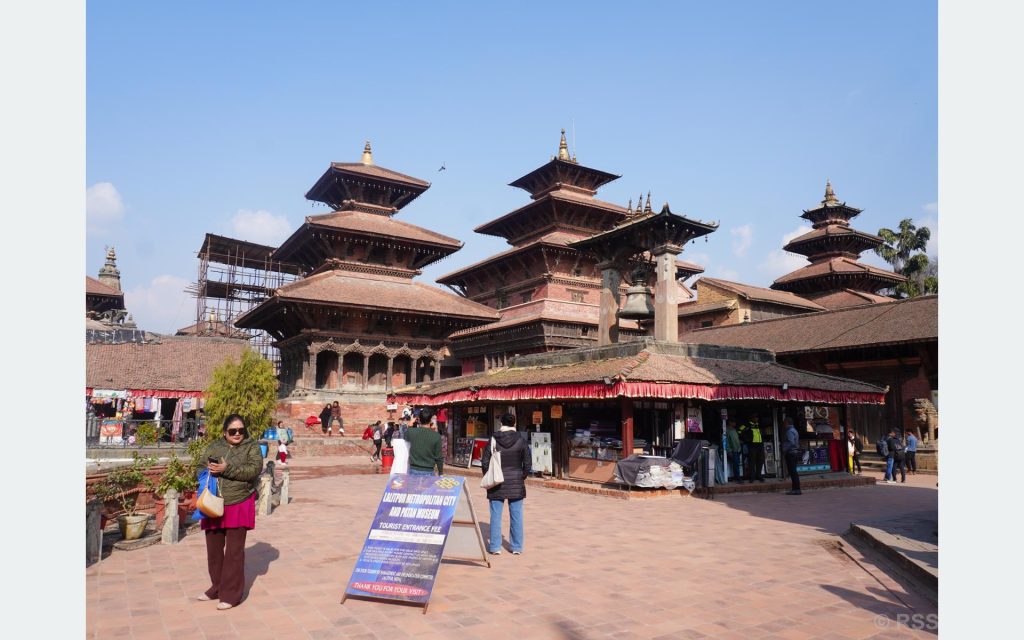
Holding the exhibition at Patan Museum adds a strong cultural dimension to the event. Located in the historic Patan Durbar Square area, the museum is surrounded by the architectural and artistic heritage for which Lalitpur is internationally recognized. The museum has also hosted exhibitions in the past that used photography and visual material to help visitors understand Nepal’s cultural history. For example, an earlier photographic exhibition at the museum presented historical images and sketches of the Kathmandu Valley, demonstrating how photography can complement the museum’s permanent heritage collections.
This combination of historic surroundings and contemporary photography is particularly relevant to tourism because visitors can experience different layers of Nepalese culture in one destination. Rather than limiting the museum experience to traditional objects and architecture, temporary exhibitions create opportunities for visitors to encounter changing artistic perspectives and contemporary creative work while remaining within a major heritage setting.
Photography as a window into Nepal
Photography has long played an important role in documenting Nepal’s landscapes, communities, cultural traditions and major historical moments. Contemporary photographers continue that tradition by recording the country’s rapidly changing social and cultural landscape, while also presenting Nepal to audiences who may never have visited the places shown in the images. Recent coverage by Nepali Times on World Photography Day similarly highlighted photography’s role as a form of visual documentation and historical record in Nepal.
The publication noted how photographs have captured major moments in the country’s modern history and demonstrated the wider power of photography to document people, places and social change.
For tourists, this visual dimension can make a cultural visit more meaningful. A photograph can introduce a visitor to a landscape, festival, community or tradition before they encounter it personally, while images taken by photographers in different parts of Nepal can also encourage curiosity about destinations beyond the country’s best known tourist centers.
A boost for Lalitpur’s cultural tourism
The exhibition also fits naturally into Lalitpur’s broader tourism environment, where heritage, art, architecture and creative activities are closely connected. Patan already attracts visitors for its historic monuments and traditional Newar artistic heritage, and cultural exhibitions can provide an additional reason for tourists to visit or extend their stay in the area.
For international visitors in particular, events such as photography exhibitions can help broaden the perception of Nepal beyond trekking and mountain tourism. Nepal is internationally recognized for the Himalayas, but its tourism appeal also includes museums, traditional art, festivals, architecture, craftsmanship and contemporary cultural expression. Events held in heritage locations can bring these different dimensions together and create a more diverse tourism experience.

Creative events can strengthen visitor experiences
The exhibition demonstrates how temporary cultural programs can complement Nepal’s established tourism attractions. A heritage site does not necessarily have to rely solely on its permanent monuments and collections to attract visitors; exhibitions, artistic programs and cultural events can give tourists new reasons to return and can introduce different audiences to historic destinations. For Lalitpur, this approach has particular value because the city’s tourism identity is strongly connected with its artistic traditions.
Photography exhibitions can build on that identity by bringing contemporary visual artists, photographers and visitors into the same cultural space. The result is a tourism experience in which heritage and contemporary creativity coexist, rather than being treated as separate attractions. The exhibition at Patan Museum therefore represents more than a display of photographs.
With foreign tourists among the visitors, it offers a small but visible example of how Nepal’s cultural institutions can connect international tourism with contemporary Nepali creativity, using photography to present different perspectives of the country while drawing visitors into one of the Kathmandu Valley’s most significant heritage environments.