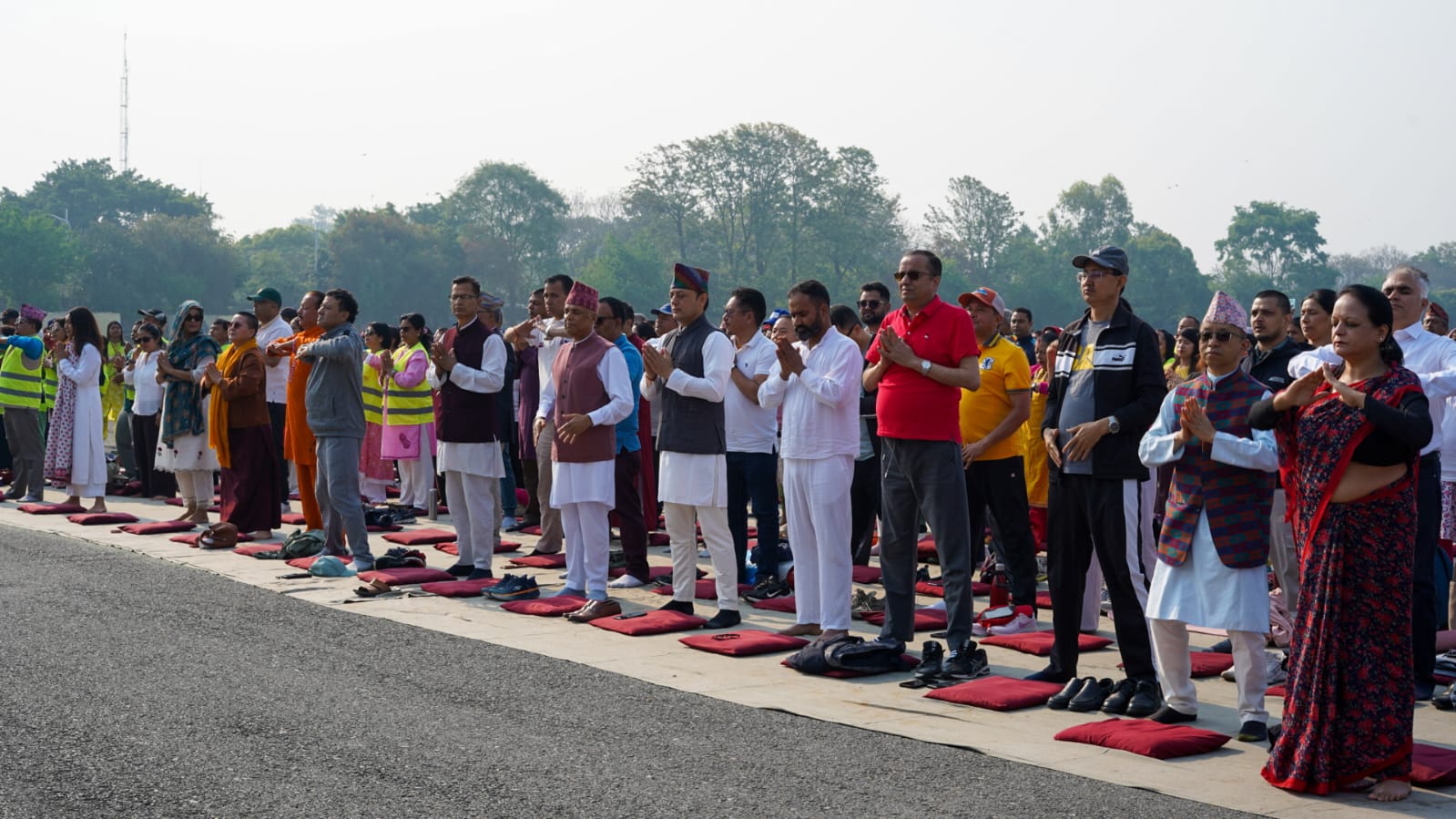
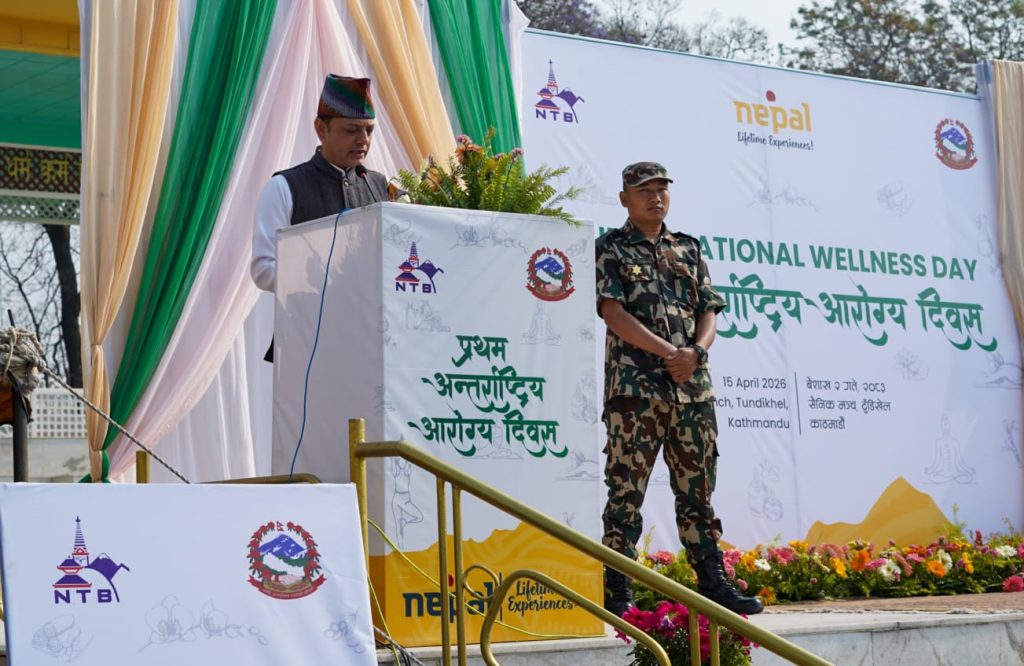
The first-ever International Wellness Day was celebrated on Wednesday at the Army Pavilion, Tundikhel, following the formal recognition of the day by the United Nations General Assembly. The event marked a historic milestone for Nepal, which had proposed the observance, and positioned wellness as a global priority for holistic human development.
The celebration brought together government leaders, wellness experts, spiritual practitioners, and stakeholders from the tourism and health sectors, highlighting Nepal’s growing role in promoting wellness tourism and inner well-being on the international stage.
On the occasion, Minister for Culture, Tourism and Civil Aviation, Khadak Raj Paudel (Ganess), announced that Nepal will observe “Wellness Year 2027”, aiming to establish the country as a global hub for wellness tourism.
Wellness is defined as Holistic Human Balance
Speaker of the House of Representatives and Chief Guest Dol Prasad Aryal emphasized that wellness must be understood beyond physical health, describing it as a comprehensive state of balance in human life. He stated that wellness includes physical, mental, social, cultural, emotional, spiritual, and environmental dimensions.
According to him, true wellness is not merely the absence of illness but a complete state of harmony within individuals and society. Aryal highlighted growing global challenges such as mental stress, climate change, and conflict, noting that wellness should be viewed as a “global necessity and a source of hope for humanity.”
He also underlined Nepal’s potential as a leading wellness tourism destination due to its natural beauty, Himalayan landscape, spiritual traditions, and rich cultural heritage. “We must focus on quality tourism rather than quantity and establish Nepal as a destination for meaningful and transformative experiences,” he said.
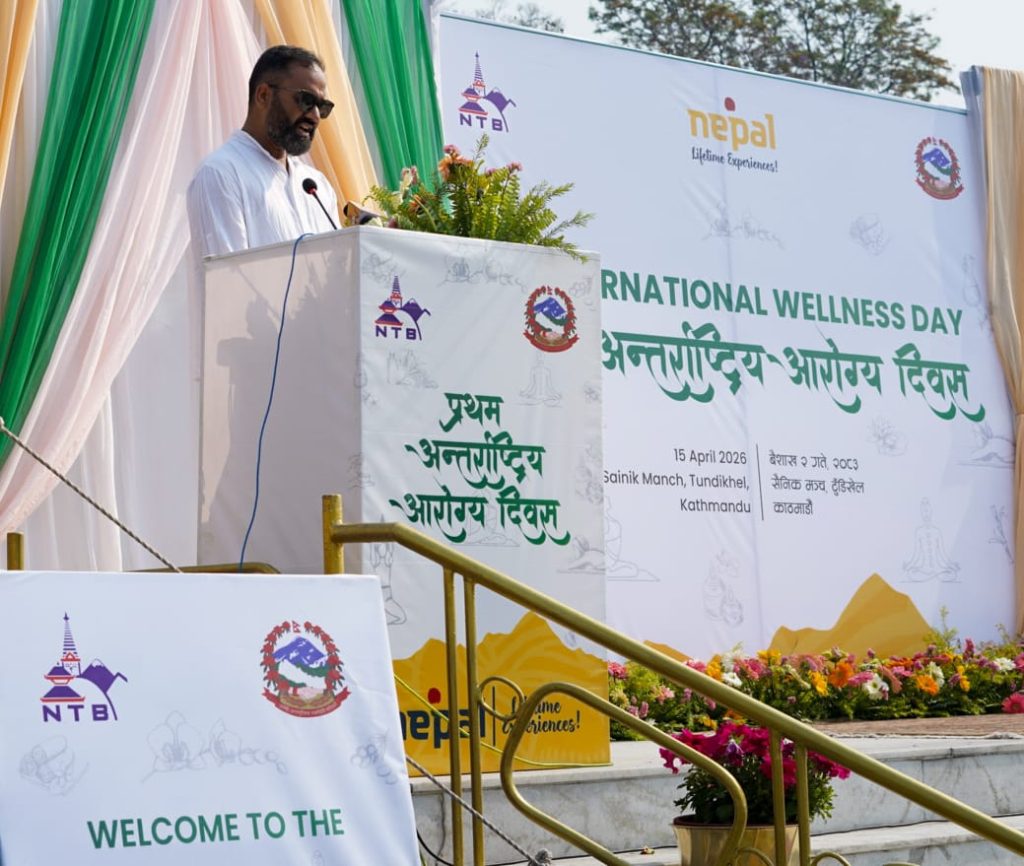
Nepal’s Vision for Global Wellness Leadership
Tourism Minister Khadak Raj Paudel (Ganess) stated that wellness is deeply connected to lifestyle and inner awareness, and Nepal has the potential to guide the world in this direction. He described wellness as the “courage to turn inward” and an art of understanding inner peace amid modern-day stress and fast-paced life. Citing World Health Organization data, the minister noted that over one billion people worldwide suffer from mental health challenges, making wellness more relevant than ever.
He further said that Nepal intends to develop wellness tourism as a form of “soft power,” integrating it with national development strategies. The government’s 100-point action plan envisions transforming Nepal into a global wellness hub, with 2027 declared as Wellness Year as part of this long-term vision.
According to him, wellness tourism will be linked with sustainable development, cultural preservation, and economic upliftment of local communities. Nepal, he said, should not only be seen as a travel destination but also as a place for self-discovery, healing, and spiritual peace.
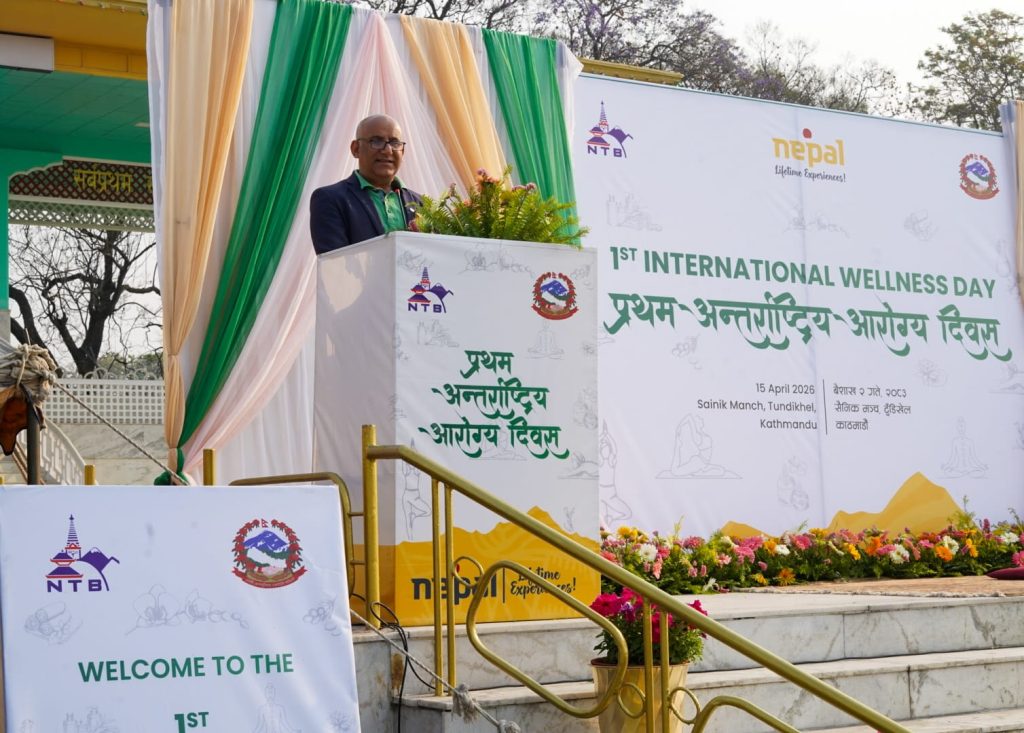
NTB CEO Highlights Nepal’s Global Wellness Potential
Nepal Tourism Board (NTB) Chief Executive Officer Deepak Raj Joshi emphasized that Nepal’s unique natural and spiritual assets position the country strongly in the global wellness tourism market. He stated that Nepal’s Himalayas, meditation traditions, yoga heritage, and hospitality sector together create a powerful foundation to attract wellness travelers seeking authentic healing and transformation experiences. Joshi also noted that coordinated efforts between the government, the private sector, and local communities are essential to develop Nepal as a globally recognized wellness destination.
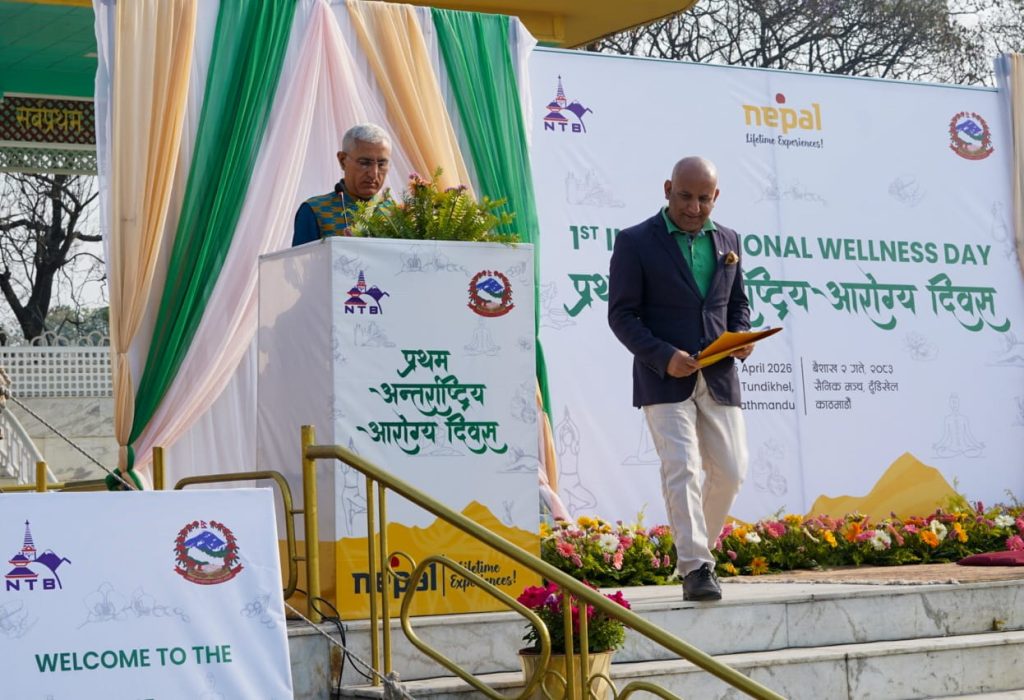
Call for a Strong Institutional Framework
Wellness expert LP Bhanu Sharma stressed the importance of developing a strong institutional framework to sustain and expand wellness initiatives in Nepal and the wellness day. He stated that effective leadership in wellness begins with personal ownership and self-awareness. He also highlighted that millions of people in Nepal are already engaged in meditation and self-awareness practices, which can form the foundation of a wellness ecosystem and encourage people to celebrate this day.
Sharma proposed several structural measures, including the establishment of a high-level wellness commission, the development of wellness circuits across the country, the introduction of wellness visa policies, and the promotion of long-term wellness stays for international visitors. He emphasized that linking wellness tourism with economic development could significantly contribute to national prosperity.
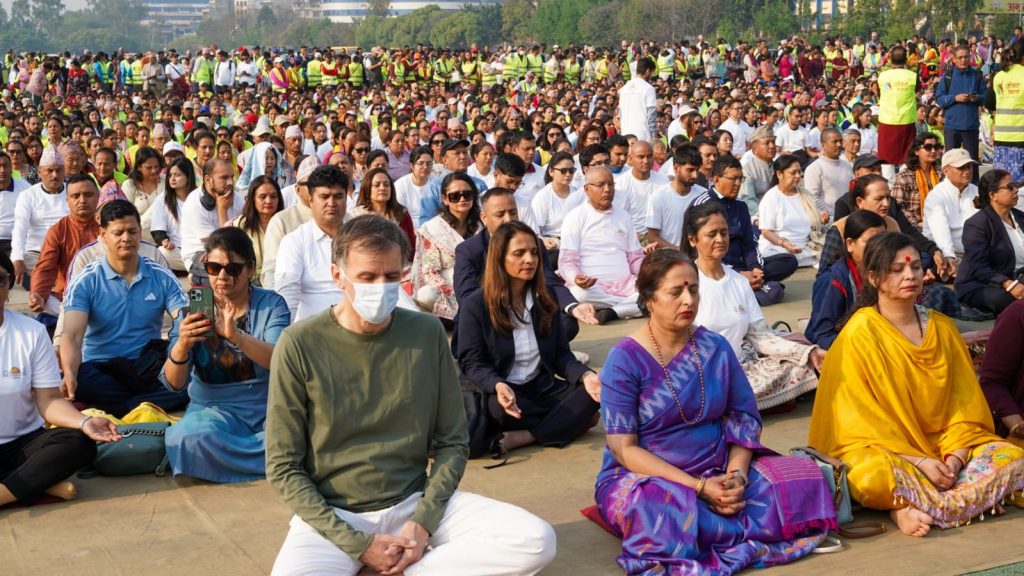
Meditation, Yoga, and the Global Message of Peace in International Wellness Day
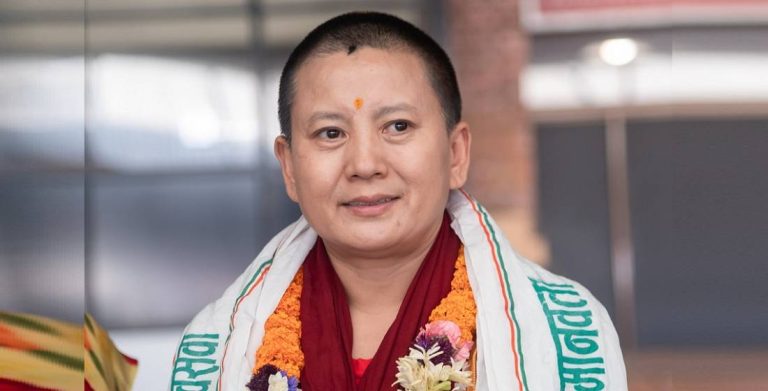
The event began with chanting led by Buddhist nun and singer Ani Choying Drolma, setting a spiritual tone for the celebration. This was followed by guided meditation and yoga sessions conducted at the venue, where participants engaged in collective mindfulness practices. Representatives from the Spa Association also presented insights on traditional and modern healing practices, contributing to discussions on holistic wellness approaches.
Key highlights of the program included the unveiling of the official wellness logo, presentation of Nepal’s wellness tourism strategy, and demonstrations of meditation and yoga activities. The United Nations General Assembly had earlier approved Nepal’s proposal to observe April 15 as International Wellness Day. This year’s celebration marked the first global observance of the day, making Nepal the center of attention in the global wellness movement. The event concluded with a strong message that wellness is not only a personal journey but also a shared responsibility for building a peaceful, balanced, and sustainable world.