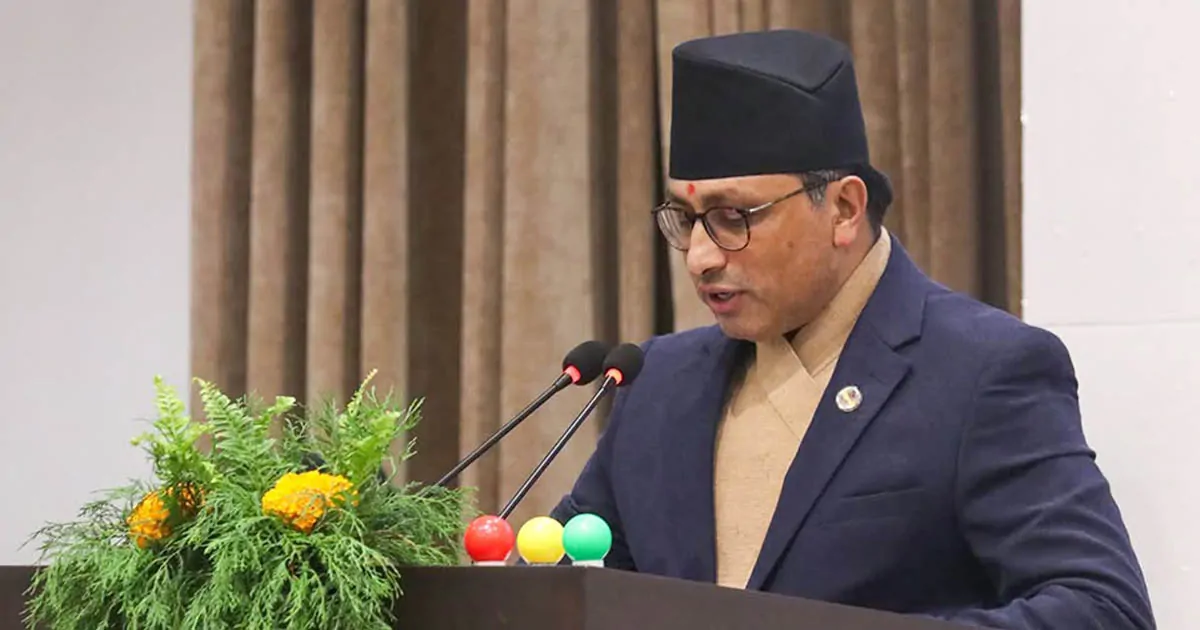
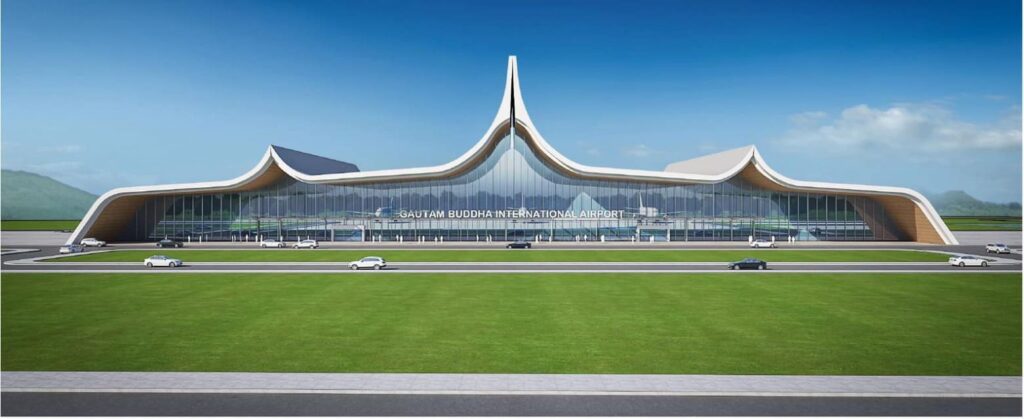
Finance Minister Dr. Swarnim Wagle has said that the government has placed high priority on bringing both Gautam Buddha International Airport in Bhairahawa and Pokhara International Airport into full operation, emphasizing their importance for Nepal’s economic growth, tourism expansion, and regional connectivity.
Speaking at a budget discussion programme organised by the Nepal Chamber of Commerce, the Finance Minister stated that the government is actively pursuing diplomatic engagement with both India and China to ensure smooth operations of the two international airports, including air route access, connectivity, and operational management.

Diplomatic Efforts with India and China for Air Connectivity with Gautam Buddha and Pokhara International Airports
Dr. Wagle informed that during recent high-level visits to India and China by the Foreign Minister, issues related to airport operations of Gautam Buddha and Pokhara International Airports were raised as key agenda items. These included securing additional air routes, improving bilateral aviation cooperation, and strengthening the infrastructure utilisation of Nepal’s newly built international airports, Gautam Buddha and Pokhara International Airports.
He said the government is treating aviation connectivity as part of broader economic diplomacy, alongside water resources, road infrastructure, and trade facilitation. According to him, Nepal is now actively engaging in negotiations that were previously delayed or avoided.
Government Committed to Managing Airport-Related Debt and Operations of Gautam Buddha and Pokhara International Airports
The Finance Minister underlined that the government is regularly servicing the loans taken for the construction of the two international airports, reflecting its commitment to ensuring their operational success. He stated that the government is “more serious than ever” about putting the airports into full use, as continued non-operation would increase financial pressure on the state without generating economic returns. Dr. Wagle also noted that discussions during diplomatic visits have focused on how to operationalise the airports effectively through improved coordination on flight routes and management systems.
Economic Diplomacy at the Core of Infrastructure Strategy to run Gautam Buddha and Pokhara International Airports
Highlighting Nepal’s evolving foreign policy approach, Dr. Wagle said the government is now prioritising economic diplomacy to resolve long-standing infrastructure and trade-related challenges. He explained that issues related to aviation, hydropower, and road construction are being addressed through active negotiations with neighbouring countries.
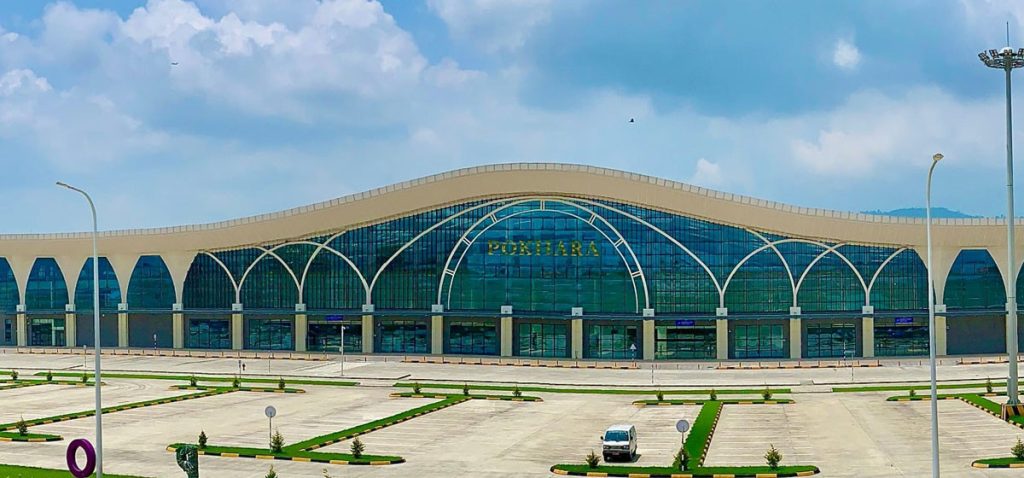
According to him, the government is engaging more assertively in discussions that had previously remained unresolved for years. He added that this shift reflects a more practical and outcome-oriented diplomatic strategy aimed at translating infrastructure investments into economic returns from Gautam Buddha and Pokhara International Airports.
Industrial Policy Focused on Raw Materials and Local Production
The Finance Minister also outlined the government’s industrial policy direction, stating that customs duties on raw materials and intermediate goods have been set lower than those on finished products to encourage domestic manufacturing. However, he acknowledged that there are practical complexities in implementing this policy, as certain goods serve simultaneously as finished products for one industry and raw materials for another, creating inconsistencies in tariff structures. Despite these challenges, he emphasized that the government is working to refine the system to support industrialisation and domestic value addition.
Call for Evidence-Based Policy Debate from the Private Sector
Dr. Wagle urged private sector stakeholders to engage constructively in policy discussions, particularly on issues such as food imports and agricultural pricing policies. He encouraged businesses to present evidence if they believe government policies are not aligned with the national interest.
He further assured that the government remains open to policy adjustments in future fiscal years if any mistakes or inefficiencies are identified. According to him, policy-making is an iterative process, and improvements will continue based on real-world feedback and economic outcomes.
Land and Real Estate Slowdown a Growing Concern
The Finance Minister acknowledged that the slowdown in the real estate sector has become a significant concern for the broader economy. He said that insufficient policy debate on issues such as land ceiling regulations has limited the government’s ability to take immediate corrective measures in the budget.
However, he noted that the government plans to gradually ease restrictions in the real estate sector to mobilize idle capital, particularly funds locked in cooperatives and other financial channels. He said unlocking this capital is essential for stimulating economic activity and supporting liquidity in the financial system.
Potential Monetary Policy Support Under Discussion
Dr. Wagle also indicated that the government may coordinate with Nepal Rastra Bank to address real estate sector challenges even before the next budget cycle. He said discussions with the central bank governor could lead to supportive monetary policy measures if necessary. This reflects a broader effort to align fiscal and monetary policies to stabilise key economic sectors facing liquidity constraints.
Government to Explore NRN Bonds and Investment Channels
The Finance Minister further announced that policies related to Non-Resident Nepali (NRN) investment, including the introduction of an “NRN bond,” are under priority consideration. He said the government aims to attract diaspora investment to strengthen foreign exchange reserves and support long-term infrastructure financing. According to him, building trust between the government and the private sector is essential for sustaining economic momentum and ensuring that investment flows into productive sectors.

Government’s Focus on Economic Revitalisation in the Full Operations of Gautam Buddha and Pokhara International Airports
Concluding his remarks, Dr. Wagle emphasized that Nepal’s economic growth strategy depends on coordinated efforts between domestic policy reform, international diplomacy, and private sector engagement to run the Gautam Buddha and Pokhara International Airports.
He reiterated that full operation of Gautam Buddha and Pokhara international airports is not only an infrastructure priority but also a key driver for tourism expansion, employment generation, and regional economic integration. The government, he said, remains committed to turning major infrastructure investments into productive national assets through sustained policy reform and international cooperation.