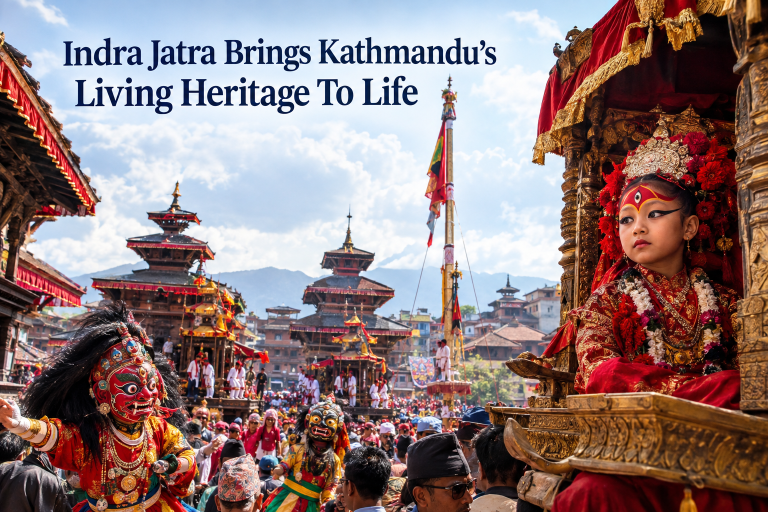
The month-long Gunla festival, one of the important religious and cultural observances of the Newar community, began on Wednesday with devotees gathering at Swayambhunath and other religious sites across Kathmandu Valley. Observed from the first day of the bright fortnight of Shrawan to the first day of the bright fortnight of Bhadra according to the lunar calendar, Gunla is a period dedicated to religious discipline, charity, devotion and traditional practices. The festival also provides visitors with an opportunity to experience Kathmandu’s living Newar culture, traditional music and religious heritage.

A Month Dedicated to Religious Discipline
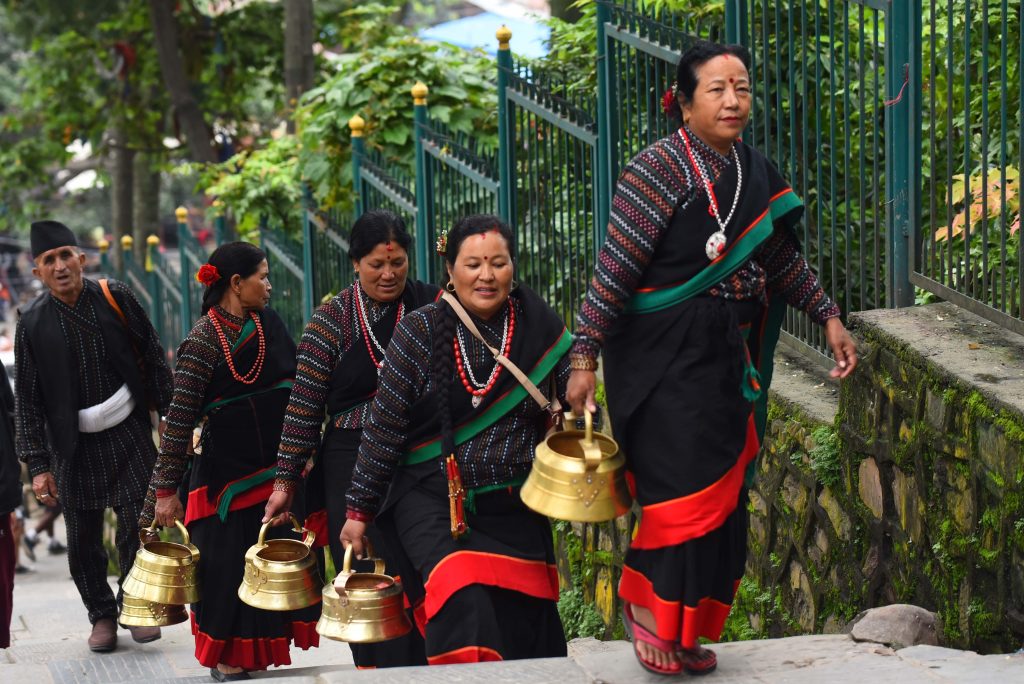
Gunla is associated with the tenth month of Nepal Sambat and carries strong spiritual significance for the Newar community. The term “Gunla” is traditionally connected with doing good deeds, helping others, and cultivating positive qualities. During the month, devotees follow various forms of discipline and religious practices. Traditionally, people avoid sleeping on high beds, limit entertainment, eat meals on time, and engage in charitable activities according to their ability. These practices are intended to encourage self-discipline, devotion, and good conduct throughout the month.
Swayambhunath Becomes a Major Pilgrimage Destination
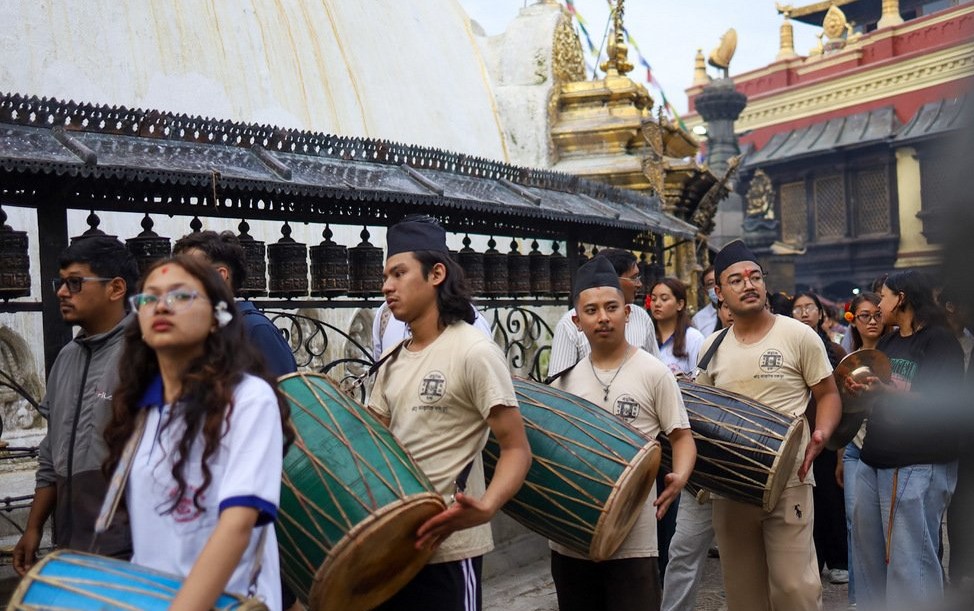
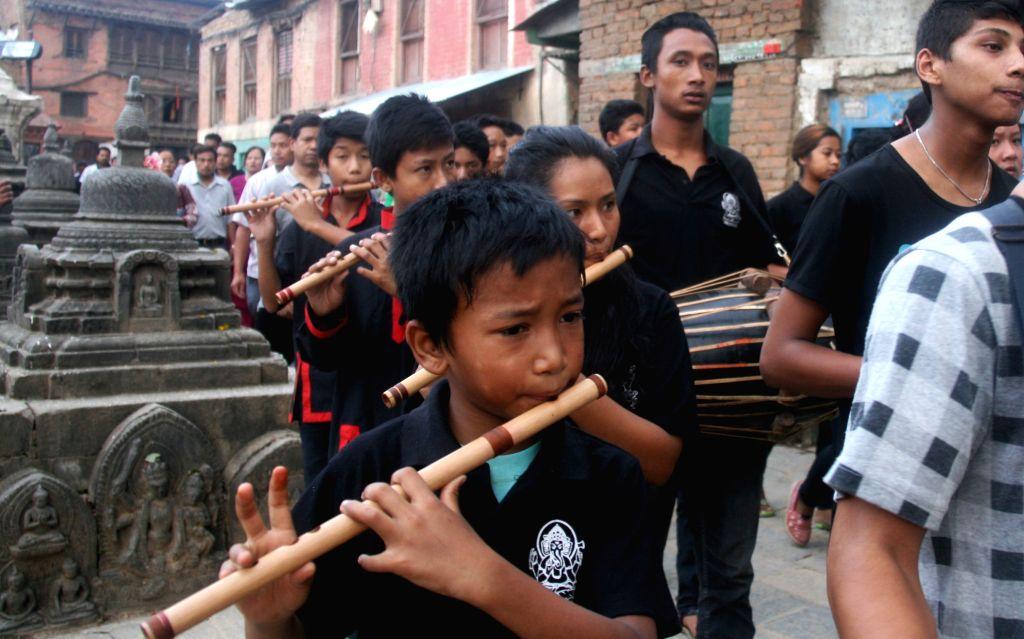
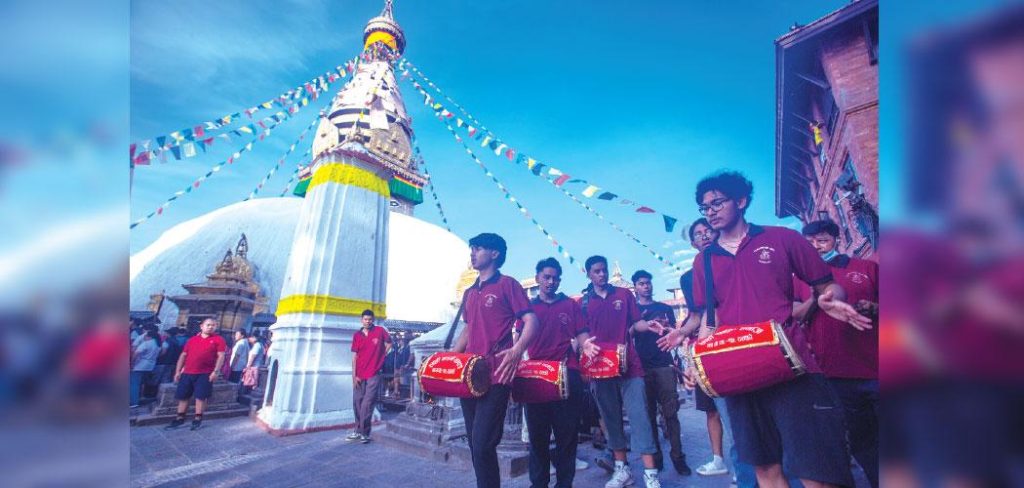
Swayambhunath Mahachaitya becomes one of the main centers of Gunla observances during the festival. A special religious gathering is held at the site throughout the month, drawing devotees from different parts of Kathmandu and surrounding areas. Many devotees begin their visits early in the morning, creating a lively atmosphere around the historic Buddhist heritage site. Groups traditionally travel to Swayambhunath while playing Gunla music, adding a distinctive cultural character to the pilgrimage. For tourists, the festival provides an opportunity to observe the close relationship between Kathmandu’s historic monuments, religious traditions and community life.
Traditional Music Adds to the Festival Atmosphere
Traditional musical performances are one of the most recognizable features of Gunla. Devotees participate in musical processions featuring instruments such as the dhime, flute, pachhima and shringabheri, a traditional instrument made from buffalo horn. In some communities, devotees also visit Swayambhunath while playing shringabheri in memory of people who died during the previous year. The combination of traditional instruments, religious processions and visits to heritage sites makes Gunla particularly significant from a cultural tourism perspective.
Chabahil Continues Its Local Traditions
Gunla observances are not limited to Swayambhunath. Different neighborhoods of Kathmandu have their own customs and musical traditions associated with the festival. Ramesh Dangol, a resident of Chabahil, said people in the area traditionally celebrate Gunla by playing dhime, flute, and pachhima while visiting temples. According to him, devotees in Chabahil also follow a traditional route around the Chandrabinayak area as part of their observance. Such neighborhood-level traditions demonstrate how Gunla remains deeply connected to everyday community life rather than being limited to a single public celebration.
Traditional Instrument Rituals Facing Decline
One of the traditional practices associated with Gunla is the worship of Kepu Baja, but the custom has reportedly begun to decline because of a shortage of people capable of continuing the tradition. In Chabahil, however, efforts have been made to preserve the practice by conducting instrument worship at Natyeshwar. The continuation of such traditions is important not only for the Newar community but also for Kathmandu’s cultural heritage, as traditional music and rituals form an integral part of the Valley’s identity.
Gunla as a Cultural Tourism Experience
Gunla offers visitors more than a religious festival. It provides an opportunity to experience living heritage through music, processions, rituals, traditional instruments, and community participation. Unlike heritage attractions that can be experienced only through monuments and museums, Gunla allows visitors to observe cultural traditions being practiced by local communities in their original social and religious settings. The month-long celebration can therefore contribute to Kathmandu’s cultural, religious and heritage tourism, particularly for visitors interested in Newar history and traditions.
A Unique Experience Around Kathmandu’s Heritage Sites
Visitors to Kathmandu during Gunla can experience traditional musical processions while exploring historic religious sites such as Swayambhunath. The festival also creates opportunities to explore the smaller temples, courtyards and traditional neighborhoods where local communities continue their own Gunla customs. For cultural travelers, this combination of architecture, religion, music and community participation offers a deeper understanding of Kathmandu beyond its well-known monuments.
Preserving Living Heritage Through Tourism
The gradual decline of some traditional practices highlights the need for continued preservation efforts. Greater awareness, responsible cultural tourism and community-led preservation could help ensure that traditional instruments, musical practices and rituals are passed on to future generations. Tourism can play a supportive role by creating interest in these traditions, provided visitors observe the rituals respectfully and avoid disrupting religious activities.
Gunla Strengthens Kathmandu’s Cultural Tourism Appeal
With devotees once again filling Swayambhunath and traditional music echoing through Kathmandu’s historic neighborhoods, Gunla has begun another month-long celebration of Newar religious and cultural heritage. The festival demonstrates Kathmandu Valley’s strength as a destination where religion, history, architecture, music and community traditions continue to exist together. As Nepal seeks to promote cultural and heritage tourism, events such as Gunla offer visitors an opportunity to experience the Valley not merely as a collection of historic monuments, but as a place where centuries-old traditions remain part of everyday life.