The traditional Jhulanotsav, a vibrant festival dedicated to devotion, music, and Mithila culture, has begun across the Mithila region, including Mahottari. The festival started on the third day of the bright fortnight of Shrawan and will continue until the full moon. With the beginning of the festival, traditional Jhula songs dedicated to Lord Vishnu and Goddess Lakshmi have begun resonating across temples, monasteries and religious sites in the region. The festival provides visitors with an opportunity to experience the distinctive religious traditions, folk music and cultural heritage of Mithila.
A Festival of Devotion and Tradition
Jhulanotsav is celebrated by placing idols of Ram and Sita and Radha and Krishna, who are regarded as incarnations of Lord Vishnu and Goddess Lakshmi, on elaborately decorated swings known as Jhula. Devotees gently swing the idols while singing traditional devotional songs. The festival is not generally celebrated individually in households but is observed collectively at temples and monasteries. Devotees gather at nearby religious sites, sing bhajans and kirtans, and participate in the festivities while swinging the idols. According to Dr. Rabindradas Vaishnav, successor Mahant of Laxmi Narayan Matha in Matihani, the festival symbolically recalls the childhood of the deities and the tradition of mothers such as Kaushalya and Yashoda rocking Lord Ram and Lord Krishna in cradles.

Matihani and Janakpur at the Center of Celebrations
The festival has brought a festive atmosphere to major religious destinations across Mithila. Laxmi Narayan Math and Temple in Matihani and Janaki Temple in Janakpur are among the most prominent places where Jhulanotsav is celebrated. The festival is also observed at Ram Janaki Kuti in Jaleshwar-1 and Bardibas-14, along with numerous other temples and Vaishnav monasteries in the region.
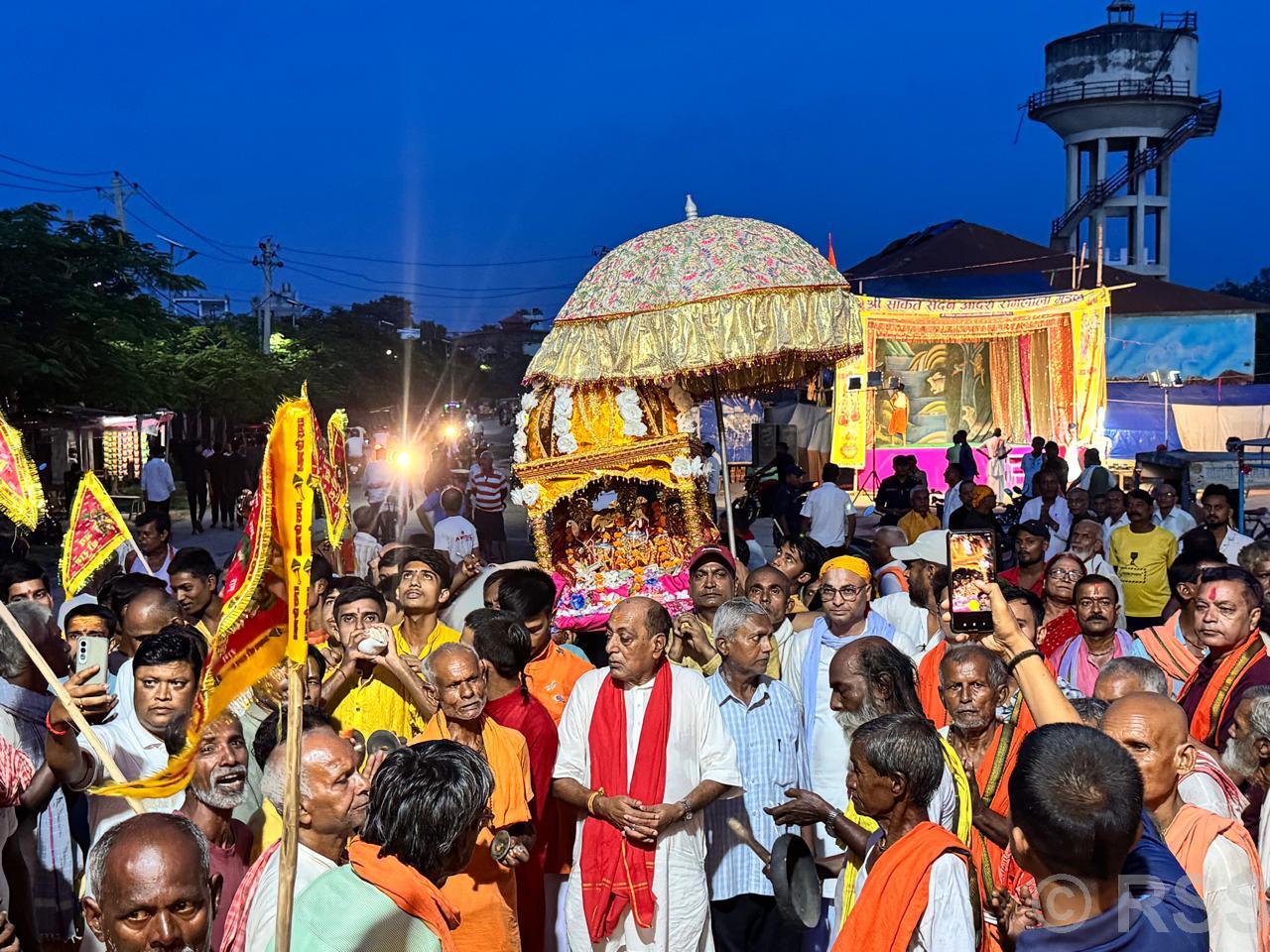
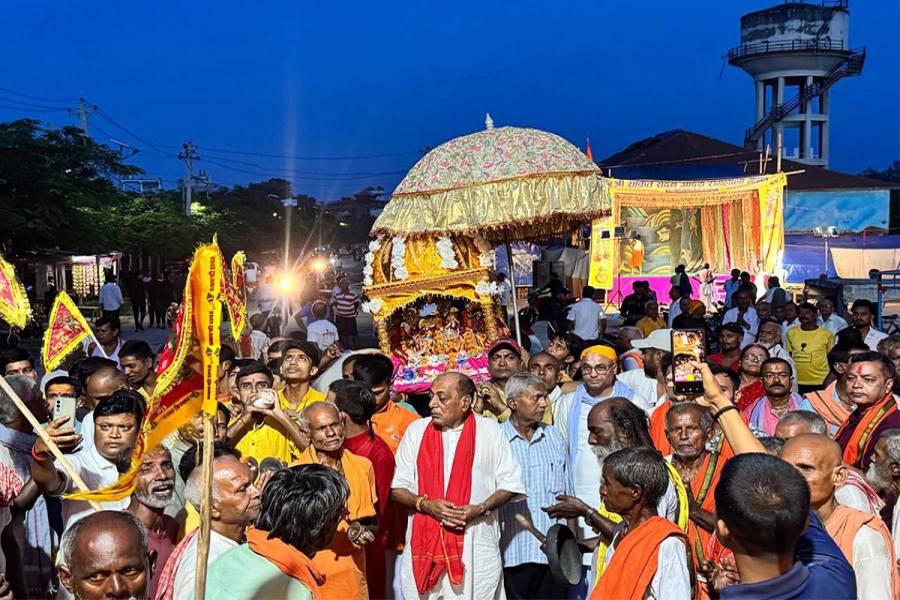
In Matihani, a dedicated Jhula Ghar has been constructed for the festival. Idols of Vishnu and Lakshmi are brought from Laxmi Narayan Math and Temple in a ceremonial palanquin and placed on the decorated swing. This year, idols from dozens of monasteries and temples from Mahottari and neighboring areas of India have reportedly been brought to Matihani for the celebration, drawing religious figures, devotees and visitors to the town.
Traditional Music Adds to the Festive Atmosphere
Traditional Mithila folk music is an important part of Jhulanotsav. Devotees sing Jhula, Malhar and Kajari songs while swinging the idols. The combination of devotional rituals, traditional music, dance and communal gatherings creates a distinctive cultural experience. For visitors, the festival offers an opportunity to experience Mithila’s living traditions beyond its well-known temples and historical sites.
A Festival with Deep Historical Roots
Jhulanotsav is believed to have entered the Mithila region through cultural influences from Ayodhya, the birthplace associated with Lord Ram, and Vrindavan, traditionally associated with the childhood pastimes of Lord Krishna. The festival is also closely connected with Janakpur’s identity as the birthplace of Sita. According to local tradition, the celebration in Mithila is believed to have been initiated around 1787 B.S. by saint Surkishor Das, following the tradition of honoring Ram, regarded as Mithila’s son-in-law.
Worship of Manimandap and the Start of the Festival
According to Mithila tradition, the festival begins with the worship of Mani Parvat in Janakpur on the third day of the bright fortnight of Shrawan. Local tradition holds that when Ram and Sita were married, King Janak gave jewels, precious stones and other valuables as dowry, which accumulated into a mound resembling a hill. The site is now known as Mani Parvat and lies approximately five kilometers northwest of Janaki Temple in Janakpur. The worship of Mani Parvat marks an important traditional beginning of the Jhulanotsav celebrations in Mithila.
Religious Festival with Tourism Potential
Beyond its religious significance, Jhulanotsav offers considerable potential for cultural and religious tourism. The festival connects several important destinations, including Janakpur, Matihani and Jaleshwar, while showcasing the region’s music, rituals, architecture and community traditions. The concentration of devotees and religious visitors at temples and monasteries during the festival can also support local tourism businesses, including accommodation, restaurants, transportation, handicrafts and other visitor services. For cultural tourists, the festival provides an opportunity to experience Mithila’s traditions in their living form rather than simply visiting its heritage sites.

Cross-Border Cultural Connection
The participation of religious institutions from areas of neighboring India further strengthens the festival’s cross-border cultural significance. The arrival of idols from Indian monasteries and temples creates an opportunity to promote religious and cultural tourism between Nepal and India. With better promotion, visitor facilities and tourism infrastructure, Jhulanotsav could become an important annual cultural attraction for domestic visitors, Indian pilgrims and international travelers interested in Mithila heritage.
Festival Concludes on the Full Moon
The festival will conclude on the day of the Shrawan full moon. According to Maithil tradition, the Jhulanotsav ends when the rope of the swing carrying the idols of Vishnu and Lakshmi is ceremonially cut. The festival also marks the beginning of a series of important celebrations observed during the month of Shrawan in Mithila, including Madhushravani, Jhulanotsav, Nag Panchami and Raksha Bandhan. As one of Mithila’s distinctive cultural traditions, Jhulanotsav continues to preserve the region’s religious heritage while creating opportunities to promote Janakpur, Matihani and other destinations of Madhesh as cultural and religious tourism hubs.